Sany introduces its biggest ever excavator
The 314-horsepower Cummins engine in the 41-ton SY385C is termed as the ¢â‚¬ËBig Brother¢â‚¬â„¢ to the SY335 LC, as it increases productivity. This will replace the SY365 LC excavator.
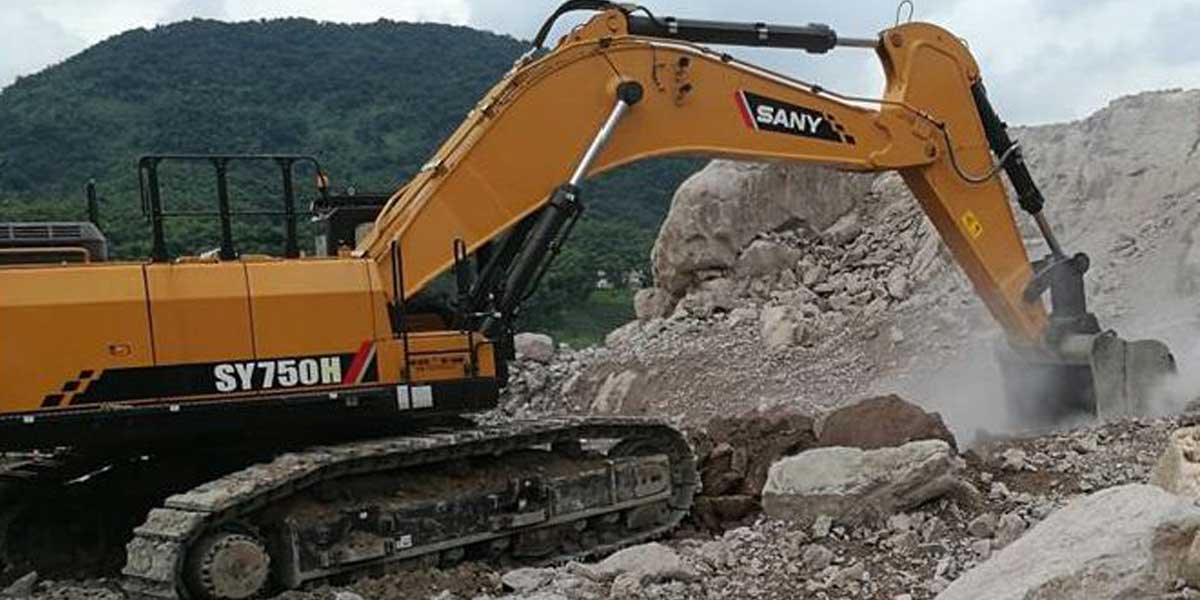
Finally, the SY750H called as ¢â‚¬ËThe Ox¢â‚¬â„¢ by Sany, is the company's largest excavator to date. Sany is now in a new size class with the 86.5-ton excavator, allowing it to serve clients on both minor mining and substantial building projects.
On a construction site, a Sany SY750H big excavator is seen with its bucket elevated halfway. With a 6.5-cubic-yard bucket and a weight of 86.5 tonnes, the SY750H is Sany's new largest excavator. The slogan ¢â‚¬ËFully loaded is the new standard¢â‚¬â„¢ has been adopted by Sany. The company stuck to the tagline for the new excavators, hoping to achieve feature uniformity across the series.
A 10.4-inch touch screen monitor within a bigger, redesigned climate controlled cab is one of the typical new amenities. Other standard features include a new heated air suspension seat, primary and secondary auxiliary hydraulic lines, and a fast coupler plumbed to the end of the stick. The product specialist for excavators, Jordan Van Lee, claims that everything has a lot in common.
"Operators will now need to be able to jump in and grasp the situation rapidly. There isn't much in the cab that will be overwhelming for them.¢â‚¬Â
Blind-side and rear view cameras, push-to-start ignition, and adjustable one or two-way auxiliary hydraulic flow and pressure control via the touch screen monitor are additional standard features. Every daily maintenance checkpoint is located on the ground.
 A-303, Navbharat
Estates,
Zakaria Bunder Road,
Sewri (West), Mumbai - 400 015,
Maharashtra, India
A-303, Navbharat
Estates,
Zakaria Bunder Road,
Sewri (West), Mumbai - 400 015,
Maharashtra, India +91-22-24193000
 Subscriber@ASAPPinfoGlobal.com