

Building Resilient Pathways for Future of Compaction
India’s infrastructure journey is entering a defining decade. Sustained investments in highways, expressways, logistics corridors, and urban mobility are reshaping the nation’s economic backbone. Yet this scale of opportunity comes with complexity — compressed timelines, cost pressures, evolving emission standards, supply chain volatility, and rising sustainability expectations.
In this environment, three forces are redefining the construction equipment landscape: Drive, Disruption, and Digitisation.
At Dynapac, these are not thematic expressions. They are strategic imperatives guiding how we engineer solutions, support contractors, and invest in long-term capability. As part of the globally respected Fayat Group, our direction is anchored in industrial excellence, independence, and responsible growth.
Drive: Purposeful innovation
India’s road-building ambition demands productivity with precision. Today’s projects require faster execution without compromising quality or durability. Equipment performance is measured not only by output, but by uptime, lifecycle efficiency, and predictable results across diverse climatic and operating conditions.
For us, Drive means engineering solutions that deliver measurable outcomes. In compaction and paving, this translates into enhanced surface uniformity, optimised fuel consumption, and improved machine reliability. Innovation must be practical, not ornamental — aligned directly to contractor profitability and project success.
Drive is equally cultural. It reflects a leadership mindset willing to invest ahead of the curve — in modular product platforms, digital capability, and strengthened dealer ecosystems. Supported by Fayat Group’s long-term industrial philosophy, Dynapac remains committed to contributing meaningfully to India’s infrastructure transformation.
Disruption: Engineering resilience
Recent years have demonstrated that disruption is structural rather than temporary. Supply chain realignments, raw material volatility, regulatory transitions, and geopolitical uncertainties have reshaped global manufacturing dynamics. Resilience today must be designed, not improvised.
Our approach integrates diversified sourcing strategies, closer supplier collaboration, and agile production planning. Modular product architecture enables faster adaptation to regulatory changes — including emission transitions — without fundamental redesign cycles.
However, disruption extends beyond operations. Contractors in India operate in highly competitive environments where timelines are closely monitored and margins tightly managed. They increasingly expect performance partnerships supported by predictive maintenance, digital transparency, and responsive service support.
Resilience, therefore, is both operational and relational. It is built through reliability, trust, and long-term alignment.
Digitisation: From Machines to Intelligent Decision Platforms
Digitisation is rapidly transforming Indian jobsites. Fleet owners managing equipment across multiple projects recognise that real-time visibility is essential for control, efficiency, and profitability.
At Dynapac, digitisation is structured around three integrated solutions — DYN@link, DYN@LYZER, and the NEXUS system — forming a connected intelligence ecosystem.
DYN@link – Connected equipment intelligence: DYN@link is our telematics platform that provides real-time visibility into fuel consumption, machine utilisation, idle trends, location tracking, and engine health. This transparency enables predictive maintenance planning, reduces unplanned downtime, and improves overall fleet productivity. For contractors managing dispersed assets across states, DYN@link brings operational control to a single interface.
DYN@LYZER – Intelligent compaction: DYN@LYZER enhances compaction accuracy by delivering live feedback on pass counts, vibration parameters, and surface temperature. Operators gain immediate insights, reducing guesswork and ensuring uniform density. In paving applications, this data-driven approach improves mat quality, minimises material wastage, and reduces rework — directly impacting project profitability.
NEXUS System – Integrated fleet intelligence: The NEXUS system acts as a centralised performance platform, consolidating machine data across fleets and project sites. Contractors can benchmark productivity, monitor maintenance schedules, evaluate utilisation patterns, and make data-backed deployment decisions. In India’ss cost-sensitive environment, such clarity significantly improves return on capital investment.
Digitisation is not about connectivity alone. It is about converting data into leadership clarity — empowering decisions at both site and enterprise levels.
Case perspective
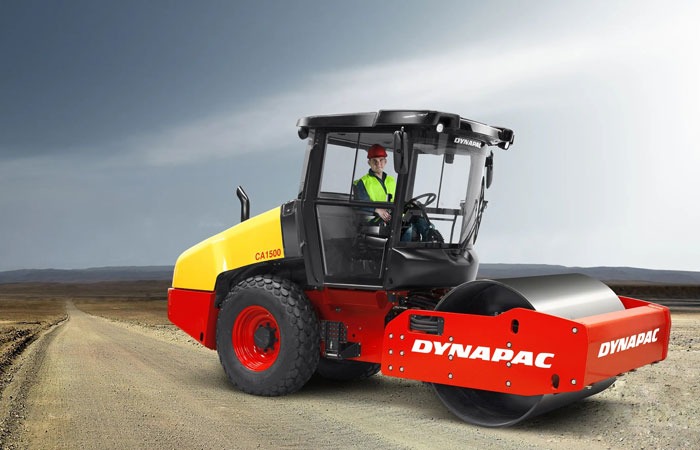
On a recent national highway expansion project in Western India, Dynapac rollers equipped with DYN@link connectivity and DYN@LYZER compaction support were deployed under demanding climatic conditions.
Real-time monitoring of compaction passes and asphalt temperature enabled optimised rolling patterns. Predictive alerts ensured timely maintenance interventions. Centralised visibility through the NEXUS platform allowed fleet managers to monitor utilisation and fuel trends remotely. The outcome was improved compaction consistency, reduced fuel consumption, minimised rework, and strong adherence to project timelines.
This example reflects a broader shift within India’s construction ecosystem: from reactive execution to controlled, data-informed delivery.
Modular design
India’s market diversity demands adaptability. Regulatory requirements, cost sensitivities, and operator preferences vary significantly across regions.
Our modular design philosophy enables scalable digital integration — allowing DYN@link, DYN@LYZER, and NEXUS capabilities to be embedded flexibly across product ranges. It also supports adaptable emission configurations and region-specific compaction or paving setups. This approach reduces complexity, shortens time-to-market, and strengthens competitiveness in volatile environments. Modularity ensures that innovation and resilience progress in parallel.
Sustainability: Productivity with responsibility
As India accelerates infrastructure development, sustainability is becoming integral to procurement and execution strategies. Real-time fuel monitoring through DYN@link, optimised compaction via DYN@LYZER, and performance benchmarking through NEXUS collectively reduce fuel usage, idle time, and material wastage. The result is lower operating costs and reduced environmental impact.
Supported by Fayat Group’s global commitment to responsible industrial development, we view sustainability not as a parallel initiative, but as a natural outcome of intelligent engineering.
Leadership in transition
The construction equipment industry is evolving from a hardware-centric model to a solution-driven ecosystem. Machines remain fundamental — but intelligence defines differentiation.
To lead in this transformation, three priorities are essential:
- Operational discipline to withstand disruption
- Strategic foresight to harness digitisation
- Long-term commitment to innovation and partnerships
Drive sustains momentum.
Disruption builds resilience.
Digitisation unlocks performance intelligence.
Together, they define the next chapter of India’s road infrastructure evolution.
Road ahead
India’s infrastructure pipeline remains strong and forward-looking. The next phase of growth will demand not only powerful machines, but connected, adaptable, and future-ready solutions.
At Dynapac, strengthened by the enduring vision of Fayat Group and guided by deep understanding of Indian market realities, we remain committed to enabling smarter construction practices — enhancing productivity, reliability, and sustainability.
The highways of tomorrow will not be built by horsepower alone. They will be shaped by data, agility, and strategic partnerships. And that future is already in motion.
ABOUT THE AUTHOR:
Abjijit Som, Managing Director, Fayat Road Equipment Division – India.
 A-303, Navbharat
Estates,
Zakaria Bunder Road,
Sewri (West), Mumbai - 400 015,
Maharashtra, India
A-303, Navbharat
Estates,
Zakaria Bunder Road,
Sewri (West), Mumbai - 400 015,
Maharashtra, India +91-22-24193000
 Subscriber@ASAPPinfoGlobal.com