

Built to Perform, Ready to Disrupt
The construction equipment industry is operating in an era where excellence is no longer defined solely by output volumes or manufacturing scale. Instead, sustained success depends on an organisation’s ability to deliver consistent performance while navigating disruption, adopting advanced technologies, and maintaining operational health across increasingly complex manufacturing environments. As global supply chains face uncertainty and customer expectations continue to rise, the ability to integrate performance discipline with digital intelligence has become a decisive competitive advantage. At Timken, this integration forms the foundation of a long-term operational strategy built around three interconnected pillars: driving performance, strengthening resilience against disruption and accelerating digitisation across plants and processes.
The industry today is shaped by multiple forces acting simultaneously. On one hand, customers expect higher reliability, shorter lead times and uncompromising quality. On the other, manufacturers must contend with volatile raw material markets, shifting trade and tariff structures, logistics constraints and evolving regulatory requirements. In this environment traditional operating models that rely heavily on manual oversight or reactive problem-solving are no longer sufficient. Timken’s response has been to strengthen operational maturity by embedding foresight, data-led decision making and preventive controls into the core of manufacturing execution.
Digitisation has played a central role in enabling this shift. At Timken, digital transformation is not approached as a technology-driven initiative in isolation, but as a performance enabler designed to improve visibility, predictability, and control. By integrating digital tools into everyday operations, teams can access real-time insights into production flow, equipment condition and process stability. This enhanced visibility allows deviations to be identified early, enabling corrective action before they escalate into larger disruptions affecting safety, quality, or delivery performance.
The impact of this approach becomes especially significant when viewed through the lens of operational health. Much like biological systems, manufacturing processes are vulnerable to “diseases” if early symptoms are ignored. These may take the form of contamination risks, premature wear, corrosion, recurring quality defects or gradual efficiency losses that accumulate over time. Left unaddressed, such issues can compromise productivity and reliability across the value chain. Timken’s focus has therefore been on early detection and prevention rather than late-stage correction, ensuring that operational health is maintained consistently across plants.
The Bharuch plant serves as a strong example of this philosophy in practice. Operating in a demanding manufacturing environment, the plant has placed a sharp emphasis on process discipline, monitoring, and preventive maintenance to address potential sources of operational degradation. By strengthening controls around process stability and equipment health, the plant has enhanced its ability to manage risks linked to contamination, wear, and quality variation. Digital visibility has further supported faster diagnosis and resolution, reinforcing a culture where issues are addressed at the root rather than managed after the fact.
Similar principles are being applied across other Timken plants, each operating under distinct conditions and challenges. While the nature of risks may vary by location, the underlying objective remains consistent to reduce variability, strengthen compliance and sustain process integrity. By scaling best practices and aligning performance metrics across plants, Timken ensures that improvements are not confined to individual sites but contribute to a broader, enterprise-wide standard of operational excellence.
This consistency is critical in a multi-plant manufacturing ecosystem. Differences in geography, workforce composition and supply networks can often lead to fragmented performance if not actively managed. Timken’s approach emphasises alignment through shared operational frameworks and common performance expectations, supported by digital systems that provide transparency across locations. This allows leadership and plant teams alike to identify trends, benchmark performance and replicate successful interventions where they are most needed.
Alongside digitisation, disruption readiness has emerged as a strategic priority. The construction equipment industry has witnessed repeated disruptions in recent years, driven by geopolitical developments, trade policy changes and supply chain constraints. These disruptions have underscored the importance of resilience as a built-in characteristic of operations. Timken’s response has been to strengthen planning rigor, enhance cross- functional coordination and build flexibility into manufacturing and sourcing strategies. This ensures continuity of operations while safeguarding commitments to customers and partners.
Resilience, however, is not achieved through contingency planning alone. It is reinforced through disciplined execution and timely decision-making at the plant level. Digital tools have enabled faster scenario assessment and improved coordination between manufacturing, quality, maintenance, and supply chain functions. This integrated approach allows plants to respond swiftly to changing conditions without compromising safety or product integrity, even during periods of heightened uncertainty.
Innovation and sustainability considerations further shape this operational journey. Across the construction equipment ecosystem, there is growing emphasis on cleaner processes, energy efficiency and responsible manufacturing practices. Timken’s operational strategy aligns with these expectations by continuously improving process efficiency and reducing waste, while maintaining strict adherence to quality and safety standards. Digitisation supports these efforts by enabling precise monitoring and control, ensuring that sustainability goals are translated into measurable outcomes rather than aspirational targets.
The cumulative impact of these initiatives is reflected in the organisation’s ability to sustain performance across diverse manufacturing environments. By addressing operational “diseases” through early detection, preventive action and continuous improvement, Timken reinforces reliability at every stage of production. The emphasis on operational health ensures that productivity gains are durable, and that quality consistency is maintained even as demand patterns and external conditions evolve.
Importantly, Timken’s journey highlights that technology alone is not the differentiator. The real advantage lies in how digital capabilities are integrated with people and processes. Empowered teams, supported by timely information and clear accountability are better equipped to drive improvement and adapt to change. This combination of human expertise and digital intelligence strengthens decision-making at all levels, from shop-floor execution to strategic planning.
As the construction equipment industry looks ahead, the organisations that will lead are those capable of balancing scale with agility, innovation with discipline and performance with resilience. Timken’s integrated approach demonstrates how operational excellence can be built and sustained through a clear focus on drive, disruption readiness and digitisation. By embedding these principles across plants such as Bharuch and beyond, Timken continues to strengthen its manufacturing foundation while preparing for the demands of the future.
In an environment where disruption is inevitable and expectations continue to rise, operational excellence must be treated as a living system; one that requires constant monitoring, timely intervention, and continuous improvement. Through its commitment to operational health, digital maturity and resilient execution, Timken is not only responding to today’s challenges but actively shaping a future where performance remains consistent, scalable, and dependable across the enterprise.
ABOUT THE AUTHOR:
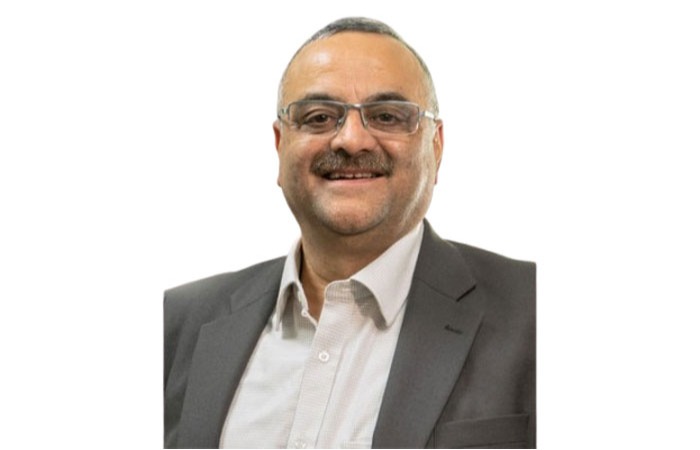
Sanjay Koul is Managing Director at Timken India.
 A-303, Navbharat
Estates,
Zakaria Bunder Road,
Sewri (West), Mumbai - 400 015,
Maharashtra, India
A-303, Navbharat
Estates,
Zakaria Bunder Road,
Sewri (West), Mumbai - 400 015,
Maharashtra, India +91-22-24193000
 Subscriber@ASAPPinfoGlobal.com