Building Roads for a Changing Climate
India’s road network is expanding rapidly, but the challenge is no longer simply to build more roads. With extreme weather events intensifying, material resources under pressure and sustainability becoming a core infrastructure objective, road design is being forced to evolve. The focus is shifting towards roads that can withstand changing climatic conditions, use resources more efficiently and deliver value across their entire lifecycle.
Designing for extreme weather
Erratic rainfall, flash floods, heat waves and changing freeze-thaw cycles are already testing conventional road designs. Prof. Satish Pandey, Head, Flexible Pavement Division, CSIR-CRRI, believes climate resilience must now be embedded into road design, construction and maintenance rather than treated as an afterthought.
For roads exposed to intense rainfall, moisture infiltration can weaken the pavement and accelerate damage. Pavement mixes therefore need greater moisture resistance, supported by technologies that improve the bond between bitumen and aggregates. Pandey cited work on NH-66 Mumbai-Goa, where hydrophobic slag aggregates and technologies such as stripping agents and organosilane treatments are being explored to minimise moisture-related damage.
Climate resilience also extends beyond the pavement. In high-altitude and vulnerable terrain, changing rainfall and freeze-thaw patterns can increase slope-failure risks. Conventional approaches to slope stability need to be supplemented by rock bolting, net stabilisation and bioengineering techniques, including deep-rooted vegetation, to strengthen slopes against extreme weather.
The underlying message is significant: road durability must now be designed around the climate the road will actually experience, rather than historical weather patterns alone.
Recycling needs a stronger push
India already has the technical knowledge to recycle large portions of existing pavements, but adoption remains limited.
Prof. Dharamveer Singh, Professor, Department of Civil Engineering, IIT Bombay, points out that Indian Roads Congress guidelines have supported pavement recycling for years, including technologies capable of using substantial proportions of recycled material. Recycling can reduce environmental impact, conserve aggregates, lower costs and reduce carbon emissions. The bigger challenge, he argues, is implementation.
Without stronger mandates, recycling often loses out to conventional construction practices. This is becoming increasingly problematic as quality aggregates become harder to source in several regions. Materials may have to travel hundreds of kilometres to reach project sites, adding significantly to both cost and environmental impact.
The solution is not limited to recycling old pavements. Industrial by-products such as steel slag and other waste streams can also become valuable construction resources. The industry therefore needs to move from simply discussing circularity to making recycled and alternative materials an integral part of project planning.
Rethinking the DPR
Sustainability cannot be achieved merely by adding another specification to an existing project document. Prof. Venkatesh Balasubramanian, Professor, Department of Engineering Design, IIT Madras, argues that road planning needs to return to first principles.
The fundamental question should be: what is the purpose of the road, and how can that objective be delivered most efficiently?
A sustainable DPR should consider locally available materials instead of transporting resources over long distances. It should also be data-driven and sensitive to local conditions, including geography, traffic, climate and human behaviour.
Adaptability is another critical consideration. Roads need to accommodate changing traffic loads and future requirements without requiring complete reconstruction. Designing for adaptability can make infrastructure more resilient over its lifecycle.
Equally important is verifiability. Specifications need to be practical, measurable and consistently executable at site. Sustainability cannot remain an aspirational statement in a DPR; it must translate into actions that can be verified during construction and maintenance.
Making innovation commercially viable
For Himanshu Agarwal, COO – Roads & Infrastructure, Zydex Group, the contractor ultimately builds what the DPR asks for. If long-term performance is the objective, the DPR must therefore define performance over the life of the pavement rather than simply prescribe construction parameters.
Drainage and moisture resilience are particularly important. A pavement exposed to water cannot be genuinely climate-resilient unless its design addresses moisture from the outset.
India also possesses a major advantage: an enormous existing road network and an equally large stock of potentially reusable materials. Earth, aggregates and industrial residues are already available within the country’s infrastructure ecosystem. The challenge is to engineer these materials effectively and ensure that they remain stable throughout the pavement’s life.
Agarwal also points to the enormous potential of waste materials. Plastic waste, industrial residues and mining by-products could potentially be incorporated into infrastructure applications if they are evaluated and designed appropriately.
But innovation needs trust. Contractors working on BOT and HAM projects have a stronger incentive to adopt technologies that can reduce maintenance because they bear the long-term consequences of pavement performance. The industry therefore needs evidence-based pathways that allow proven innovations to move from the laboratory to mainstream projects.
From lowest price to lifecycle value
The economics of road construction remain dominated by initial project cost, but that equation is beginning to change.
Navin Bhuwalka, Director, SRMB Steel, highlights the growing importance of ESG and lifecycle thinking, particularly in long-duration road concessions. When infrastructure is operated for decades, the cost of maintenance can become far more significant than the initial difference in construction cost.
This makes material selection critical. A higher-performing material that costs slightly more upfront can potentially generate greater value if it extends service life and reduces maintenance requirements.
The challenge is to move away from selecting materials purely on an L1 basis. Technical performance, durability and lifecycle economics need greater weight in procurement and DPR specifications.
For contractors, the equation is straightforward: paying more for performance can make commercial sense if it significantly reduces maintenance and improves long-term returns.
The human factor
Even the best technology and specifications cannot deliver results without capable people at the site. Singh highlights capacity building as one of the industry’s most pressing challenges. Engineers, supervisors and laboratory personnel need not only qualifications but also practical understanding of why a particular specification or process matters.
The problem is compounded when site personnel lack the authority to reject substandard material or workmanship. Fear of commercial or administrative repercussions can discourage engineers from making technically correct decisions.
Pandey agrees that the challenge goes beyond individual competence. India’s road construction ecosystem often operates within a framework heavily focused on completing projects quickly and at minimum cost. Sustainability, new materials and long-term performance must be integrated into this framework rather than treated as competing priorities.
Greater third-party quality audits, independent technical assessments and stronger collaboration between government agencies, research institutions and contractors can help close the gap between design intent and execution. The recent emphasis on climate-resilient infrastructure also provides an opportunity to institutionalise these practices.
From sustainable roads to resilient infrastructure
India's road-building ambitions will require enormous quantities of materials, energy and capital. Simply building more roads using conventional approaches will increase the pressure on natural resources and infrastructure maintenance.
The alternative is to design roads differently—from the DPR stage through construction and eventual rehabilitation.
That means using local and recycled materials wherever technically appropriate, designing pavements for extreme weather, incorporating adaptability into infrastructure, strengthening site-level technical capacity and evaluating projects through lifecycle value rather than initial cost alone.
Sustainability, in this context, is not merely about reducing carbon emissions. It is about creating infrastructure that uses fewer resources, lasts longer, adapts to changing conditions and delivers dependable performance.
India has the technologies, research capabilities and material resources to make this transition. The bigger task is aligning policy, procurement, design, execution and stakeholder incentives around the same objective.
The road of the future will therefore need to be more than durable. It will need to be resilient, resource-efficient and designed for a climate that is no longer predictable.
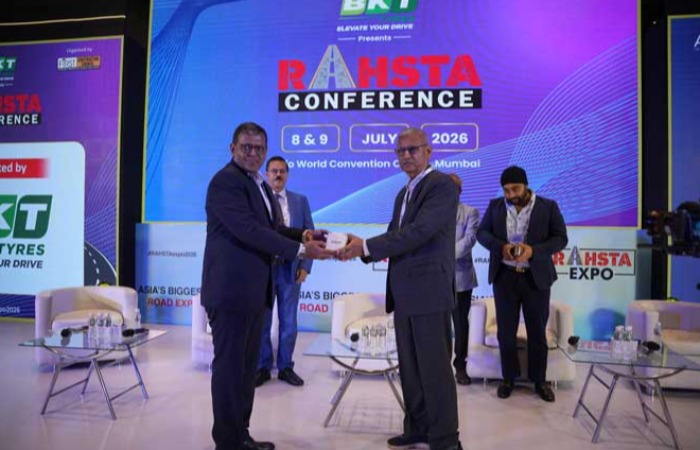
This article is based on insights shared during the session titled “Designing Roads on Sustainability, Durability and Climate Change”, held at RAHSTA 2026 on July 9, 2026.
 A-303, Navbharat
Estates,
Zakaria Bunder Road,
Sewri (West), Mumbai - 400 015,
Maharashtra, India
A-303, Navbharat
Estates,
Zakaria Bunder Road,
Sewri (West), Mumbai - 400 015,
Maharashtra, India +91-22-24193000
 Subscriber@ASAPPinfoGlobal.com