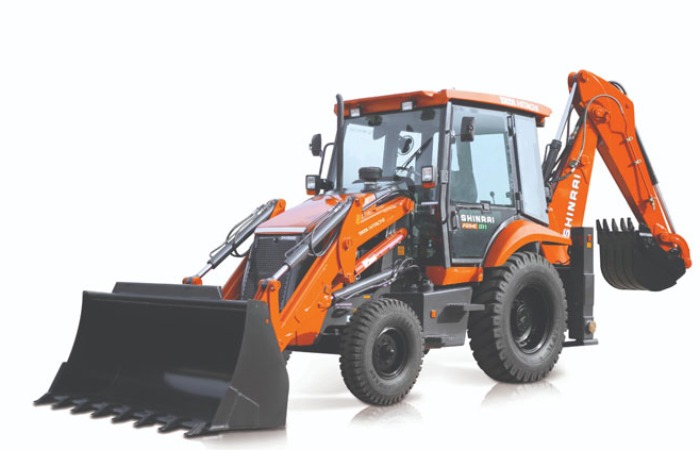
From Machines to Intelligent Ecosystems
Digitisation is transforming construction equipment into intelligent, connected assets that deliver far beyond mechanical performance. Advanced telematics suites which Tata Hitachi offers like ConSite and InSite are enabling real-time visibility into machine health, utilisation, fuel consumption, location and operator behaviour, allowing customers to move from reactive maintenance to predictive and preventive maintenance.
ConSite, with its automated monthly health reports and alarm analytics, helps customers and service teams identify potential issues well in advance, thereby reducing unplanned downtime and improving machine availability. InSite, on the other hand, provides live fleet monitoring, geo-fencing, service alerts and performance dashboards that enable data-driven deployment of machines across projects.
This level of connectivity improves jobsite planning, enhances asset productivity, optimises fuel efficiency and ensures better lifecycle management. The result is higher uptime, lower operating costs and improved project execution timelines.
Strategies to navigate
In a volatile global environment, policy support is playing an increasingly important role in creating long-term stability and visibility for the industry. The Government of Indias proactive approach in securing and advancing multiple Free Trade Agreements (FTAs) is expected to enhance global trade flows, boost exports and open up new international markets for the construction equipment sector. This will not only improve market access for Indian manufacturers but also strengthen supply chain confidence and future growth opportunities.
Alongside this, digital visibility and ecosystem integration are critical for operational resilience. Connected machine data from platforms like InSite enables better demand forecasting, parts planning and service readiness, ensuring that customers experience minimal disruption even during supply chain constraints.
At an organisational level, resilience is being built through localisation of supply chains, multi-sourcing strategies, flexible manufacturing and closer collaboration with supplier partners. Digital tools are also being used for inventory optimisation, production planning and logistics tracking, enabling faster response to market fluctuations while maintaining cost competitiveness.
Case studies
A strong example is the use of ConSites predictive maintenance insights, which allowed proactive planning of service interventions based on machine condition rather than fixed intervals. This significantly reduced unexpected breakdowns and ensured higher machine uptime, even when spare part availability was impacted by global disruptions.
Similarly, during periods of demand variability, InSite-enabled fleet analytics helped customers redeploy underutilised machines to high-demand regions, improving overall fleet productivity without additional capital investment. Remote diagnostics through connected service platforms also reduced physical service visits, improved response time and ensured continuity of operations in challenging conditions.
Role of policy, innovation, and collaboration
Sustainable growth in the construction equipment sector is closely linked to the Government of Indias continued focus on large-scale infrastructure development. The Union Budget 2026 reinforces this direction through sustained capital expenditure on roads, railways, urban infrastructure, mining and energy, along with policy support for domestic manufacturing, logistics efficiency and technology adoption. Increased investments in multimodal connectivity, housing and industrial corridors are expected to drive equipment demand, improve asset utilisation and create long-term visibility for the industry. These initiatives are well aligned with the national vision of Viksit Bharat, which aims to transform India into a developed, self-reliant and globally competitive economy through world-class infrastructure and manufacturing excellence.
Within this enabling ecosystem, emission regulations such as CEV Stage V are accelerating the adoption of cleaner and more fuel-efficient technologies, while digital solutions like ConSite and InSite are helping customers reduce fuel consumption, optimise machine utilisation and lower their carbon footprint.
Innovation in telematics, electrification, alternative fuels and smart hydraulics is enabling higher productivity with lower environmental impact. At the same time, collaboration between OEMs, suppliers, financial institutions and policymakers is essential to build robust ecosystems, improve equipment financing penetration, enhance skill development and standardise digital integration across the value chain.
Together, these elements are laying the foundation for a more efficient, sustainable and globally competitive construction equipment industry, supporting Indias journey towards Viksit Bharat.
ABOUT THE AUTHOR:
Siddharth Chaturvedi, Head Marketing, Tata Hitachi Construction Machinery Company
 A-303, Navbharat
Estates,
Zakaria Bunder Road,
Sewri (West), Mumbai - 400 015,
Maharashtra, India
A-303, Navbharat
Estates,
Zakaria Bunder Road,
Sewri (West), Mumbai - 400 015,
Maharashtra, India +91-22-24193000
 Subscriber@ASAPPinfoGlobal.com