India Moves Higher
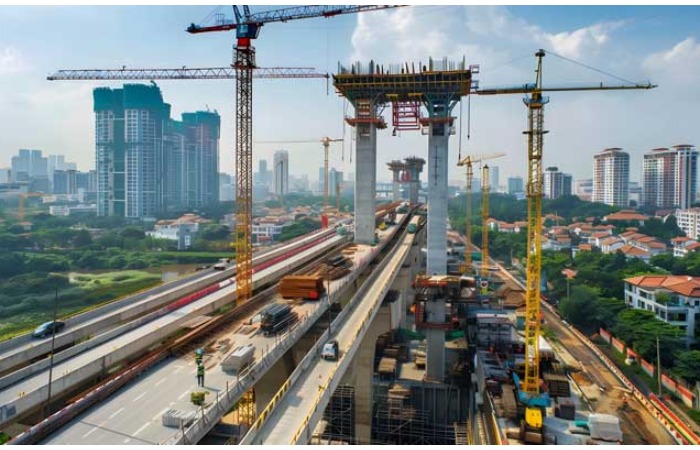
Indias infrastructure expansion is no longer driven merely by volume; it is increasingly defined by engineering complexity, accelerated timelines and the need for precision execution. Massive investments in highways, metro rail networks, ports, airports, renewable energy and industrial corridors are reshaping the countrys construction landscape. Supporting this transformation is the crane industry, which has emerged as one of the most critical enablers of modern infrastructure development.
Cranes today are not just material-handling machines. They have become central to project execution strategies, influencing productivity, safety, operational efficiency and cost optimisation. Whether it is erecting wind turbines, handling refinery modules, constructing long-span bridges or building urban skylines, cranes now play a strategic role in ensuring projects are completed on time and with greater precision.
As infrastructure ambitions rise, the Indian crane market is undergoing a significant transition marked by technological advancement, localisation, sustainability and changing market dynamics.
Infrastructure push fuels demand
Indias continued investment in roads, railways, ports, airports and urban infrastructure has created strong momentum across the construction equipment sector, particularly for cranes. Demand is increasing across crawler cranes, mobile cranes, tower cranes and rough-terrain cranes, with project requirements becoming more specialised.
Crawler cranes, especially in the high-capacity segment, are witnessing notable growth due to their suitability for demanding infrastructure and industrial applications. Their ability to handle heavy loads in challenging terrains makes them essential for large-scale projects such as bridges, refineries, petrochemical plants and renewable energy installations.
The governments focus on port modernisation and maritime trade expansion is also driving demand for specialised lifting solutions. Meanwhile, industries such as oil and gas, steel, cement and power continue to generate sustained requirements for high-capacity cranes.
Demand diversifies across segments
A defining characteristic of the current market is the simultaneous rise in demand for both large-capacity cranes and compact lifting equipment.
Large infrastructure and industrial projects are pushing the need for specialised heavy-lift cranes capable of handling increasingly complex tasks. According to Karan Gandhi, Executive Director, Express Equipment Rental & Logistics, The future of Indias crane market lies in larger and more specialised cranes capable of handling complex lifting tasks.
The trend is particularly visible in refinery and petrochemical projects where lifting requirements have become far more demanding. Praveen Sharma, Managing Director, ABC Infra, explains, 1,200-tonne crawler cranes were essential at the Pachpadra refinery, underlining the importance of such machinery in Indias evolving construction landscape.
Indias renewable energy ambitions are expected to further accelerate demand for super-heavy cranes. As wind turbines become taller and heavier, cranes above 800 tonnes are increasingly required for installation activities. With India targeting substantial renewable energy capacity expansion over the next decade, the heavy-lift segment is poised for strong growth.
At the same time, smaller and mid-capacity cranes are also witnessing rising acceptance. Contractors are increasingly seeking economical and flexible solutions amid higher financing costs and fluctuating project cycles. Smaller cranes offer easier mobility, lower acquisition costs and quicker deployment for urban and short-duration applications.
This trend is also creating opportunities for emerging rental companies entering the crane business with limited capital investments.
Rental industry reshapes the market
The crane rental business has become one of the most influential forces shaping purchasing trends and fleet strategies in India. Rental companies are no longer simply equipment providers; they are evolving into integrated lifting solution partners offering engineering support, project planning and execution services.
Fleet owners are now making more calculated investment decisions as rising capital costs and uncertain equipment utilisation impact profitability. While demand for large cranes remains strong, rental companies are balancing expansion plans with financial prudence.
Companies with diversified fleets are increasingly focusing on end-to-end lifting services, enabling customers to reduce operational complexities while improving project execution efficiency.
Local manufacturing gathers momentum
One of the biggest structural shifts in the Indian crane industry is the growing emphasis on domestic manufacturing. For many years, India remained heavily dependent on imported high-capacity cranes. However, the push for localisation and self-reliance is gradually changing the landscape.
Collaborations between manufacturers and rental companies are playing a major role in accelerating indigenous development and field validation of locally manufactured cranes.
Sorab Agarwal, Executive Director, ACE, says, Indias infrastructure expansion has entered a phase where scale and complexity are increasing rapidly. These applications require higher-capacity crawler and mobile cranes, which has created a clear shift in demand.
He adds, Partnerships with rental companies allow indigenous equipment to be tested in real-world applications, helping improve product reliability and performance.
The localisation drive is not limited to manufacturing alone. It is also strengthening aftermarket support, reducing service turnaround times and encouraging the development of ancillary industries and skilled employment.
Highlighting the broader significance of localisation, Rishi Sanghvi remarks, This is not just about replacing imports, but about building long-term capability.
The formation of ACE KATO, a joint venture between ACE and Japan-based Kato Works, further reflects the industrys commitment to combining global technology with Indian manufacturing expertise.
Commenting on the collaboration, Agarwal states, Our partnership with Kato Works marks an important milestone in bringing globally benchmarked crane technology to India while strengthening domestic manufacturing capabilities.
Technology transforms crane operations
Technology is becoming a defining differentiator in the crane industry as customers increasingly prioritise efficiency, safety and operational intelligence.
Modern cranes are now equipped with advanced telematics, remote diagnostics and predictive maintenance systems that enable real-time monitoring of machine performance. These capabilities help fleet owners reduce downtime, improve utilisation and optimise maintenance planning.
Manish Mathur, CEO “ Cranes, ACE, notes that sustainability and digitalisation are rapidly transforming the sector. Advanced telematics and intelligent monitoring systems are enabling more data-driven equipment management and improving operational efficiency.
Safety technologies are also becoming increasingly sophisticated as lifting capacities increase and project risks become more complex. AI and IoT-enabled systems are now being integrated into cranes to reduce human error and improve operational reliability.
Agarwal explains, Most crane-related incidents arise from human error rather than equipment failure. We have integrated AI and IoT-based safety systems to create fail-safe operating conditions.
These innovations are helping contractors improve productivity while enhancing overall site safety.
Skilling remains a critical gap
Despite rapid technological advancement, the shortage of trained operators and technicians continues to be one of the industrys biggest challenges.
Operating modern high-capacity cranes requires specialised technical knowledge, operational precision and strict adherence to safety standards. As cranes become more technologically advanced, the demand for skilled manpower is increasing significantly.
To bridge this gap, companies are investing heavily in training initiatives, operator certification programmes and dedicated technical academies. Structured skilling programmes are increasingly being viewed as essential not only for operational efficiency but also for reducing accidents and improving equipment longevity.
Rishi Sanghvi, MD, Sanghvi Movers, emphasises that long-term industry growth will depend heavily on continuous investment in operator training and technical capability development.
Global pressures intensify competition
The Indian crane market is also being influenced by global trade dynamics and pricing pressures. The growing presence of low-cost imported equipment, particularly from China, has intensified competition across several markets worldwide.
In Europe, concerns over pricing practices and subsidies have already triggered formal anti-dumping investigations involving crane manufacturers.
Aaron Ravenscroft, President & CEO, Manitowoc, observes, We call on the Commission to restore a level playing field. Indian manufacturers are closely monitoring these developments as similar pricing pressures continue to impact the domestic market.
Industry seeks stronger policy support
While Indias crane industry continues to grow, domestic manufacturers face increasing challenges from low-cost imports and structural cost disadvantages.
Industry veteran Anand Sundaresan offers a sharp perspective: Anti-dumping exists on paper, but offers little real protection.
He points out that higher raw material costs, dependence on imported components and inconsistent policy enforcement create an uneven competitive environment for Indian OEMs.
The growing preference for lower-cost equipment in the rental segment further complicates the market, especially for contractors focused on short-term economics rather than lifecycle value.
However, industry stakeholders believe policy support for localisation and anti-dumping measures in selected segments are beginning to show positive results.
Sustainability shapes future investments
Environmental regulations and sustainability goals are increasingly influencing product development and fleet decisions in the crane industry.
The transition towards CE V-compliant engines is helping Indian equipment manufacturers align with global emission standards while improving export competitiveness. Manufacturers are also exploring fuel-efficient systems, hybrid technologies and alternative powertrain solutions to reduce environmental impact.
Although sustainability-focused technologies increase initial costs, they are becoming essential for long-term competitiveness in both domestic and international markets.
Outlook remains strong
Indias crane industry is entering a period of sustained transformation driven by infrastructure expansion, industrial growth and energy transition projects.
Three major trends are expected to shape the sectors future:
- Growing demand for both high-capacity and compact cranes across diversified applications.
- Stronger localisation through domestic manufacturing, joint ventures and strategic partnerships.
- Increased adoption of digital technologies, automation and advanced safety systems.
As India pursues ambitious infrastructure and industrial goals, cranes will remain at the centre of project execution. The sectors long-term success, however, will depend on balancing innovation, localisation, policy support and fair market competition.
The crane industry today is not merely lifting heavy structures”it is helping elevate Indias infrastructure ambitions to an entirely new scale.
 A-303, Navbharat
Estates,
Zakaria Bunder Road,
Sewri (West), Mumbai - 400 015,
Maharashtra, India
A-303, Navbharat
Estates,
Zakaria Bunder Road,
Sewri (West), Mumbai - 400 015,
Maharashtra, India +91-22-24193000
 Subscriber@ASAPPinfoGlobal.com