India is one of the most promising underground infra markets globally
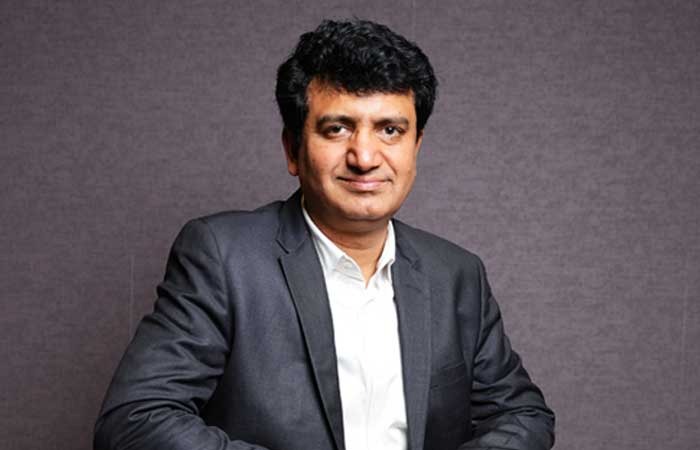
Barad Sharma, CEO, Amberg Engineering, discusses the future of underground construction, digital engineering, and sustainable infrastructure development.
What are the key trends currently shaping the underground construction and tunnelling market in India, and how do you see this sector evolving over the next decade?
India's underground sector is moving to a long-term infrastructure programme. We are witnessing increased investments in the underground sector for metros, railway, road, high-speed rail, hydropower and urban utility corridors. Projects are becoming longer, deeper and more complex, often in congested urban areas, under river/waterbodies or difficult Himalayan geology.
Over the next decade, I expect greater mechanisation, wider use of digital tools and increased emphasis on risk management, safety alongwith lifecycle performance. Owners are also becoming more conscious that spending adequately on investigations and engineering at the beginning can save significant time and cost during construction.
The global construction industry continues to face geopolitical uncertainties, supply chain disruptions, and fluctuating commodity prices. How have these developments impacted underground infrastructure projects worldwide and in India? What strategies is Amberg Engineering adopting to mitigate these challenges?
Underground projects are particularly sensitive to disruptions because specialised equipment, instrumentation and some construction consumables are sourced globally.
At Amberg, we seek to mitigate such risks through early engineering, timely identification of long-lead items, and optimisation of designs. Wherever technically feasible, we also incorporate solutions that enable the use of locally manufactured materials, equipment and systems, reducing dependence on imported items, improving procurement flexibility, and supporting the Make in India initiative. In addition, our close coordination between global experts and local teams helps us respond quickly to changing market conditions.
How important are advanced investigation techniques, digital engineering, and predictive technologies in reducing project risks and improving execution efficiency?
A significant proportion of delays, cost overruns and contractual disputes in the underground projects can be traced back to insufficient understanding of subsurface conditions.
Advanced investigation technique like I-Systems Ground Investigation (I-GI) is being used by Amberg, that includes desk studies, traverse geological mapping, I-Logging, geophysical survey and optimised geotechnical investigation to develop the most reliable ground model which serves as strong input to design phase.
During excavation, predictive technologies such as Tunnel Seismic Prediction (TSP), being developed by Amberg, provides valuable information on geological conditions ahead of the tunnel face, helping identify fault zones, weak rock masses, water-bearing strata and other anomalies before they are encountered.
Within the Amberg Group, technologies such as automated surveying and monitoring systems, railway asset management solutions, and digital tunnel inspection tools help bridge the gap between design, construction, and operation, ensuring continuity of information throughout the asset lifecycle.
How is Amberg Engineering leveraging digitalisation to enhance project planning, design, construction, and lifecycle management in India?
Digitalisation is no longer optional for complex underground projects. Amberg uses BIM-based workflows, advanced surveying techniques, automated monitoring systems, and digital platforms for managing construction data.
One of the key advantages is that information generated during investigation, design and construction can be retained and used during operation and maintenance. This helps owners move from reactive maintenance towards condition-based asset management.
How can underground construction contribute to more sustainable urban development, and what engineering practices should project owners adopt to minimise environmental impact?
Underground infrastructure can support sustainable urban growth by reducing surface land requirements, preserving environmentally sensitive areas and improving mobility in densely populated cities.
At the project level, sustainability also means optimising tunnel alignments, reducing excavation quantities where feasible, reusing excavated materials, improving energy efficiency and designing assets for longer service lives with appropriate monitoring systems. Decisions taken during the planning and design stages have the greatest influence on the overall environmental path.
Could you share your strategic priorities for the Indian market over the next three to five years?
India is one of the most promising underground infrastructure markets globally and remains strategically important for us.
Our focus over the next three to five years is to strengthen our capabilities in underground design and engineering solutions, digital infrastructure monitoring and asset management covering the entire lifecycle of an asset. We also intend to expand the deployment of Amberg Group technologies in India, develop stronger partnerships with local stakeholders and continue investing in building a highly specialised Indian team capable of delivering projects both domestically and internationally.
In India, what policy reforms or technological interventions would you recommend to improve project delivery, enhance safety standards, and build world-class engineering?
The most important improvement would be to place greater emphasis on thorough ground investigations using latest technologies before project execution. Spending one or two percent more at pre-construction stage can often prevent much larger cost and time overruns later.
There is also a need to encourage quality-based design consultant selection on project specific basis, promote collaborative contracting mechanisms, and adopt internationally recognised safety standards. Wider use of digital engineering tools and structured capacity-building initiatives would further enhance project delivery.
The industry continues to debate the optimal use of NATM, TBMs, and conventional drill-and-blast methods. How should project developers determine the most appropriate tunnelling methodology for Indias varied geological conditions?
The most appropriate tunnelling method varies project to project rather than a general assessment of which method is better.
Geology remains the primary factor; however, tunnel length, cross-section, groundwater conditions, environmental constraints, available construction time and overall economics must also be considered. In many cases, hybrid approaches may offer the most practical solution. The key is to undertake a comprehensive techno-economic assessment rather than selecting a methodology based solely on initial cost or prevailing market trends.
How is Amberg Engineering contributing to knowledge transfer, skill development, and the adoption of global engineering standards within the Indian tunnelling ecosystem?
Knowledge transfer is essential if India is to independently execute increasingly complex underground infrastructure projects in the future.
At Amberg, we contribute through project-based mentoring, technical workshops, specialised training programmes, and exposure to international best practices. Our technical directors are internationally experienced foreign experts who are based in India and actively involved in ongoing projects, providing continuous mentorship and guidance to our domestic team.
Our objective is not merely to apply global standards in India, but to adapt and embed them within the local ecosystem, enabling Indian engineers and organisations to progressively undertake more challenging assignments with greater confidence and capability.
 A-303, Navbharat
Estates,
Zakaria Bunder Road,
Sewri (West), Mumbai - 400 015,
Maharashtra, India
A-303, Navbharat
Estates,
Zakaria Bunder Road,
Sewri (West), Mumbai - 400 015,
Maharashtra, India +91-22-24193000
 Subscriber@ASAPPinfoGlobal.com