Our priorities will focus on strengthening local manufacturing
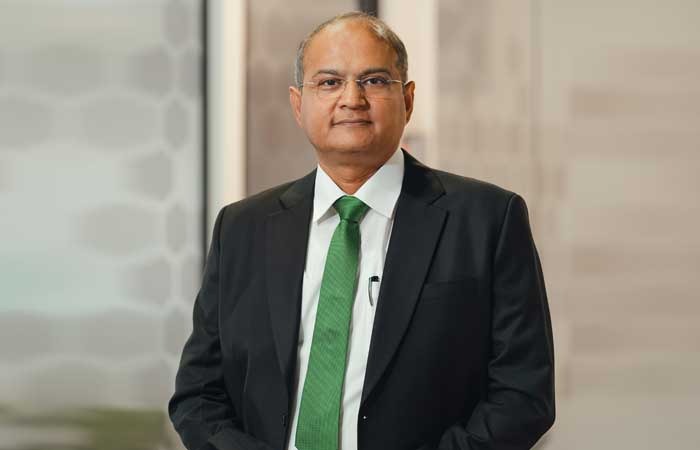
Seshan Iyer, President Bearings & Industrial Solutions, Schaeffler India
What are the key products, technologies or solutions you are showcasing at bauma ConExpo India, and what customer requirements have driven their development?
At bauma ConExpo 2026, Schaeffler will showcase its comprehensive Motion Technology portfolio for the construction equipment industry, with a strong focus on improving efficiency, reliability, productivity, and sustainability across construction equipment applications.
Key highlights will include our low-friction bearing solutions, which help reduce energy consumption, extend service life, and lower the total cost of ownership. Alongside these, we will present advanced powertrain and chassis components designed to deliver robust performance in demanding operating environments.
We will also showcase innovative sensor technologies that provide valuable insights into machine loads and operating conditions, enabling smarter and more efficient fleet management. In addition, our electromechanical actuators support precise, reliable, and energy-efficient operation of auxiliary functions. These solutions reflect the industry’s shift toward smarter, connected, and increasingly electrified construction equipment. Our Industrial Lifetime Solutions portfolio will further demonstrate how digital condition monitoring and predictive maintenance can improve equipment availability, optimize maintenance planning, and minimise unplanned downtime.
As construction equipment manufacturers continue to focus on enhancing productivity, equipment uptime, and operational efficiency while meeting evolving sustainability requirements, our development efforts are increasingly application-driven. We work closely with customers to deliver solutions that address real-world operating challenges and create value throughout the equipment lifecycle.
Through this portfolio, we aim to demonstrate how Schaeffler supports customers not only through world-class components but also through integrated Motion Technology solutions that enhance machine performance, reliability, and long-term lifecycle value.
How are trends such as electrification, automation, connectivity, emission reduction and energy efficiency influencing your component and technology roadmap?
The construction equipment industry is undergoing a rapid transformation, driven by growing demand for higher efficiency, greater reliability, improved productivity, and smarter machine operation. These trends are significantly influencing Schaeffler’s technology roadmap and shaping our investment in future-ready solutions.
Electrification is accelerating demand for high-efficiency electric motors and advanced mechatronic systems, while automation and connectivity are driving the adoption of sensors and intelligent technologies that provide deeper visibility into machine health, performance, and operating conditions. At the same time, increasing emphasis on reducing emissions and improving energy efficiency is creating demand for low-friction components and optimised system solutions that deliver superior performance with lower energy consumption.
In response, our roadmap is evolving toward greater integration of mechanical, electrical, mechatronic, and digital technologies. Equally important is our collaborative approach to innovation. By working closely with customers, we ensure that new technologies are aligned with their application requirements and future business needs. Our objective is to translate these industry trends into practical solutions that help customers improve efficiency, reliability, and productivity.
How much of your focus is shifting towards localisation in India, and what opportunities do you see for India as a global sourcing and export base?
Localisation remains a key strategic priority for Schaeffler India, enabling us to strengthen supply chain resilience, improve responsiveness, and stay closer to our customers. With five manufacturing facilities supported by strong local engineering and R&D capabilities, we have established a robust manufacturing ecosystem in the country, achieving an overall localisation level of approximately 80 per cent.
Going forward, our focus is on deepening this ecosystem by expanding the portfolio of critical industrial components manufactured in India. As manufacturing capabilities, supplier networks, and engineering expertise continue to evolve, India is increasingly positioned to become an important sourcing and export hub within Schaeffler’s global network.
Our ambition is to manufacture products in India that meet global quality and performance standards while serving both domestic and international markets. A key milestone in this journey has been the BIS certification of our Maneja and Savli plants for cylindrical roller bearings and deep groove ball bearings under the new Indian standards. This achievement underscores our commitment to strengthening local manufacturing while maintaining the technological excellence and quality standards associated with Schaeffler worldwide.
How are geopolitical uncertainties, supply-chain disruptions and fluctuations in commodity and logistics costs affecting your business, and how are you mitigating these challenges?
The global operating environment continues to be shaped by geopolitical developments, supply chain disruptions, and fluctuations in commodity and logistics costs. These dynamics reinforce the need for resilient, agile, and responsive supply chains while maintaining the high standards of quality, delivery, and reliability that customers expect from Schaeffler.
In India, our strong manufacturing footprint and growing localisation efforts provide a solid foundation for managing these challenges effectively. We continue to strengthen our local supplier ecosystem, diversify sourcing where appropriate, and enhance supply chain visibility through improved planning and digital tools.
At the same time, Schaeffler’s global manufacturing and sourcing network enables us to leverage resources across regions and respond flexibly to changing market conditions. Our strategy is to balance the benefits of localisation with the strengths of our global footprint, ensuring business continuity, competitiveness, and long-term value creation for our customers.
As India moves towards higher ethanol blending, what changes or adaptations are required in engines, fuel systems and components, and how are you preparing your products and technologies for this transition?
The move toward higher ethanol blending is an important element of India’s energy-transition journey and reflects the industry’s efforts to diversify fuel sources and improve sustainability. As powertrain technologies continue to evolve, it is important to understand the changing requirements of customers and support them through this transition.
At Schaeffler, we recognise that multiple powertrain and fuel technologies are likely to coexist for the foreseeable future. Accordingly, we are developing solutions across a broad range of technology pathways and working closely with customers to address their specific application requirements.
Our focus remains on understanding evolving market needs and providing the right technologies and engineering expertise to support our customers’ development plans. As fuel technologies continue to advance, we will continue to innovate and collaborate to deliver solutions that are optimised for future mobility and industrial applications.
What are your key business priorities for the Indian market over the next two to three years, and where do you see the biggest growth opportunities?
India remains one of Schaeffler’s most important growth markets, supported by strong investments in infrastructure, industrialisation, manufacturing, and the ongoing energy transition. Over the next two to three years, our priorities will focus on strengthening local manufacturing and supply chain resilience, expanding our industrial and automotive portfolios, increasing localisation, enhancing engineering and R&D capabilities, and accelerating digitalisation and sustainability initiatives across our operations and customer solutions.
We see significant opportunities emerging from the rapid growth of India’s manufacturing sector, the increasing adoption of digital technologies, rising demand for energy-efficient and sustainable solutions, and government initiatives such as Make in India, which continue to encourage domestic production and innovation.
At the same time, customers are placing greater emphasis on reliability, productivity, and operational efficiency. This is creating strong demand for advanced motion technologies, predictive maintenance solutions, automation, and intelligent industrial systems. By aligning our strategy with these market trends, Schaeffler aims to further strengthen its position as a trusted technology partner while contributing meaningfully to India’s long-term industrial growth and competitiveness.
 A-303, Navbharat
Estates,
Zakaria Bunder Road,
Sewri (West), Mumbai - 400 015,
Maharashtra, India
A-303, Navbharat
Estates,
Zakaria Bunder Road,
Sewri (West), Mumbai - 400 015,
Maharashtra, India +91-22-24193000
 Subscriber@ASAPPinfoGlobal.com