Technology Shift Reshaping the Aggregates Industry
India’s economic growth is closely linked to the development of world-class infrastructure. From highways, railways, and airports to industrial corridors, urban mobility systems, housing, and smart cities, infrastructure investments are reshaping the nation’s economic landscape. Government initiatives and large-scale public and private sector investments continue to accelerate the pace of development, creating sustained demand for construction materials, aggregates, and equipment across the country.
As infrastructure projects grow in scale and complexity, the industry must go beyond capacity expansion and focus on improving productivity, efficiency, and sustainability. Meeting the country's long-term development aspirations will require greater adoption of advanced technologies, digital solutions, automation, and innovative operating models across the construction and mining value chain. This transformation will play a critical role in building a more competitive, resilient, and future-ready infrastructure ecosystem.
At the centre of this transformation lies the construction and aggregates industry. As project timelines become tighter and execution complexities increase, equipment is no longer evaluated solely on capacity and durability. Customers today face mounting challenges around margins, rising operating costs, skilled workforce availability, and project execution. As a result, they increasingly seek solutions that deliver higher productivity, improved reliability, lower lifecycle costs, and greater operational predictability.
The industry’s next phase of growth will therefore be driven not by machines alone, but by technology.
From Equipment to Technology-Driven Productivity
Going forward, manufacturers that can combine equipment with advanced technologies and value-added services will have a clear competitive advantage. The technological edge that companies build today will determine market leadership well beyond 2030.
This shift is particularly visible in the aggregates sector, which forms the backbone of road, rail, housing, and industrial infrastructure development. Modern crushing and screening technologies are increasingly designed to maximise throughput while minimising energy consumption and operating costs.
For example, Metso's Nordberg® HP350e™ cone crusher and Nordberg® C117™ jaw crusher leverage advanced crusher kinematics, optimised chamber designs, and higher power capabilities to deliver increased productivity within the same plant footprint. The objective is no longer simply to produce more tonnes. The objective is to produce more tonnes with fewer resources, lower energy consumption, and better profitability.
Automation: The Productivity Multiplier
As project sizes increase and execution schedules tighten, automation is becoming an essential enabler of productivity.
Modern crushing plants increasingly use intelligent automation systems to monitor performance, optimise operating conditions, and reduce manual intervention. Metso’s IC™ crusher automation system continuously tracks key operating parameters and automatically adjusts process conditions to maintain optimal performance.
The benefits extend beyond productivity. Automated systems reduce human error, improve process consistency, and help identify operational issues before they develop into costly equipment failures. In an industry where skilled manpower remains a challenge, automation reduces dependency on manual adjustments while ensuring repeatable and efficient operations.
For customers, this translates into higher uptime, reduced operating costs, improved safety, and more predictable business outcomes.
Data, Connectivity and Predictive Maintenance
The future of construction equipment lies in connected operations.
Digital technologies are transforming equipment from standalone machines into intelligent, data-driven productivity platforms. Real-time visibility into plant operations is enabling customers to make faster and better decisions while reducing unplanned downtime.
Metso Metrics, a cloud-based monitoring and analytics platform, provides customers with real-time insights into equipment health, utilisation, performance, and availability. Plant operators can remotely monitor assets, identify emerging issues, receive automated alerts, and plan maintenance activities proactively.
When combined with automation systems, digital monitoring creates a powerful framework for predictive maintenance. Instead of reacting to breakdowns, customers can identify potential issues before they impact production.
This shift is particularly important as construction and aggregate operations expand beyond major metropolitan areas into remote project locations across India. Digital tools enable equipment manufacturers and service teams to support customers regardless of geography, ensuring higher equipment availability and improved operational efficiency.
For an industry where every hour of downtime has a direct impact on profitability, data-driven decision-making is rapidly becoming a necessity rather than a luxury.
Lifecycle Services: Supporting Customers Beyond Equipment
As operating costs continue to rise, customers increasingly look for long-term partnerships rather than one-time equipment purchases.
Recognising this shift, Metso has significantly expanded its Lifecycle Services (LCS) portfolio to help customers maximise equipment reliability, productivity, and operational performance throughout the asset lifecycle.
Metso currently supports more than 160 aggregate customer sites across India through Lifecycle Services agreements, demonstrating strong customer confidence in the company's support model.
These programs include dedicated site-based service engineers, on-site spare parts availability, preventive and predictive maintenance planning, inventory management, equipment performance monitoring, and customised productivity reporting.
For customers seeking component protection and maintenance cost predictability, Metso also offers Equipment Protection Plans (EPP), or LCS Lite, which provide tailored coverage for critical equipment components while ensuring spare part availability and reducing unexpected maintenance expenses.
The outcome is improved reliability, reduced breakdowns, higher machine availability, longer equipment life, and lower operating costs.
Electrification and Sustainable Growth
Alongside digitalisation, electrification is emerging as one of the most significant trends shaping the future of construction equipment.
As environmental expectations increase and fuel costs remain volatile, customers are actively evaluating electrically driven and hybrid crushing and screening solutions that reduce emissions and operating expenses while maintaining productivity.
Metso is advancing this transition through a range of electric and hybrid mobile and stationary solutions that combine high performance with improved energy efficiency. Electrically driven process functions help reduce fuel consumption, lower emissions, minimise noise, and improve overall sustainability.
Similarly, modular solutions such as FIT™ crushing stations enable faster installation, optimised energy utilisation, and greater operational flexibility.
Another major sustainability opportunity lies in manufactured sand (M-sand). As natural river sand resources decline and environmental regulations become stricter, aggregate producers are increasingly adopting advanced sand production technologies. Through integrated crushing, shaping, and washing solutions, producers can generate premium-quality manufactured sand while maximising resource utilisation and minimising waste.
Building India's Technology-Led Future
India's infrastructure story is evolving into a broader industrial growth story. The country is increasingly being viewed as a global manufacturing hub, supported by strong domestic demand, favourable policy frameworks, and sustained infrastructure investments.
To support this opportunity, companies are investing heavily in local engineering, innovation, and manufacturing capabilities. Metso has been present in India for over three decades and continues to strengthen its technology footprint through engineering and R&D investments. The company operates dedicated engineering centres in Alwar and Vadodara, supporting aggregates and mining technologies, along with refurbishment and service capabilities in Alwar and Bengaluru.
Significant investments have also been made in manufacturing, foundries, distribution centres, and service networks across India. Today, Metso employs more than 3,500 people in the country, supports customers through nationwide sales and service operations, and exports nearly half of its India production to global markets.
Most importantly, Metso continues to invest in technologies that will shape the next generation of customer solutions, including automation, predictive maintenance, digital analytics, electrification, and advanced process optimisation.
As India moves toward Mission 2030 and the longer-term vision of Viksit Bharat 2047, technology will be the defining differentiator. Manufacturers that invest in innovation today will be best positioned to support the country's infrastructure ambitions tomorrow. The winners of the next decade will not simply be equipment suppliers; they will be technology partners helping customers improve productivity, sustainability, profitability, and operational resilience.
India has the demand, the ambition, and the policy momentum. With continued investment in advanced technologies and manufacturing capability, the country is well positioned to become not only one of the world's largest construction equipment markets, but one of its most influential construction equipment powerhouses.
ABOUT THE AUTHOR:
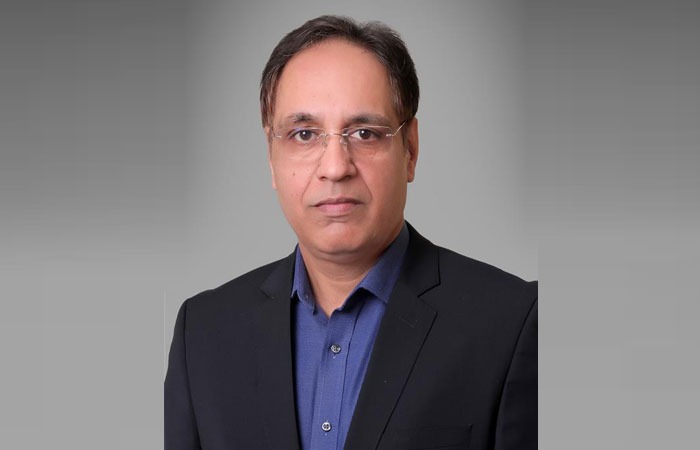
Harpreet Singh is Vice President - Aggregates Sales, India at Metso.
 A-303, Navbharat
Estates,
Zakaria Bunder Road,
Sewri (West), Mumbai - 400 015,
Maharashtra, India
A-303, Navbharat
Estates,
Zakaria Bunder Road,
Sewri (West), Mumbai - 400 015,
Maharashtra, India +91-22-24193000
 Subscriber@ASAPPinfoGlobal.com