Technology is reshaping modern backhoe loaders
Puneet Vidyarthi, Head of Brand Marketing, CASE Construction Equipment, APAC & India, speaks on the outlook for the Indian backhoe loader market over the next five years.
What is your outlook for the Indian backhoe loader market over the next five years, and how do you see Indias potential as a global export hub?
Indias construction equipment industry has shown stable but uneven performance over the past few years, with the backhoe loader segment remaining one of its most resilient categories. FY26 reflected this mixed trend, where overall domestic demand for construction equipment remained under pressure, but the sector still closed the year on a stable note supported by gradual recovery in momentum. While domestic sales saw some correction, demand stability was supported by continued activity in infrastructure, road development, housing, and rural projects, where backhoe loaders remain widely deployed due to their versatility.
A key highlight of FY26 was the strong support from exports, which grew significantly and helped offset domestic cyclicality, reflecting Indias growing relevance in global markets. Within equipment segments, infrastructure-linked categories such as road construction and earthmoving also showed recovery signals, indicating improving execution on the ground. Over the next five years, the outlook remains positive, with demand expected to strengthen as project pipelines stabilise and mechanisation deepens across rural and urban markets.
At the same time, Indias role as a global export hub is expected to expand further, supported by manufacturing capability, cost competitiveness, and increasing acceptance of Indian-made equipment in international markets. The market is also entering a more mature phase, where long-term success will depend on adaptability to regulatory changes, evolving customer expectations, and stronger focus on lifecycle value rather than volume alone.
Despite the growing adoption of specialised equipment, what factors sustain the dominance of backhoe loaders in the Indian market?
Despite the growing adoption of specialised equipment, backhoe loaders continue to hold a strong position in the Indian construction equipment market due to their versatility, cost efficiency, and suitability across a wide range of infrastructure needs. Their ability to perform multiple functions such as excavation, loading, digging, and material handling within a single machine makes them a practical choice for contractors working across varied and changing project sites. In many projects, especially where requirements shift frequently, equipment utilisation becomes important. In such cases, a single machine that can manage multiple tasks offers better value compared to deploying different specialised machines, which can increase both cost and operational complexity. This flexibility is one of the key reasons backhoe loaders continue to remain widely used across urban and rural infrastructure projects in India.
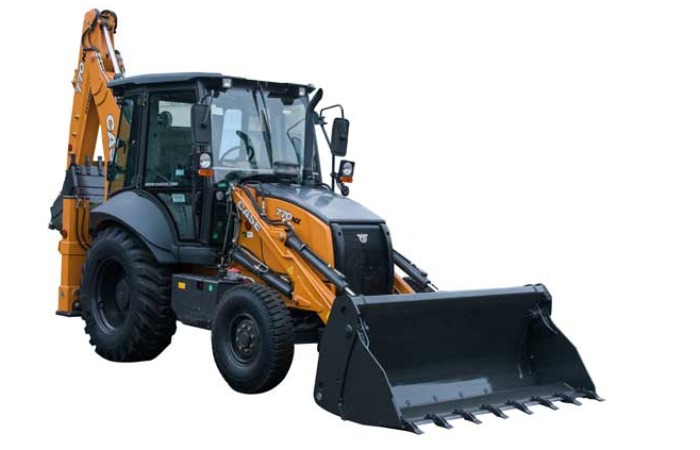
This demand is further supported by Indias ongoing infrastructure development across roads, housing, mining, and urban projects. Large-scale programmes such as Bharatmala under PM Gati Shakti, the Viksit Bharat Gati Shakti Mahamarg initiative, along with continued investments in rural connectivity and cities, are driving consistent equipment requirement across geographies. At CASE, our backhoe loaders are designed for these conditions. Models such as the 770NX and 851NX are built to deliver consistent performance across different site conditions while ensuring ease of operation. Their lower upfront cost, along with ease of transport and maintenance, also makes them suitable for both contractors and rental businesses, supporting their continued relevance in the market.
What technological advancements are shaping modern backhoe loaders, and how are they enhancing productivity and reducing lifecycle costs?
Technology is reshaping modern backhoe loaders by improving connectivity, safety, and machine intelligence, which together enhance on-site efficiency. At CASE Construction Equipment, machines are equipped with myCASEConstruction telematics, which enables real-time tracking of fuel consumption, machine performance, and service requirements. Supported by IoT sensors and AI-driven analytics, it helps identify early warning signs of potential issues and enables planned maintenance instead of reactive repairs. This reduces unplanned downtime and improves machine availability on site. These digital systems also help operators and fleet owners make better decisions by offering clear visibility on machine health and utilisation.
Safety advancements are also central to modern machine design, especially in demanding mining and construction environments. ROPS and FOPS certified cabins are provided to protect operators from rollovers and falling objects, while wide-view cabin design improves visibility in active working zones. Proximity sensors further support safe operations by alerting operators to nearby obstacles, helping reduce risk during manoeuvring in confined or crowded sites. These features ensure safer control of machines while maintaining operational efficiency in challenging conditions.
Alongside digital and safety upgrades, operator comfort is playing a key role in improving productivity. Low vibration and reduced noise cabins help minimise fatigue during long working hours, while ergonomic seating and climate control improve comfort and focus. Intuitive digital displays and simple controls make daily operations easier and more efficient. Together, these improvements directly enhance productivity through better machine handling and reduced operator strain. At the same time, fuel efficiency, predictive maintenance, and higher machine uptime help reduce lifecycle costs. Lower breakdown rates, optimised servicing cycles, and improved asset utilisation contribute to a lower total cost of ownership, ensuring stronger long-term value for customers.
What are the key challenges facing the industry today, including regulatory changes, rising input costs, and the need for skilled operators?
The industry is operating in an environment shaped by cost pressures and evolving compliance requirements. Rising input costs, especially raw materials like steel and key components, continue to impact pricing and margins. Fuel price fluctuations further add to operating expenses for customers, particularly those managing multiple machines across large infrastructure projects. Supply chain disruptions also remain a concern, affecting production planning and sometimes delaying equipment availability. These factors together are making cost management and execution more complex across the value chain.
At the same time, regulatory norms are becoming stricter, with emission standards driving continuous upgrades in product design and technology. While this supports cleaner and more efficient machines, it also increases development effort and timelines for manufacturers. Another key challenge is the shortage of skilled operators, as equipment becomes more advanced and technology-led. At CASE, this is being addressed through focused CSR initiatives such as the Hunar program and Project Vijeta, which train youth in machine operation and construction equipment sales through structured learning and on-ground exposure. These efforts help bridge the skill gap and support industry readiness for future requirements.
 A-303, Navbharat
Estates,
Zakaria Bunder Road,
Sewri (West), Mumbai - 400 015,
Maharashtra, India
A-303, Navbharat
Estates,
Zakaria Bunder Road,
Sewri (West), Mumbai - 400 015,
Maharashtra, India +91-22-24193000
 Subscriber@ASAPPinfoGlobal.com