The equipment has to be self-sufficient in most ways
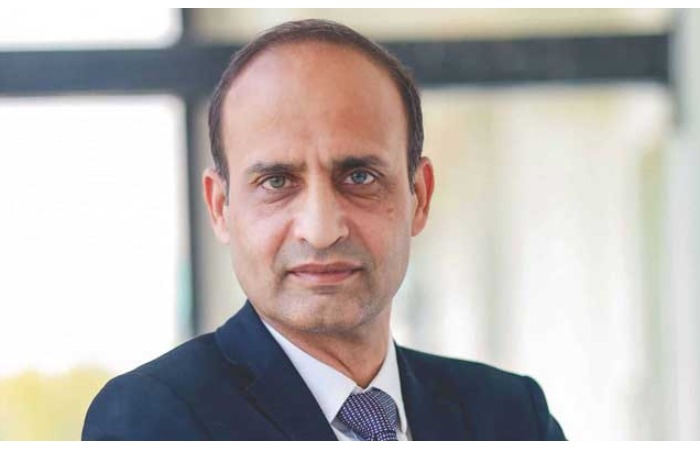
Sanjeev Bajaj, Chief Officer, Construction Equipment Business Division, Escorts Kubota Limited
Escorts Kubota showcased several new products at bauma India 2026. Could you take us through the key products on display and their salient features?
At every exhibition, we get an opportunity to showcase newer technologies based on evolving customer requirements. What we have observed is that customers are increasingly looking for greater versatility in material handling equipment, including higher lifting heights and higher load-carrying capacities. At the same time, availability of skilled operators is becoming a challenge, which means equipment needs to become more self-sufficient.
Our focus has been on offering machines with higher capacities, improved reliability and enhanced safety features. Intelligent ergonomically designed dashboards help operators select the right operating mode, while lower creep speeds support safer pick-and-carry operations. These features reduce dependence on manual intervention and improve overall jobsite safety.
At bauma India, we introduced new categories, including 25-tonne High-End and 16-tonne Hydra cranes, designed with higher lifting capacities and greater application flexibility. These machines are suitable for both contractual and rental segments due to their operational efficiency. We also showcased our new Backhoe Loader powered by a Kubota engine, new generation hydraulics which focuses on fuel efficiency, reliability, durability and resale value.
How are customer expectations changing in the construction equipment market?
Customers are increasingly looking for equipment that can deliver higher productivity, better fuel efficiency and improved reliability. Apart from performance, they are also becoming more conscious about lifecycle value, including durability and resale value.
The availability of skilled operators has also become an important factor. Therefore, equipment manufacturers need to focus not only on machine performance but also on technologies and features that simplify operations and improve safety.
Operator availability and skill levels remain key challenges for the industry. What initiatives is Escorts Kubota undertaking to address this?
We are working on multiple initiatives to address the skill gap. Recently, we conducted a CSR programme where unemployed youth from the Naxalite-affected belt were trained on our cranes. We also collaborated with customers who were willing to hire these trained operators. Another batch is currently undergoing training, and we will continue these initiatives.
Our training department also has a dedicated customer training cell that visits sites regularly and trains operators. This helps customers understand the technology better, become comfortable with the equipment and utilise the available features effectively.
We work closely with site safety teams to understand their requirements and upgrade our training modules accordingly. The focus is on improving operator capability while ensuring compliance with site safety standards and enhancing productivity.
What role does localisation play in Escorts Kubota’s manufacturing strategy?
Today, we are nearly 98 per cent localised in terms of component sourcing. Most of our vendors are located close to our manufacturing facilities, and many have been associated with us for several years. Our top suppliers consistently meet the quality standards required for our products.
We will continue enhancing localisation, not only for products offered in India but also for products that can be exported through the Kubota channel globally. A significant amount of work is being done on component development and strengthening the local supply ecosystem.
How do you view the growth potential of India’s construction equipment industry?
The construction equipment industry in India has significant growth potential. As the industry progresses towards becoming the second-largest construction equipment market globally, there is considerable headroom for expansion. We believe the next decade will be an important growth phase for the sector.
Within our existing portfolio, which represents around 52 per cent of the total industry, we see opportunities to increase our market presence and build larger volumes. To support this growth, we are enhancing our manufacturing capacity, including the development of a new plant near Jewar, Greater Noida.
We are also exploring opportunities to localise additional equipment for exports through the Kubota channel and expand beyond our current product portfolio. We see this as a phase of growth and business expansion.
 A-303, Navbharat
Estates,
Zakaria Bunder Road,
Sewri (West), Mumbai - 400 015,
Maharashtra, India
A-303, Navbharat
Estates,
Zakaria Bunder Road,
Sewri (West), Mumbai - 400 015,
Maharashtra, India +91-22-24193000
 Subscriber@ASAPPinfoGlobal.com