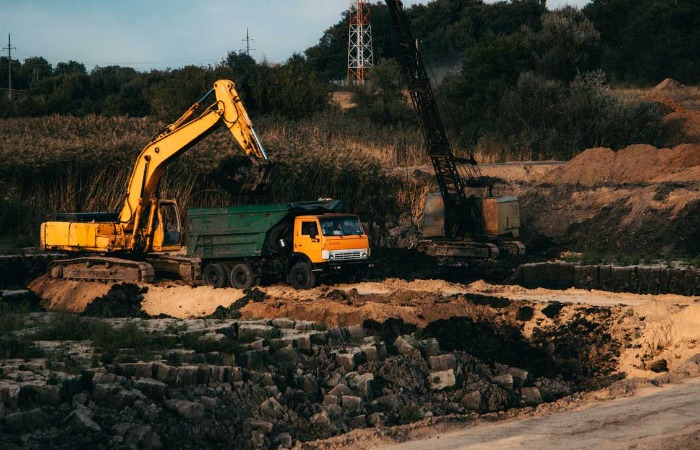
CE Industry: The Productivity Race
India’s construction equipment industry is entering a phase where productivity, intelligence and lifecycle economics are becoming as important as machine capacity. As project timelines shrink and operating margins come under pressure, the industry is moving beyond the traditional equation of buying a machine at the lowest price. Contractors increasingly want equipment that delivers higher utilisation, lower operating costs, greater uptime and measurable productivity across the life of the machine.
The shift is visible across the equipment ecosystem. Excavators, pavers, rollers and other machines are becoming connected; engines are evolving into intelligent power-management systems; tyres are being engineered for specific applications; and even steel is moving towards lighter, stronger and more sustainable grades. The common thread is clear: technology is no longer an optional differentiator. It is becoming central to equipment performance.
Productivity becomes the new benchmark
According to Sandeep Singh, Managing Director, Tata Hitachi Construction Machinery Company, today's customer is considerably more informed about equipment and evaluates a machine on much more than its purchase price. Productivity, fuel efficiency, lifecycle cost, operator comfort, connectivity, reliability and durability are increasingly influencing buying decisions.
The change is also being driven by the economics of construction. Contractors are facing tighter project schedules, higher financing costs and intense competition, while having to execute projects within increasingly compressed timelines. This makes machine uptime particularly critical.
For large contractors and mining operators, lifecycle economics become even more significant. Machines in mining applications can operate for 20 to 23 hours a day and accumulate thousands of operating hours annually. In such environments, productivity cannot be separated from site management and equipment synchronisation. The ability to optimise the entire fleet, rather than individual machines, is becoming an important source of competitive advantage.
The same emphasis on productivity is reshaping road construction. Abhijit Som, Managing Director, FAYAT Road Equipment Division – India, points to the advances already made in asphalt paving, where automated sensors and advanced levelling technologies have significantly improved execution quality.
However, he sees an important opportunity in compaction. While the industry has developed considerable knowledge around compaction, its application, particularly in soil and sub-base preparation, still has room for improvement. A stronger foundation can extend road life and reduce downstream costs. Technology that ensures the right compaction at the right stage could therefore deliver benefits well beyond the equipment itself.
Intelligence moves into the machine
Connectivity is rapidly becoming standard equipment rather than a premium feature. Telematics is already widely deployed on excavators, wheel loaders and backhoe loaders, although its utilisation varies significantly between customer segments.
For some customers, the requirement remains basic—machine location, operating hours, fuel consumption and start-stop monitoring. In mining, however, the focus is shifting towards advanced diagnostics, performance monitoring and predictive maintenance.
One of the barriers remains infrastructure. Machines operating in remote locations may still encounter weak cellular connectivity, making real-time data transmission difficult. Nevertheless, the direction of travel is unmistakable: equipment is becoming increasingly data-driven.
For Samir Kale, AVP and Global Leader – Construction and Agri Business, Kirloskar Oil Engines, the engine itself is becoming an intelligent node within this connected ecosystem.
The next leap in powertrain technology will not come from one development alone. Higher power density, improved engine management and alternative fuels will evolve simultaneously. While diesel remains dominant, sophisticated engine management systems are allowing engines to operate intelligently between power and economy requirements.
Artificial intelligence is also beginning to influence engine management. Sensors and electronic control units can identify abnormal operating conditions, monitor engine health and provide early warnings before failures occur. Vibration and other parameters can potentially indicate developing component problems, enabling predictive rather than reactive maintenance.
The longer-term opportunity is machine-to-machine communication, where engines across equipment working at the same site could eventually coordinate their operation to optimise fuel consumption, productivity and emissions.
Automation without losing control
Road equipment is also moving towards greater automation, although fully autonomous operation remains some distance away.
FAYAT has tested fully autonomous machines, demonstrating that the technology itself is possible. The greater challenge is deploying it safely in real-world road environments. For Som, the immediate opportunity lies in reducing operator intervention rather than eliminating the operator altogether.
Semi-automation can allow the machine to perform more functions while keeping the operator in control. This is particularly relevant in asphalt applications, where material temperature and timing directly influence quality. Connecting the asphalt plant, paver and roller into one coordinated production chain could further improve consistency.
Automation, therefore, is not simply about removing human intervention. It is about making the machine more capable, reducing variability and ensuring that the right process is followed consistently.
Components become engineered solutions
The transformation is equally evident among component suppliers. Farid Ahmed, Product Management (OHT), Asia Pacific, Middle East & Africa, BKT, notes that OEM expectations have moved well beyond the supply of standard, off-the-shelf tyres.
Equipment is operating across increasingly diverse conditions—from expressways and urban roads to quarries, tunnels and difficult mountainous terrain. As a result, tyre development is becoming increasingly application-specific.
BKT's extensive product portfolio reflects this shift, with different tread patterns, rubber compounds and tyre constructions designed for specific operating conditions. Tyre design can be optimised for factors such as heat dissipation, cut resistance, traction, rolling resistance and load-bearing capacity.
Digital simulation is further accelerating development. Manufacturers can model tread behaviour and wear at different stages of the tyre's life, helping optimise performance before the product reaches the field.
The next stage is the smart tyre. Tyre-pressure and temperature monitoring are already available in selected applications, but future systems could provide much richer data. Digital twins could maintain the tyre's operating history, including hours, temperature exposure and remaining tread life, helping determine when tyres should be rotated or replaced.
For autonomous equipment, tyres could become an important source of information about terrain, gradient and surface conditions. Electrification will create another set of requirements because heavier batteries and higher initial torque loads will demand different tyre characteristics.
Ahmed believes the long-term direction is clear: tyres will become “autonomous by design, intelligent by data, and sustainable by choice.”
From volume to smarter steel
The transformation extends to the basic materials used to build machines.
Gouranga Charan Rout, Senior Vice President, Electrotherm (India), highlights the volatility of raw-material and energy costs as a major challenge for steel manufacturers. With margins under pressure, the industry's response is increasingly centred on efficiency—improving yield, reducing energy consumption and developing specialised grades.
The demand is also shifting from simply more steel to better steel. High-strength and micro-alloyed grades can deliver equivalent or improved performance at lower thicknesses, reducing the amount of material required.
This concept of “smart steel” is closely linked to sustainability. Higher-strength grades can reduce material consumption, while renewable energy, energy-efficiency measures, hydrogen and carbon-capture technologies are being explored to reduce the carbon intensity of steelmaking.
Rout also points to the need for closer collaboration between industry and academia to accelerate metallurgical innovation and close technology gaps in advanced steel production.
Technology, however, cannot be separated from commercial reality. Contractors remain highly sensitive to equipment acquisition costs, and every technology investment must ultimately demonstrate a return.
For road equipment, Som sees machine utilisation as one immediate opportunity. Telematics can reveal idle time, machine utilisation and operating patterns, enabling fleet managers to identify inefficiencies.
Material efficiency offers another route. Recycling asphalt can reduce the requirement for new construction material, while warm-mix technologies can lower the energy required to heat asphalt. Such solutions demonstrate how technology can reduce cost not merely by making a machine more efficient, but by reducing waste throughout the construction process.
The challenge for OEMs and component manufacturers is therefore to develop technologies that translate directly into measurable outcomes—more tonnes moved, more kilometres paved, fewer breakdowns, lower fuel consumption or longer component life.
Building India's global equipment advantage
The industry's longer-term ambition goes beyond improving machines operating within India. India wants to become a global manufacturing and export hub for construction equipment.
Singh identifies localisation, manufacturing competitiveness and economies of scale as critical to achieving that ambition. Greater localisation of components such as hydraulics, electronics and undercarriages can strengthen the domestic value chain, while improved skills, lower logistics costs, competitive energy costs and a more supportive business environment can make Indian manufacturing more competitive globally.
The opportunity is substantial, but so is the challenge. Competing with established manufacturing ecosystems requires India to combine scale with technology, quality and cost competitiveness.
The road ahead will also be shaped by the energy transition. Som expects connected and increasingly autonomous road equipment, including electric machines, to become more commercially viable as energy technologies mature. Kale, meanwhile, believes internal-combustion engines will remain central to construction equipment for at least the next couple of decades, even as biodiesel, CNG, LNG, hydrogen and electrification find applications in specific segments.
The transition, therefore, is unlikely to follow a single path. Different applications will adopt different power solutions depending on duty cycles, infrastructure, payload, operating environment and economics.
What will remain constant is the industry's pursuit of productivity. The construction equipment of the future will not simply be stronger or larger. It will be more connected, more predictive, more application-specific and more efficient. Its components will increasingly communicate with each other, while data will help operators and fleet owners make better decisions.
For an industry preparing for India's infrastructure ambitions through 2047, the competitive advantage will ultimately come from how effectively technology can be converted into productivity—and how consistently that productivity can be delivered at the lowest sustainable lifecycle cost.
This article is based on insights shared during the session titled “Construction Equipment and Technology: Driving Productivity Under Pressure”, held at RAHSTA 2026 on July 9, 2026.
 A-303, Navbharat
Estates,
Zakaria Bunder Road,
Sewri (West), Mumbai - 400 015,
Maharashtra, India
A-303, Navbharat
Estates,
Zakaria Bunder Road,
Sewri (West), Mumbai - 400 015,
Maharashtra, India +91-22-24193000
 Subscriber@ASAPPinfoGlobal.com