From Domestic Scale to Global Relevance
India has a significant opportunity in construction and concreting equipment sector. The country is investing heavily in roads, railways, metros, airports, industrial infrastructure and urban development, creating demand across almost every segment of the industry. This gives manufacturers the scale to invest and grow.
But the bigger opportunity is beyond the domestic market.
India can become a base for construction equipment that is designed and manufactured for markets around the world. Reaching that point, however, will require the industry to look beyond manufacturing volumes and focus on the capabilities that make equipment competitive globally.
We believe India’s construction equipment industry has reached a stage where our engineering ambition must match the scale of our domestic market. By 2030, we should be developing more products in India for international applications, supported by stronger component engineering and dependable service overseas. Customers should choose Indian equipment for its performance and reliability as much as for its price.
One of the biggest areas of focus will be R&D and innovation. Construction sites are becoming more demanding, and customers are looking closely at productivity, fuel and energy consumption, safety, uptime and the total cost of operating a machine. Equipment manufacturers therefore need to spend more time understanding what is happening at the jobsite and less time looking at technology in isolation.
AI, IoT, connected equipment and intelligent controls will have a role to play. So will electric and other alternative power solutions. But the value of these technologies will ultimately depend on how well they solve practical problems for equipment owners and operators.
A practical example is automatic moisture correction in concrete batching plants. Variations in sand moisture can affect concrete consistency; Stetter’s moisture measurement and control systems allow batching adjustments to account for these changes. This helps maintain the intended mix proportions and reduces dependence on manual correction during production.
Manufacturing capability will have to develop at the same pace. India has made progress in building a domestic supplier base, but there is room to take this further. Localisation should not only mean sourcing more components within the country. Indian suppliers also need to develop the quality, consistency and engineering capabilities required to serve international markets.
This is closely linked to skills. The equipment industry will increasingly need people who understand mechanical engineering alongside electronics, software, automation and data. Developing this talent cannot be left to individual companies alone. The industry must prepare for future technologies and evolving needs, while continuing to innovate ahead of the curve.
One gap we would prioritise is the ability to diagnose faults across mechanical, hydraulic and electronic systems. As equipment becomes more connected, technicians must be able to interpret sensor readings and identify the underlying problem, rather than simply replace parts. We need more practical training on working machines, with manufacturers and training institutions jointly preparing people for these responsibilities.
Exports will be another important part of the equation. India's domestic market gives manufacturers an opportunity to build scale, but international markets provide a different benchmark. Equipment has to meet the expectations of customers who have many global options, particularly in areas such as reliability, safety, productivity and after-sales support.
This means export readiness needs to become part of how manufacturers plan for the future. Companies need to anticipate changing global requirements, invest in the right technologies and build capabilities that allow them to compete beyond cost. The next three or four years will be important in preparing for this shift, particularly in manufacturing, R&D, supplier development, technology and skills.
The wider ecosystem will also matter. Component manufacturers, technology providers, financing companies, rental businesses and training institutions all have a role in supporting the industry's growth. Policy can help by creating an environment that encourages investment, innovation and exports, but industry will also need to continue investing for the long term.
The decisions made now on manufacturing, R&D, supplier development, technology and skills will shape where the Indian construction equipment industry stands in 2030.
Between now and 2030, our priority should be to make export readiness part of product development from the outset. That means designing for different operating conditions, meeting the destination market’s requirements and ensuring that parts and trained service personnel are available to customers. The test of our progress will be whether an overseas customer confidently places a repeat order.
India has already built the demand needed to support a strong construction equipment industry. The next step is to build on that foundation and develop the capabilities to serve customers beyond our borders.
The real measure of progress by 2030 will not only be how much equipment India manufactures. It will be how well the industry anticipates future needs, adapts to changing customer requirements and innovates to build for what comes next.
ABOUT THE AUTHOR:
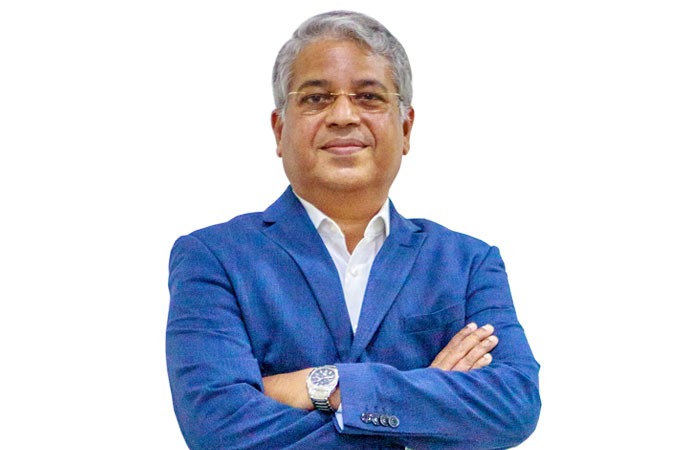
VG Sakthikumar is Chairman and Managing Director at Schwing Stetter India.
 A-303, Navbharat
Estates,
Zakaria Bunder Road,
Sewri (West), Mumbai - 400 015,
Maharashtra, India
A-303, Navbharat
Estates,
Zakaria Bunder Road,
Sewri (West), Mumbai - 400 015,
Maharashtra, India +91-22-24193000
 Subscriber@ASAPPinfoGlobal.com