
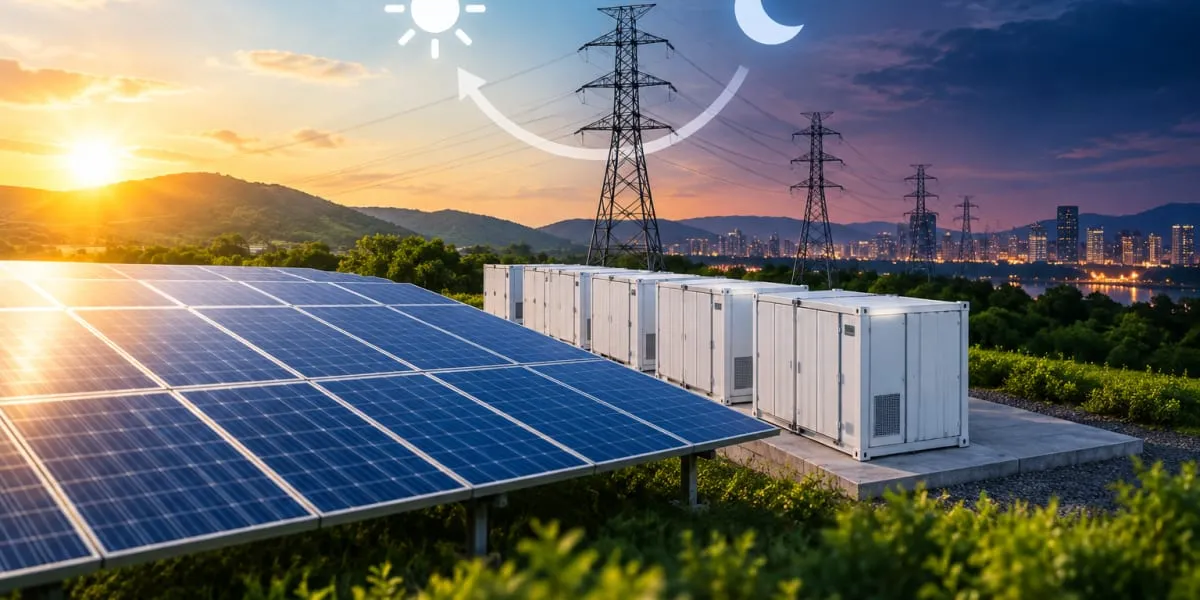
Maharashtra’s 2,500 MW RTC Tender Offers New Model for Solar Surplus
Maharashtra is introducing a renewable energy procurement model designed to convert surplus daytime solar generation into reliable round-the-clock electricity. The approach is intended to address the growing challenge faced by power distribution utilities as renewable capacity expands and electricity demand continues beyond daylight hours.
Maharashtra State Electricity Distribution Company (MSEDCL) floated a tender to procure 2,500 MW of round-the-clock renewable power for 25 years through tariff-based competitive bidding and an electronic reverse auction. The arrangement effectively combines 5,000 MW of non-firm solar capacity with other generation sources and storage to deliver 2,500 MW of firm power.
The Maharashtra Electricity Regulatory Commission (MERC) described the arrangement as a bespoke procurement structure. Unlike conventional contracts, it does not require bidders to own dedicated generation assets. Suppliers can source electricity from multiple generators and technologies, but must meet annual, monthly and peak-hour supply obligations, including a minimum 51 per cent traceable renewable energy component.
The structure places responsibility for sourcing, scheduling and balancing electricity with suppliers, while MSEDCL retains control over deployment. MERC said the discovered tariff of Rs. 5.90 per unit compared favourably with levelised tariffs of Rs. 6.31-8.90 per unit for recent long-term thermal power procurement. The tariff will remain fixed for the 25-year power purchase agreement, leaving suppliers exposed to changes in input power costs.
Four bidders offered a combined 6,250 MW. Adani Power secured the contract after quoting Rs. 6.30 per kWh initially and winning the reverse auction, ahead of Lalitpur Power Generation Company at Rs. 6.34 per kWh, MB Power at Rs. 6.48 per kWh and Sterlite Grid 42 at Rs. 9.50 per kWh. The contract includes penalties of up to 400 per cent of the applicable tariff for specified non-performance.
The model could reduce renewable energy curtailment, improve transmission network utilisation and limit the inefficient backing down of thermal plants. West Bengal has concluded a similar 2,500 MW procurement, comprising 1,750 MW and a 750 MW greenshoe option, with later tariff increases linked to the Wholesale Price Index. The two procurements may offer a template for states seeking dependable electricity with a substantial renewable component.
 A-303, Navbharat
Estates,
Zakaria Bunder Road,
Sewri (West), Mumbai - 400 015,
Maharashtra, India
 +91-22-24193000
 Subscriber@ASAPPinfoGlobal.com