
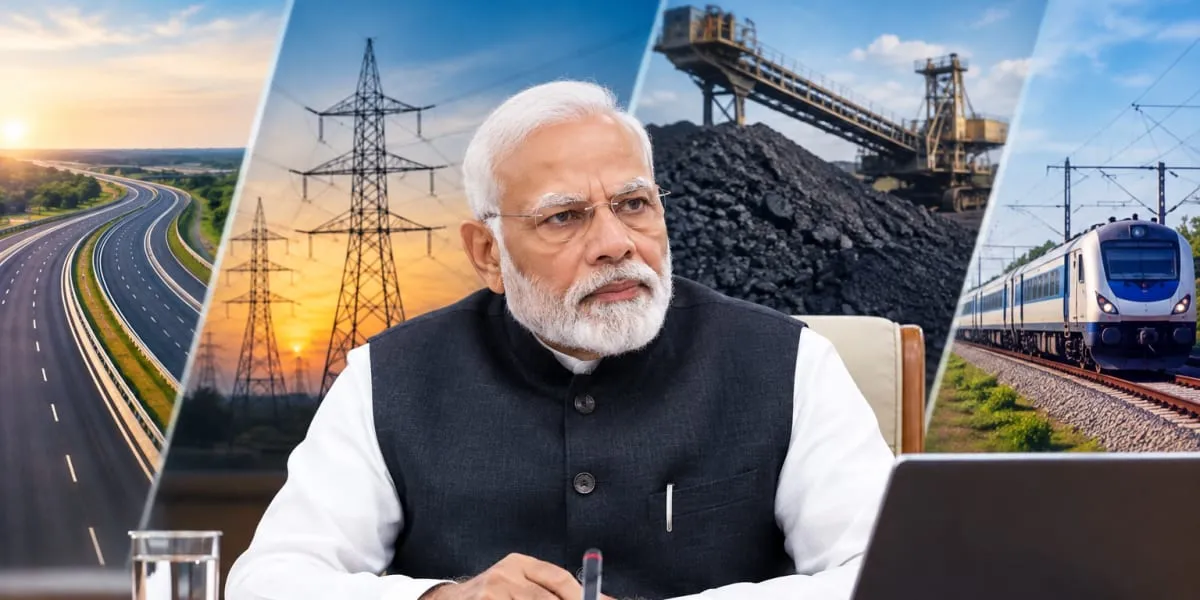
PM Modi Reviews Rs. 780 bn Projects, Pushes ITI Partnerships
Prime Minister Narendra Modi chaired the 55th meeting of PRAGATI, an ICT-enabled, multi-modal platform for proactive governance and timely implementation, at Seva Teerth on Wednesday. The platform brings the Central and State Governments together to resolve implementation challenges and improve the delivery of projects and welfare schemes.
The meeting reviewed five major infrastructure projects in the road, power, coal and railway sectors, with a combined cost of more than Rs. 780 bn. Modi said delays increase costs and postpone benefits for citizens, businesses and the wider economy. He asked Ministries and State Governments to assign clear responsibilities, set realistic timelines and maintain high construction standards.
During the sectoral reviews, Modi called for faster execution of the road project and greater emphasis on outcomes rather than outlays. For the coal project, he stressed that rehabilitation and resettlement should be completed in a timely and dignified manner. He also recommended innovative models for decentralised solar and wind generation near consumption centres, based on local resources and demand.
The review also covered the Industrial Training Institute ecosystem and implementation of the Pradhan Mantri Skilling and Employability Transformation through Upgraded ITIs programme, known as PM-SETU. Modi urged Chief Ministers and Chief Secretaries to lead efforts to strengthen ITIs and expand industry participation. He said industries should support institutional upgradation and help ensure that training reflects current and future workforce requirements.
He asked Public Sector Undertakings to assess future workforce needs, strengthen links with ITIs, provide practical training and apprenticeships, and give greater priority to trained ITI graduates. Modi also called for trades, curricula and training capacity to match industrial clusters, upcoming investments and local employer requirements. He advocated a Classroom–Company–Career approach, linking learning with workplace exposure and employment, which could create opportunities closer to home and reduce distress-driven migration.
 A-303, Navbharat
Estates,
Zakaria Bunder Road,
Sewri (West), Mumbai - 400 015,
Maharashtra, India
 +91-22-24193000
 Subscriber@ASAPPinfoGlobal.com