Rolling the Future of Infrastructure
The construction equipment sector is evolving rapidly, supported by strong infrastructure development, increased mechanization, and rising activity in mining, construction, and material handling sectors. Government-led investments in highways, smart cities, and rural development continue to create significant demand for high-performance OTR tyres. At the same time, digitisation and connected technologies are reshaping equipment performance, fleet management, and overall jobsite efficiency, while policy support, innovation, and collaboration are driving sustainable growth across the sector.
Major industry trends include the adoption of advanced materials, smart tyre technologies, sustainability-led manufacturing practices, and a preference for premium long-life tyres that lower the total cost of ownership. Together, these advancements are redefining the competitive landscape and elevating global benchmarks for reliability and efficiency in the off-highway tyres industry.
Digitisation has become central to improving the productivity and efficiency of construction equipment. Tyres play a critical role in enhancing the productivity and efficiency of construction equipment by delivering maximize traction, minimize downtime, and optimize fuel consumption. Our tyres are engineered using advanced compounds and technology that provide stability, & reliability. This ensures that construction machinery operates at peak performance across tough terrains.
Our radial tyre range is engineered to deliver uniform wear and enhanced heat dissipation, factors that collectively minimize downtime and extends equipment longevity. Additionally, we continue to invest in tyre testing and technologies, enabling operators to prevent unplanned interruptions. By delivering stronger traction, optimized rolling resistance, and extended service life, we ensure fewer replacements and improved total lifecycle cost for both OEMs and contractors.
There is also a transition from traditional bias-ply tyres to advanced radial tyres. Radial construction offers superior benefits for construction and infrastructure applications, including less rolling resistance, better fuel efficiency, longer tread life, better heat dissipation and improved traction. As machinery evolves, performance requirements for tyres continue to advance, particularly with the introduction of electric and hybrid equipment.
As the industry embraces sustainability, electrification is progressing quickly, with early-stage technologies advancing and adoption steadily rising across operations. We have e-ready tyres in our range designed to support electric equipment, and we are introducing several new tyre sizes with reduced rolling resistance to meet the needs of modern electric machinery. To meet these challenges, our teams are experimenting, actively tracking ongoing research, continuously learning from new developments, and keeping a close watch on industry updates to ensure solutions remain at the forefront of innovation.
Innovation lies at the heart of product development, guiding every aspect of design and manufacturing processes. Through ongoing R&D, we are steadily increasing the use of renewable materials and replacing petrochemical components in our tyres with sustainable alternatives. In FY 2024-25, 32% of our raw materials are renewable. Alongside these material innovations, we have enhanced resource efficiency, increased renewable energy usage, recycled over 98% of process waste, and reduced dependence on non-renewable energy sources.
Sustainability is at the core of long-term strategy, inspiring innovation across both products and manufacturing processes. The integration of tyre and carbon black production strengthens sustainability, operational efficiency, and supply chain reliability. Carbon black is a critical raw material, making up nearly 30% of a tyres composition. To ensure a stable, high-quality supply, we established our own carbon black manufacturing facility at our flagship plant in Bhuj.
The plant operates as a zero-liquid-discharge facility with complete water recycling, while ongoing initiatives in reclaimed rubber, recycled steel, and reused feedstock further reinforce commitment to circularity. A pneumatic transfer system has replaced bulk bags, eliminating nearly 100,000 bags per year, reducing energy use by up to 70%, and cutting over two million kilograms of CO? annually, all while enhancing automation and worker safety. Together, these integrated practices demonstrate how responsible manufacturing and vertical integration deliver performance, lower production emissions in OTR tyre manufacturing and brings long-term environmental value.
Collaboration remains central to driving performance and sustainable growth. Co-creation is central to our innovation approach; guided by our Growing Together philosophy, we work closely with OEM partners to design tyres tailored to specific machinery and applications. We believe that choosing the right tyre begins with understanding the terrain and ensuring that load capacity is perfectly matched to the equipments gross vehicle weight rating.
This approach, engineering tyres precisely for the machine, terrain, and operating conditions, has helped consistently to deliver superior performance, safety, and efficiency across construction, mining and industrial sectors. This same ideology guides how we leverage strategic partnerships beyond OEMs to drive even faster innovation and reach. By collaborating closely with distributors, dealers, fleet operators, and industry bodies worldwide, we tap into real-time insights from the field. These inputs directly fuel application-specific design processes across 3,600 SKUs, enabling refinement of tread patterns, compounds, and construction types to meet evolving demands.
After-sales service has become a decisive factor for both OEMs and contractors, often influencing the final purchase decision. Strong on-site service support ensures tyres deliver optimum performance throughout their lifecycle. Proper after-sales assistance helps customers maximize product utilization, reduce downtime, and achieve significant cost savings.
Policy support continues to be a strong enabler of growth. With strong government initiatives supporting infrastructure, agriculture, and mining, significant growth and a strong upward trajectory for the industries are anticipated. Agriculture continues to be a strong and stable foundation, contributing nearly 18% to Indias GDP, while the infrastructure and construction sector is expanding rapidly under the governments Viksit Bharat 2047 goals. Both sectors are crucial, with agriculture providing steady, long-term strength, and infrastructure and construction poised to drive stronger demand over the next three to five years.
In line with the vision to scale sustainably and meet rising global demand, there are plans to increase manufacturing and expand carbon black production by an additional 360,000 metric tonnes per annum and add 24 MW of cogeneration power at the flagship plant in Bhuj. Continued investments in capacity expansion, automation, green energy, and product diversification ensure preparedness to meet growing global demand.
India remains the strategic manufacturing hub, with four world-class manufacturing facilities supplying tyres to more than 163 countries. The plants are designed to meet global standards in technology, automation, and sustainability, enabling supply of high-quality tyres to both domestic and international markets.
With this blend of market diversification, product excellence, deeper vertical integration, innovation, policy alignment, and collaborative partnerships, the construction equipment sector continues to evolve with stronger performance, improved efficiency, and sustainable long-term growth.
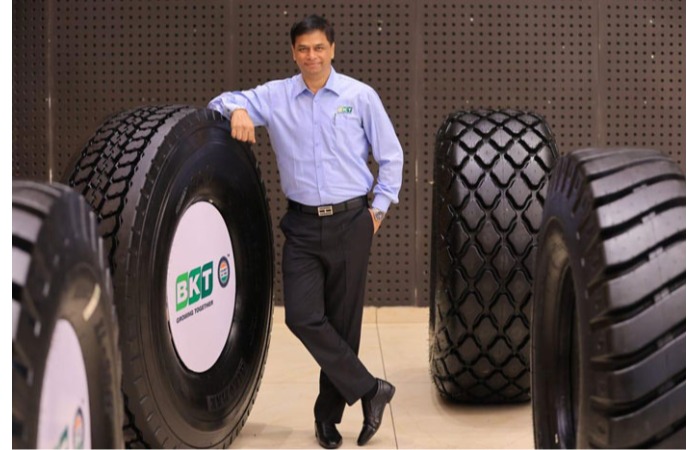
ABOUT THE AUTHOR: Ratnesh Sinha, General Manager - Industrial Tyres, BKT
 A-303, Navbharat
Estates,
Zakaria Bunder Road,
Sewri (West), Mumbai - 400 015,
Maharashtra, India
A-303, Navbharat
Estates,
Zakaria Bunder Road,
Sewri (West), Mumbai - 400 015,
Maharashtra, India +91-22-24193000
 Subscriber@ASAPPinfoGlobal.com