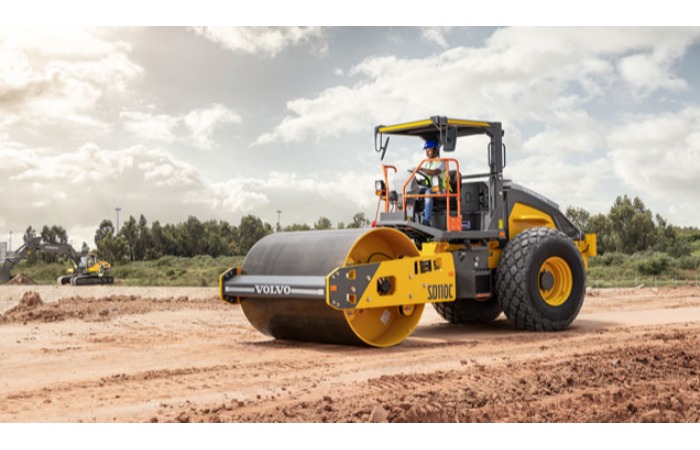
Small is the new Big!
Indias construction landscape is undergoing a quiet but decisive transformation. As projects move deeper into congested cities, dense residential clusters and utility-heavy corridors, size is no longer the defining measure of productivity. Instead, agility, precision and efficiency are emerging as the new benchmarks. At the heart of this shift is a fast-growing category”mini construction equipment.
Compact machines such as mini excavators, skid steer loaders, compactors, telehandlers and light material handling equipment are steadily rewriting the rules of jobsite execution. Once seen as supplementary tools, these machines are now playing central roles across urban infrastructure, housing, municipal services and even industrial applications. Industry estimates suggest the segment is growing at a robust 12 to 15 per cent annually, outpacing several traditional equipment categories.
Why compact is clicking now
The drivers behind this growth are structural, not cyclical. Urbanisation has intensified, with projects increasingly executed in live environments”narrow roads, basements, congested utility corridors and brownfield sites. Conventional heavy equipment often struggles in such conditions, either due to space constraints or the disruption they cause.
Mini equipment thrives precisely where larger machines falter. Their compact footprints, lower noise levels and ease of transport allow contractors to work faster, safer and with minimal disruption. From trenching and pipe-laying to material handling and site clean-up, compact machines are enabling construction activity to move forward without shutting cities down.
According to multiple OEMs, government-led programmes such as Smart Cities Mission, AMRUT, PMAY-Urban, metro rail expansion and urban road upgrades have significantly boosted demand for mini machines. Municipal bodies and utility contractors, in particular, are emerging as key buyers.
Mini excavators take centre stage
Among compact categories, mini excavators are clearly leading the charge. Their ability to operate in confined spaces while supporting a wide range of attachments makes them one of the most versatile tools on modern jobsites.
Compact machines like mini excavators are in high demand due to rapid urbanisation, says E Moses, Director, Kobelco Construction Equipment India. He notes that mini excavators are increasingly deployed for solid waste management, trenching, pipeline works and landscaping”applications that demand precision rather than brute force.
Kobelcos mini excavator range spans from 0.8 to 6 tonne, with the bulk of Indian demand concentrated in the 3 to 4 tonne segments. Nearly 80 per cent of mini excavators sold in India fall in this category, Moses explains, adding that zero tail swing designs and advanced hydraulics have become critical differentiators in space-constrained environments.
OEMs are also investing heavily in operator comfort and environmental performance. Noise and dust reduction technologies, improved cabin ergonomics and easier maintenance access are now standard expectations. Kobelcos focus on compactness, low noise and ease of servicing reflects a broader industry trend”designing machines that can work longer hours in sensitive urban zones without compromising productivity.
Global players such as Volvo Construction Equipment are reinforcing this narrative with next-generation compact excavators that deliver higher power, improved digging forces and upgraded operator environments in compact envelopes. These machines are engineered to achieve big results across a wide range of jobsites, says Xavier Beaud, Head of Technology, Compact Business Unit, Volvo CE, underscoring how compact equipment is no longer about compromise but optimisation.
Skid steer loaders: potential meets perception
If mini excavators are enjoying steady acceptance, skid steer loaders (SSLs) continue to spark debate in the Indian market. Globally, skid steers are among the most popular compact machines, but India remains an outlier.
Demand for skids is extremely low in India, observes Sunil Newatia, Chairman and Managing Director, Suretech Infrastructure. Despite being present for over three decades, annual volumes remain a fraction of backhoe loader sales. Limited customer awareness, preference for familiar machines and price sensitivity have restricted widespread adoption.
Yet, OEMs argue that the tide is slowly turning”especially in urban infrastructure and municipal applications. Doosan Bobcat India, the clear market leader, continues to anchor this segment with over 40 per cent market share in skid steer loaders.
We are the global leader in skid steers, and in India too, we have been number one for a long time, says Manjunath S, Director of Sales India and SAARC, Doosan Bobcat India. He attributes this leadership to durability, reliability and long machine life”attributes that resonate strongly with Indian customers. Importantly, India has emerged as a global manufacturing hub for Bobcat, exporting compact equipment to markets worldwide under the Make in India initiative.
Real-world use cases are strengthening the skid steer value proposition. In industrial settings, for instance, compact loaders are replacing manual processes and forklifts in hazardous environments. A recent deployment of the Bobcat S70 at a lead smelting facility cut furnace loading time by nearly 50 per cent, reduced fuel consumption and significantly improved operator safety by minimising manual handling.
Versatility through attachments
A defining advantage of mini equipment”especially skid steers and mini excavators”is attachment versatility. One base machine can perform multiple roles, improve utilisation and lower total cost of ownership.
At Manitou, our competitive advantage lies in versatility, says a spokesperson from Manitou India. The company manufactures skid steer loaders and a wide range of attachments in India, enabling a single machine to function as a loader, forklift, trencher, sweeper or compactor. One compact machine can perform many functions with different attachments, making it highly attractive for contractors and rental companies.
This attachment-led flexibility is also driving adoption in non-traditional segments such as waste management, landscaping and facility maintenance”areas where compact size and manoeuvrability matter more than raw power.
Safety and technology in tight spaces
As compact machines increasingly operate in crowded urban environments, safety has become a central design consideration. Mixed pedestrian traffic, narrow access points and long operating hours demand machines that are predictable, stable and easy to control.
Skid steer loaders in India are increasingly used in urban infrastructure and municipal work, where sites are tight and unpredictable, says Satendra Tiwari, Executive Director “ Operations, CASE Construction Equipment. CASE focuses on compact design, improved visibility, ROPS and FOPS cabins and integrated safety systems that work continuously without slowing operations.
Digital technologies are also making inroads. Telematics platforms enable fleet owners to track utilisation, fuel consumption and maintenance needs”particularly valuable for rental fleets and organised contractors. While advanced automation may still face behavioural challenges on Indian sites, basic IoT-enabled features are steadily gaining acceptance.
Beyond earthmoving
The mini equipment story extends well beyond excavation and loading. Compact telehandlers, forklifts and light compaction equipment are finding growing relevance across residential, commercial and infrastructure projects.
Compact telehandlers, such as those introduced by JLG, combine lifting capability with small footprints, making them ideal for precision material handling on congested sites. Their ability to use skid steer-style attachments further enhances versatility.
Light compaction equipment is another fast-growing pocket. Walk-behind rollers, plate compactors and mini compactors are becoming indispensable for road repairs, utility reinstatement and housing projects. Mahindra Construction Equipments launch of the COMPAX mini compactor highlights OEM recognition of this opportunity.
Our machines are engineered for Indian conditions with a focus on fuel efficiency, robustness and ease of service, says Dr Venkat Srinivas, Business Head “ Mahindra Truck, Bus and Construction Equipment. Such localisation is critical to driving adoption beyond metro markets.
Digitising compaction
Digital construction technologies are also beginning to influence traditionally operator-driven processes such as soil and asphalt compaction. As highway packages become larger and timelines tighter, contractors are increasingly turning to grade and compaction control systems to ensure uniformity, reduce rework and generate digital quality records. Solutions that combine ease of installation with real-time feedback are finding greater acceptance, particularly in projects where equipment is rented or operated by subcontractors. By enabling consistent outcomes regardless of operator skill levels, such systems are helping contractors meet quality benchmarks while improving productivity on site.
Trimble, for instance, has introduced an easy-to-install configuration of its Earthworks and Roadworks platforms for soil and asphalt compactors in India, aimed at lowering the entry barrier for digital compaction. Offered through a subscription-based model, the solution allows contractors to move the system easily between machines while integrating compaction data with cloud-based reporting tools. The solution is available at a lower cost of entry to enable greater adoption by Indian contractors, said Rajan Aiyer, Vice President and Managing Director, India at Trimble. As India builds out its national highway infrastructure, digital construction technologies can help contractors work with much greater efficiency, higher quality and improved safety.
Rental, skills and localisation
The rise of the rental model is accelerating compact equipment penetration. Smaller contractors increasingly prefer renting mini machines for short-duration or specialised tasks, reducing upfront investment and improving access.
OEMs are responding with localised manufacturing, simplified designs and expanding service networks. Training is another critical piece of the puzzle. With skilled operators in short supply, compact machines”requiring shorter training cycles”are seen as practical solutions for faster mechanisation.
Looking ahead
Challenges remain. Awareness gaps, entrenched preferences and price sensitivity continue to influence buying decisions. Yet, the fundamentals are firmly in favour of compact equipment. As projects become more complex, timelines tighter and labour scarcer, the industrys reliance on agile, efficient machines will only grow.
Mini construction equipment may be small in size, but its impact on Indias construction ecosystem is anything but. In a market where precision, speed and adaptability increasingly define success, small truly is becoming the new big.
 A-303, Navbharat
Estates,
Zakaria Bunder Road,
Sewri (West), Mumbai - 400 015,
Maharashtra, India
A-303, Navbharat
Estates,
Zakaria Bunder Road,
Sewri (West), Mumbai - 400 015,
Maharashtra, India +91-22-24193000
 Subscriber@ASAPPinfoGlobal.com