
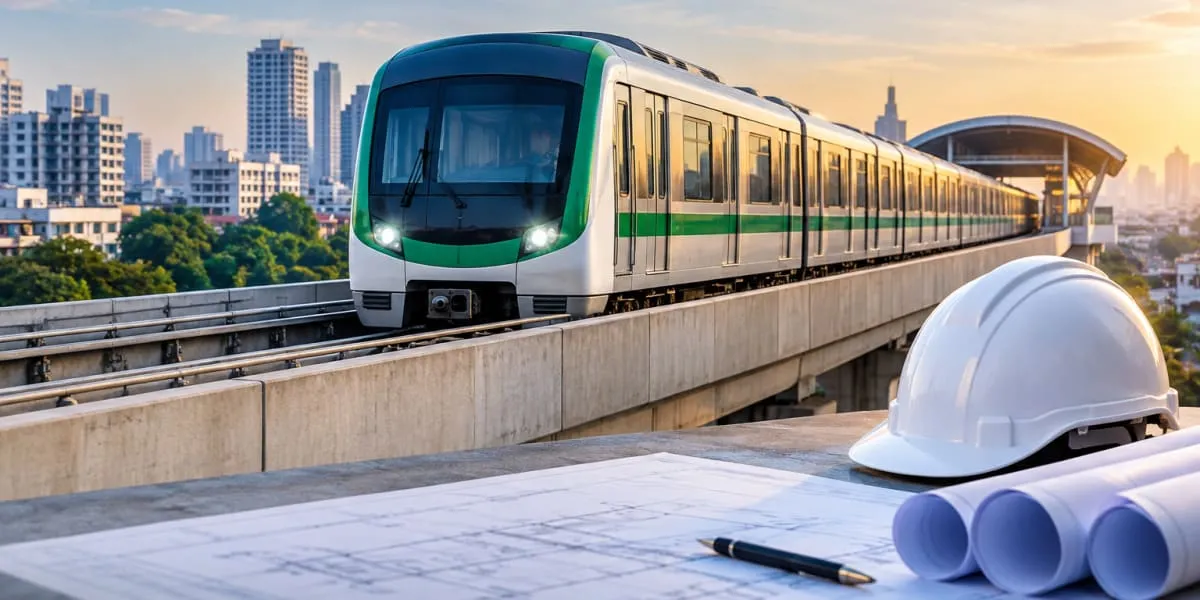
Tata Projects-led JV Wins Dhaka Metro Contract
Tata Projects, as part of the Nishimatsu-Tata Projects-Toda joint venture, has secured contract package CP06 from Dhaka Mass Transit Company (DMTCL) for a key section of the Dhaka Metro network in Bangladesh. The award expands the company’s participation in international urban transportation infrastructure projects.
The scope covers civil works, architectural finishes, and mechanical, electrical and plumbing (MEP) works for an underground main line measuring 5.2 km. It also includes the construction of three underground stations—Khilkhet Station, Airport Terminal 3 Station and Airport Station—as well as a shaft at the northern endpoint.
The project is being implemented with funding support from the Japan International Cooperation Agency (JICA). The section is intended to support Dhaka’s efforts to modernise urban transportation, improve connectivity, reduce congestion and promote more sustainable economic growth.
Rajiv Menon, president and chief growth and strategy officer at Tata Projects, said the award represented a significant milestone in the company’s international expansion. He said the contract demonstrated its ability to work within global consortiums and deliver large-scale mass transit infrastructure in line with international standards, while strengthening its visibility among governments, developers and international engineering, procurement and construction companies.
Tata Projects has delivered and executed metro infrastructure in several Indian cities, including the Lucknow Underground Metro package, underground packages for the Pune Metro system and underground corridors and stations for the Chennai Metro. Its experience includes tunnel boring machine (TBM) tunnelling, underground station construction, elevated transit infrastructure, systems integration and work in densely populated urban areas.
The Dhaka contract is expected to support Tata Projects’ plans to expand its international transportation infrastructure portfolio. The company is seeking to combine its engineering capabilities and urban transit experience with the wider Tata Group’s resources as metro and rail investment continues across Saudi Arabia, the UAE, Qatar, Oman and other rapidly urbanising markets.
 A-303, Navbharat
Estates,
Zakaria Bunder Road,
Sewri (West), Mumbai - 400 015,
Maharashtra, India
 +91-22-24193000
 Subscriber@ASAPPinfoGlobal.com