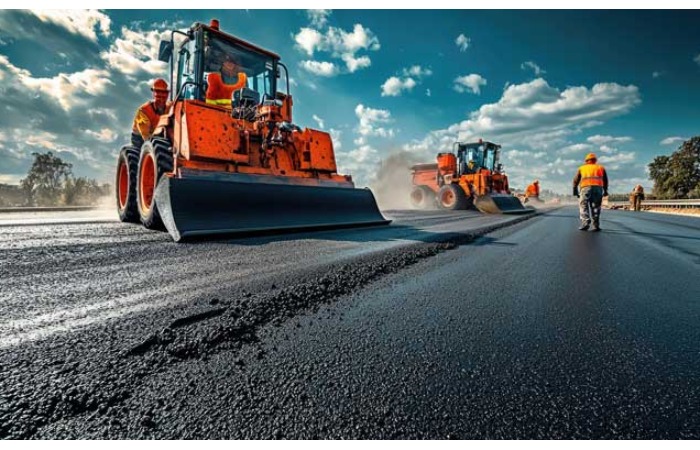
The Road to 2047
Indias road development story is at an inflection point. Over the past decade, the countrys infrastructure agenda has been defined by speed”record highway construction, expanding expressway networks and unprecedented public investment. That phase has transformed connectivity and positioned roads as the backbone of economic growth. But the journey towards a developed India by 2047 demands a new approach. The next generation of highways will not be judged solely by the kilometres built, but by how intelligently they are planned, how efficiently they are constructed, how long they last and how sustainably they perform.
This shift is changing the dynamics of the entire road construction ecosystem. Contractors are facing shrinking margins, rising input costs and tighter project schedules. Clients expect higher quality and longer pavement life, while projects themselves are becoming technically more demanding. At the same time, digital technologies, automation and sustainability are redefining the capabilities of construction equipment. The machine on the jobsite is no longer just a piece of iron; it is becoming a connected, data-driven asset that influences productivity, quality and lifecycle performance.
The transition reflects the changing nature of Indias infrastructure programme itself. Lt Gen Rajeev Chaudhry (Retd.), former Director General, Border Roads Organisation (BRO), believes the industry is entering a far more complex phase of development. Much of the relatively straightforward highway expansion has already been completed. The projects that lie ahead involve difficult terrain, tunnels, elevated corridors, coastal roads and strategic border connectivity, demanding higher levels of engineering capability, collaboration and technology than ever before.
That assessment is echoed by RK Pandey, former Chairman of the National Highways Authority of India (NHAI), who argues that the next phase of road development must place equal emphasis on asset quality, lifecycle performance and operational efficiency. Expanding the network remains important, but the long-term value of infrastructure will increasingly depend on how well roads are designed, constructed and maintained throughout their service life.
These changing priorities are already influencing the way contractors approach business.
Today, contractors are no longer chasing every project. They are evaluating opportunities much more carefully, says Sudhir Hoshing, Director, Ceigall India. Profitability, execution risks and payment security have become as important as project size. According to Hoshing, disciplined bidding is replacing the aggressive expansion strategies that characterised the previous decade.
The environment has become even more challenging because costs remain highly volatile.
Execution challenges extend beyond commercial considerations. Suhas Eklahare, Associate Director, NCC, believes project outcomes depend heavily on the capability of the client organisation. Standardised contract documents, timely decision-making and consistent project administration reduce disputes and improve execution efficiency. As road projects increasingly involve multiple agencies and complex interfaces, institutional preparedness becomes just as important as engineering expertise.
Dr Lakshmana Rao Mantri, Deputy General Manager, Afcons Infrastructure, believes Indias growing pipeline of tunnels and other technically demanding projects has exposed gaps in equipment availability. The limited supply of specialised machines such as tunnel boring machines has emerged as a bottleneck for several large infrastructure projects, highlighting the need to strengthen domestic manufacturing capabilities across the construction equipment spectrum.
The financing environment is evolving as well. According to Ankit Jain, CFO, Cube Highways InvIT, Indias mature highway assets are increasingly attracting long-term institutional investors. This shift enables developers to recycle capital into new projects, ensuring a steady flow of investment into the road sector. As the infrastructure ecosystem matures, efficiency across design, construction, financing and operations becomes increasingly interconnected.
For project owners, quality expectations have also changed dramatically. Srihari Pratap Shahi, Chief General Manager (Technical), Uttar Pradesh Expressways Industrial Development Authority (UPEIDA), believes modern expressway projects demand far greater precision than conventional highway construction. Faster execution cannot come at the expense of quality, safety or long-term durability. Advanced construction equipment is therefore becoming essential to consistently achieve stringent engineering standards across large-scale projects.
These converging pressures are fundamentally reshaping the role of construction equipment. For decades, contractors primarily evaluated machines based on purchase price, engine power and production capacity. Today, those parameters are only part of the equation. Equipment is increasingly expected to improve productivity, minimise downtime, optimise fuel consumption, reduce material wastage and provide continuous operational intelligence.
That transformation is evident across every category of road construction equipment. Siddharth Chaturvedi, GM “ Marketing, Tata Hitachi Construction Machinery, observes that modern equipment now supports virtually every stage of road construction, from excavation and earthmoving to material handling and utility development. Machines are becoming more versatile, more efficient and increasingly capable of integrating digital technologies into everyday operations.
The same trend is visible in the asphalt segment. According to Dheeraj Panda, MD, Ammann India, contractors are demanding equipment that delivers not just productivity, but also consistency and precision. Intelligent asphalt plants, advanced compaction technologies and digital process controls enable contractors to produce uniform pavement quality while optimising fuel consumption and material utilisation.
Equipment manufacturers see this as a structural shift rather than a temporary trend. Sunil Talreja, VP “ Road Construction Equipment Division, ACE, believes future road projects will increasingly depend on technology-integrated equipment capable of delivering faster execution, higher accuracy and improved operational safety. Digital fleet management, machine diagnostics and remote monitoring are becoming integral to project planning rather than optional add-ons.
That evolution is being driven by a simple reality: as highways become more sophisticated, construction itself must become smarter.
The next phase of Indias infrastructure journey will demand more than bigger fleets or faster machines. It will require intelligent equipment capable of connecting engineering design, project execution and lifecycle performance into a seamless construction ecosystem. For an industry under pressure to build faster, better and more sustainably, that transformation has already begun.
Machines that think!
The demands placed on road construction equipment have changed dramatically over the past decade. Contractors no longer view machines as standalone assets that perform a specific task; they are increasingly expected to function as intelligent systems capable of improving productivity, enhancing quality, reducing operating costs and providing real-time project intelligence.
This evolution is being driven as much by market realities as by technological innovation. Today, customers are looking beyond equipment specifications. They want complete solutions that maximise uptime, reduce fuel consumption and improve project profitability, says Panda. He notes that advanced asphalt plants, intelligent compaction systems and automated process controls are enabling contractors to produce consistent pavement quality while optimising material usage and energy consumption.
The industrys focus on operational efficiency is also changing how contractors evaluate equipment investments.
According to Guido Azzolin, CEO, MB Crusher, purchase decisions today are increasingly based on total cost of ownership rather than acquisition cost. Contractors are assessing machines on parameters such as fuel efficiency, wear-part life, maintenance requirements, versatility and resale value. Every hour a machine remains idle directly impacts profitability, he points out, adding that equipment capable of performing multiple functions or processing material directly on-site often delivers greater economic value than larger, specialised fleets.
That perspective resonates strongly with contractors managing multiple projects simultaneously.
Talreja believes the next generation of road construction equipment will be defined by intelligence rather than size. GPS-enabled fleet management, remote diagnostics, machine health monitoring and predictive maintenance are allowing contractors to optimise machine deployment while reducing operating costs. These technologies also improve utilisation by helping fleet managers identify idle assets, monitor fuel consumption and schedule maintenance before failures occur.
Digital connectivity is becoming equally important on the jobsite. Pradeep Shrivastava, Business Unit Head “ Asphalt BU, SANY India, believes road construction is moving towards an ecosystem where every machine communicates with the others. Asphalt plants, pavers, rollers and support equipment are increasingly integrated through telematics and cloud-based platforms, enabling project managers to monitor production, paving temperatures, compaction quality and equipment health in real time. Such connectivity improves coordination while minimising human error and unnecessary delays.
This transition is particularly significant as Indias highway projects become more technically demanding. Masamitsu Ishikawa, Senior Manager, Komatsu India, believes Information and Communication Technology (ICT) will fundamentally redefine construction. Machines are evolving into digital interfaces that connect engineering design, execution and project evaluation through a continuous flow of information. Instead of relying solely on manual surveys and operator judgement, machine guidance systems use three-dimensional digital models to control grading, excavation and earthmoving operations with greater accuracy.
The same digital transformation is evident in road surfacing. Ramesh Palagiri, MD and CEO, Wirtgen India, says intelligent paving and compaction technologies are helping contractors achieve higher levels of consistency while reducing material wastage. Automated screed controls maintain uniform layer thickness, while intelligent compaction systems measure density in real time, ensuring pavements meet design specifications without unnecessary rolling passes. Combined with telematics and predictive maintenance, these technologies improve machine availability while reducing operating costs.
Digitalisation is also helping address one of the industry's most pressing concerns”the shortage of skilled operators.
According to Shalabh Chaturvedi, MD, CASE Construction Equipment “ India & SAARC, machine intelligence is reducing dependence on operator experience by automating repetitive functions and providing real-time guidance during operation. Connected equipment also enables remote diagnostics and software updates, allowing manufacturers to support customers more efficiently throughout the equipment lifecycle.
Equipment manufacturers increasingly view after-sales service as a competitive differentiator rather than a support function.
This is reflected in the approach adopted by HD Construction Equipment India, where connected service platforms allow engineers to monitor equipment health remotely and intervene before breakdowns occur. Sharwan Agnihotri, Sales Head “ North, West, and Central, HD Construction Equipment, said, Predictive maintenance, over-the-air diagnostics and centralised fleet monitoring are enabling contractors to maximise machine uptime”an increasingly critical factor as infrastructure projects operate under tighter completion schedules and milestone-based payments.
The industrys transition towards connected jobsites is also changing the relationship between contractors and equipment manufacturers.
Instead of supplying machines and stepping away, OEMs are increasingly partnering with customers throughout the project lifecycle. Remote performance monitoring, operator training, preventive maintenance and digital fleet management have become integral components of equipment ownership. This collaborative approach allows contractors to focus on project execution while relying on manufacturers to ensure optimum equipment performance.
Siddharth observes that excavators, wheel loaders and compact equipment have become increasingly versatile, supporting multiple applications across road construction”from earthmoving and drainage works to utility installation and material handling. Improved hydraulic efficiency, enhanced operator comfort and advanced attachments are enabling contractors to derive greater value from individual machines while improving utilisation across projects.
For VG Sakthikumar, Chairman and MD, Schwing Stetter India, the evolution of equipment mirrors the evolution of Indias infrastructure ambitions. As projects become larger and more sophisticated, manufacturers are investing in automation, localisation and advanced manufacturing to deliver equipment capable of meeting international performance standards while addressing Indian operating conditions.
The message emerging across the industry is remarkably consistent. Productivity is no longer defined by how much material a machine can move in an hour. It is measured by how effectively equipment contributes to the overall success of a project”through higher quality, lower operating costs, reduced downtime, better safety and longer-lasting infrastructure.
As India moves towards its Vision 2047 goals, the competitive advantage will belong not simply to contractors with the largest fleets, but to those who harness intelligent equipment, digital technologies and integrated project management to build roads faster, smarter and more sustainably.
Building sustainable roads
If digitalisation is redefining how roads are built, sustainability is reshaping what they are built with”and how long they last.
Until recently, sustainable construction was largely associated with reducing emissions or complying with environmental regulations. Today, it has become a commercial imperative. Contractors are discovering that minimising waste, reducing fuel consumption and extending pavement life are just as important for profitability as they are for the environment.
For Palagiri, sustainability begins with making better use of existing resources. Technologies such as reclaimed asphalt pavement (RAP), cold recycling, in-place recycling and intelligent milling are enabling contractors to reuse existing road materials while significantly reducing the consumption of virgin aggregates and bitumen. Apart from lowering carbon emissions, these technologies shorten construction time and reduce project costs.
The emphasis on resource efficiency is also changing the way construction and demolition waste is viewed.
Azzolin believes the industry needs to move away from the traditional "extract-use-dispose" model towards a circular economy. Mobile crushing and screening attachments allow contractors to recycle excavated rock, demolished concrete and other construction waste directly at project sites, converting what was once considered waste into reusable aggregates.
Transporting waste to disposal sites and bringing fresh aggregates back to the project is both expensive and environmentally inefficient, Azzolin points out. Processing material on-site reduces truck movements, lowers fuel consumption and enables contractors to complete projects more economically while reducing their environmental footprint.
Concrete construction is also undergoing a similar transition.
According to Debjeet Chatterjee, GM “ Strategy and Business Development, Putzmeister India, the increasing adoption of energy-efficient equipment, electric machines and advanced pumping technologies will play an important role in reducing the carbon footprint of future infrastructure projects. As sustainability becomes an integral component of procurement policies, contractors will increasingly invest in equipment that combines productivity with environmental performance.
However, building sustainable roads involves more than reducing emissions during construction. It also means constructing pavements that last longer.
Strengthening Indias manufacturing backbone
While innovation on construction sites is gathering pace, an equally significant transformation is taking place inside Indias equipment manufacturing facilities.
The governments emphasis on self-reliance, combined with growing domestic demand, has encouraged manufacturers to deepen localisation, strengthen supplier ecosystems and invest in indigenous engineering capabilities. What was once primarily an assembly business is steadily evolving into a design and manufacturing ecosystem.
B Seshnath, Managing Director and CEO, Walvoil Fluid Power India, believes localisation must extend beyond sourcing components domestically. The real opportunity lies in developing Indian capabilities in high-precision hydraulics, electronics and intelligent control systems that power modern construction equipment. As machines become increasingly sophisticated, suppliers must evolve into technology partners capable of supporting global-quality manufacturing.
Manufacturing excellence also depends on process discipline.
Sunil More, Director “ Factory Operations, SANY India, believes Indias construction equipment industry must embrace world-class manufacturing practices, stronger quality systems and deeper supplier collaboration to remain globally competitive. Consistency, reliability and zero-defect production, he says, are becoming essential as Indian factories increasingly serve both domestic and export markets.
The importance of localisation is echoed across the industry.
Shalabh believes Indias expanding infrastructure programme provides manufacturers with the scale required to invest in local research and development, advanced manufacturing and indigenous product development. At the same time, stronger localisation reduces supply-chain risks while making equipment more responsive to Indian operating conditions.
For Siddharth, the next phase of localisation will focus on engineering rather than merely manufacturing. Developing products specifically for Indian applications, strengthening domestic supplier capabilities and investing in digital technologies will position India not only as one of the world's largest equipment markets but also as a significant global manufacturing hub.
This transformation extends beyond individual companies. It represents the emergence of an integrated ecosystem where OEMs, component manufacturers, technology providers and research institutions work together to create equipment designed for India's unique infrastructure requirements.
Road ahead
Indias road construction industry stands at the threshold of a new era. The first phase of highway development demonstrated the countrys ability to build at unprecedented speed. The next phase will test its ability to build smarter, more sustainably and with far greater engineering precision.
Contractors are demanding higher productivity, predictable machine performance and lower lifecycle costs. Project owners are insisting on better quality, greater transparency and longer-lasting infrastructure. Equipment manufacturers are responding with intelligent machines that combine automation, digital connectivity, predictive maintenance and sustainability in ways that were unimaginable just a decade ago.
The conversations across the industry reveal a remarkable consensus. Whether it is contractors seeking greater efficiency, OEMs investing in intelligent technologies, material innovators advocating circular construction or manufacturers strengthening localisation, everyone recognises that the future of road building will depend on creating an integrated ecosystem rather than improving isolated components.
Indias highways of 2047 will not be remembered merely for the distance they cover. They will be judged by the value they create”connecting industries, reducing logistics costs, improving safety and supporting economic growth for decades to come.
Behind every kilometre of that network will stand an equally important achievement: an Indian road construction equipment industry that has evolved from supplying machines to delivering complete infrastructure solutions.
In the journey towards a developed India, construction equipment will no longer remain in the background of the nations infrastructure story.
 A-303, Navbharat
Estates,
Zakaria Bunder Road,
Sewri (West), Mumbai - 400 015,
Maharashtra, India
A-303, Navbharat
Estates,
Zakaria Bunder Road,
Sewri (West), Mumbai - 400 015,
Maharashtra, India +91-22-24193000
 Subscriber@ASAPPinfoGlobal.com