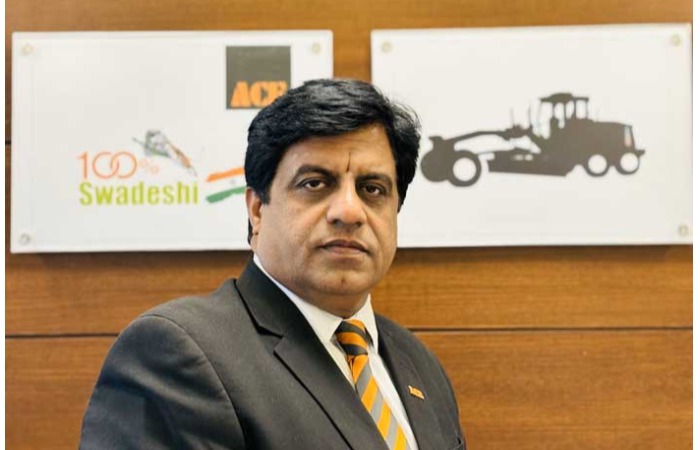
The next leap in infrastructure will come from intelligent equipment
Sunil Talreja, Vice President, Road Construction Equipment Division, ACE - Action Construction Equipment, speaks on how intelligent equipment, digital technologies, and sustainability will shape India's road infrastructure journey to Vision 2047.
As India pursues its Vision 2047 infrastructure goals, what role do you see road construction equipment playing in transforming the countrys road and highway network?
We believe road construction equipment will be pivotal to realising India's Vision 2047 infrastructure ambitions. As the country expands its highway network, expressways, rural roads, and multimodal connectivity corridors, the demand for reliable, high-performance, and technology-integrated machinery will grow substantially. Modern equipment powered by new-generation technologies is already enabling contractors to execute projects faster, with greater precision and improved safety outcomes. Even our range of cranes, pick-and-carry equipment, and material handling solutions is designed to support the full spectrum of road and infrastructure construction requirements across varied terrain and project scales.
Looking ahead, intelligent equipment integrated with telematics, automation, and predictive maintenance will define the next phase of productivity gains. ACE remains committed to advancing its product portfolio and supporting India's contractors with the machinery, service support, and technical expertise needed to build world-class infrastructure by 2047.
What are the key trends currently shaping demand for road construction equipment in India, and how do you expect these trends to evolve over the next decade?
Demand for road construction equipment in India is being shaped by unprecedented public investment in highways, expressways, rural connectivity, and logistics infrastructure. Contractors are increasingly seeking equipment that combines high productivity with fuel efficiency, lower operating costs, and digital capability. At ACE, we are seeing this shift directly in customer conversations and procurement priorities. Telematics-enabled fleet management, remote diagnostics, and predictive maintenance are becoming baseline expectations rather than premium features. Over the next decade, we expect automation and intelligent machine controls to move to the forefront, alongside growing demand for cleaner, energy-efficient equipment as environmental standards evolve.
We are investing in our product development and aftersales capabilities to stay ahead of these trends, ensuring our customers have access to equipment that is productive, cost-efficient, and future-ready as project scales and complexity continue to rise across India's infrastructure sector.
How are technologies such as telematics, machine control, automation, AI and connected job sites improving productivity, quality and project execution?
Technology integration is fundamentally changing how infrastructure projects are planned and executed. Telematics systems now provide real-time visibility into equipment performance, fuel consumption, and utilisation, enabling contractors to reduce downtime, optimise fleet deployment, and manage costs with far greater precision than was previously possible. Machine control and automation are improving accuracy in lifting, material handling, and placement operations, reducing rework and improving quality consistency on site. We too have been proactively incorporating telematics and remote monitoring capabilities into our equipment range, giving operators and fleet managers actionable data to make faster, better-informed decisions.
Moreover, AI-powered analytics can identify potential issues before they impact project schedules, while predictive maintenance helps maximise equipment uptime. Connected job sites further enhance collaboration by enabling seamless data sharing between machines, project teams, and decision-makers. Over time, these technologies are touted to play an even greater role in improving productivity, safety, and cost efficiency, helping the industry deliver large-scale infrastructure projects with greater precision and reliability in support of India's Vision 2047 goals.
Sustainability is becoming increasingly important in infrastructure development. How are equipment manufacturers supporting greener road construction through technology, fuel efficiency and recycling solutions?
Sustainability has moved from a compliance consideration to a design priority across the construction equipment industry. Modern machinery is being engineered with advanced engines, fuel-efficient technologies, and intelligent operating systems that reduce emissions without compromising performance. Telematics and energy management integration allow operators to monitor consumption patterns, optimise utilisation, and reduce unnecessary idling, cutting environmental impact across project lifecycles. There is also growing emphasis on equipment that supports recycled material use, including reclaimed asphalt pavement, with innovative paving, crushing, and material-handling technologies improving resource efficiency on site.
At ACE, sustainability is central to our product development agenda. Our equipment is built to deliver lower emissions and reduced operating costs alongside reliable performance. We are closely tracking developments in hybrid and alternative-fuel technology, with a clear intent to introduce cleaner solutions as standards evolve. Our broader commitment extends beyond the machine: we actively support contractors in building more resource-efficiently. As we see it, building a developed India by 2047 and building it responsibly are the same objective.
Contractors today are under pressure to deliver projects faster while controlling costs. What innovations are helping improve equipment uptime, operational efficiency and lifecycle economics?
As infrastructure projects grow in scale and time sensitivity, equipment uptime, productivity, and lifecycle cost optimisation have become contractor priorities as critical as project planning itself. Telematics, remote diagnostics, and predictive maintenance now allow operators to monitor machine health continuously, flag issues before they cause failures, and plan servicing without disrupting schedules, ensuring higher equipment availability where it matters most.
Advances in fuel-efficient engines, intelligent machine controls, and automated operating systems are improving productivity while reducing running costs. Digital fleet management platforms convert utilisation data into actionable decisions on deployment, maintenance, and asset planning. Greater integration of AI and connected equipment ecosystems will sharpen these gains further.
Looking ahead to 2047, what will the ideal road construction project site look like, and how will road equipment evolve to meet future infrastructure requirements?
By 2047, the ideal road construction project site will be highly connected, data-driven, and sustainable, with digital technologies enabling real-time visibility across every stage of project execution. Equipment, operators, project managers, and stakeholders will be seamlessly connected through integrated platforms, allowing faster decision-making, improved coordination, and greater productivity.
Road construction equipment will evolve to become smarter, more autonomous, and environmentally responsible. Advanced machine control systems, AI-driven analytics, predictive maintenance, and automation will help deliver higher precision, enhanced safety, and near-zero unplanned downtime. The increased adoption of low-emission, hybrid, and alternative-fuel equipment will further support sustainability goals. Future job sites will also leverage digital twins, remote monitoring, and intelligent fleet management to optimise resources and reduce waste. Together, these advancements will enable the construction of resilient, high-quality infrastructure that supports India's vision of becoming a developed nation by 2047.
 A-303, Navbharat
Estates,
Zakaria Bunder Road,
Sewri (West), Mumbai - 400 015,
Maharashtra, India
A-303, Navbharat
Estates,
Zakaria Bunder Road,
Sewri (West), Mumbai - 400 015,
Maharashtra, India +91-22-24193000
 Subscriber@ASAPPinfoGlobal.com