Building a Transparent Secondary Market
India's construction equipment industry is entering a defining decade. Infrastructure investment is accelerating, domestic manufacturing is deepening, and exports are growing faster than the domestic market itself. The industry has most of the ingredients to become a global powerhouse by 2030 — but one capability will determine whether that ambition is realised or stalls halfway: a mature, transparent secondary market for used equipment.
This is not a peripheral issue. It is the connective tissue that determines whether India's manufacturing scale actually converts into economic value, asset liquidity, and export competitiveness.
The Ambition, and the Gap Beneath It
India is currently the world's third-largest construction equipment market. ICEMA's Vision 2030 targets second place, with the industry reaching roughly $25 billion. More than 95% of equipment sold domestically is already made in India — a genuine manufacturing achievement.
But the latest numbers complicate the growth story. Domestic sales fell by approximately 2% to 136,995 units in FY2025-26, while exports grew by approximately 32% to record levels. Read together, these numbers say something specific: Indian-made equipment is winning abroad even as domestic absorption softens. That is a signal to build resilience into the ecosystem now, not just capacity — and the capability that builds that resilience fastest is the one most often left out of the conversation: what happens to a machine after its first working life.
Global leaders in this industry didn't get there on unit volume alone; they built reinforcing loops of components, financing, distribution, after-sales service and exports, where every machine sold made the next one more valuable. India's path to the same result doesn't need to look identical — it can be built around India's own strengths, starting with the asset lifecycle itself.
Why the Secondary Market Is the Capability, Not a Side Effect
A construction machine's value is not fixed at the point of sale — it is realised across its entire lifecycle: financed, deployed, monitored, maintained, and eventually remarketed and redeployed. In most mature equipment economies, the secondary market is what makes this lifecycle economically viable. It gives owners an exit, gives buyers a lower-cost entry point, and keeps productive assets working instead of idle.
India's secondary market today is large but informal, fragmented, and short on standardised inspection, valuation, and title-transfer practices. That gap has real costs: financiers price used assets conservatively because they can't trust condition data; buyers overpay or under-trust; and equipment often exits productive use earlier than its physical life would allow. Every one of ICEMA's stated priorities — demand creation, a robust operating ecosystem, and skilling — depends on fixing this, because none of them work if capital and assets remain stuck in illiquid, opaque transactions.
At Shriram Automall India Limited (SAMIL), this is the specific problem we have built our business around — not manufacturing equipment, but building the market infrastructure that lets equipment retain and transfer value. Through a phygital marketplace, standardised inspection and valuation protocols, a digital auction ecosystem, and data-led asset intelligence, we've seen firsthand what changes when used-asset transactions become transparent: transaction cycles shorten, financing becomes easier to extend against an asset, and equipment moves to its next productive use faster instead of sitting idle.
Four Recommendations for 2030
If India is serious about the secondary market as a growth lever rather than an afterthought, four interventions matter most:
- Standardise inspection and valuation. A common, industry-recognised framework for grading used equipment condition — similar to what exists in the used-vehicle market — would let financiers and buyers trust data instead of negotiating around uncertainty machine by machine.
- Digitise ownership and transaction records. A shared, verifiable record of an asset's ownership history, maintenance, and usage (building on telematics data already being generated) would cut fraud risk and speed up transactions, directly supporting financing and export documentation.
- Extend financing to the used-equipment buyer, not just the new one. Lenders currently price used assets cautiously because condition and history are hard to verify. Standardised data closes that gap and expands the pool of buyers who can responsibly finance a machine's second or third ownership cycle.
- Treat the secondary market as export infrastructure, not just a domestic convenience. Certified, well-documented used equipment is increasingly exportable to price-sensitive markets in Africa, Southeast Asia and the Middle East. A transparent domestic resale ecosystem is a direct input into export competitiveness, not a separate track.
2030: What Should Actually Be Measured
By 2030, headline success will likely be measured by whether India has become the world's second-largest construction equipment market and reached the $25 billion mark ICEMA envisions. Those numbers matter. But they will not, by themselves, indicate whether India has built a durable ecosystem — only whether it built more machines.
The more meaningful test is whether a machine sold in India today can be financed, operated, monitored, resold and redeployed with the same confidence and efficiency as one in a mature market. That test runs directly through the secondary market's maturity.
The countries that lead the next decade of construction equipment will not be the ones that manufacture the most units. They will be the ones where a machine's economic life extends as long as its physical one — because the ecosystem around it, especially the market for what happens after the first sale, was built deliberately rather than left to catch up later.
ABOUT THE AUTHOR:
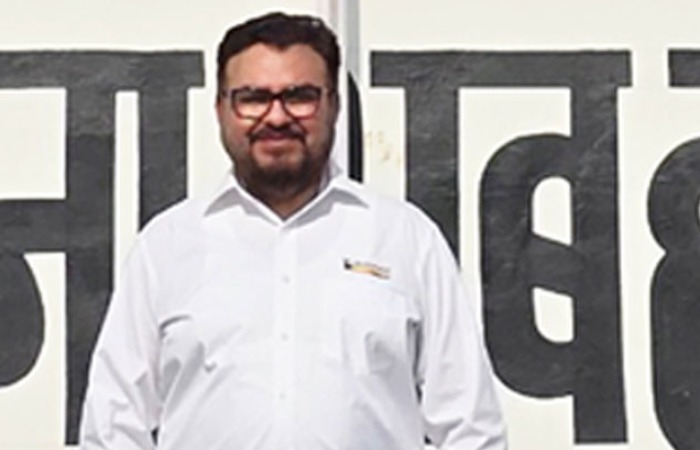
Sameer Malhotra, CEO and Director, Shriram Automall
 A-303, Navbharat
Estates,
Zakaria Bunder Road,
Sewri (West), Mumbai - 400 015,
Maharashtra, India
A-303, Navbharat
Estates,
Zakaria Bunder Road,
Sewri (West), Mumbai - 400 015,
Maharashtra, India +91-22-24193000
 Subscriber@ASAPPinfoGlobal.com