
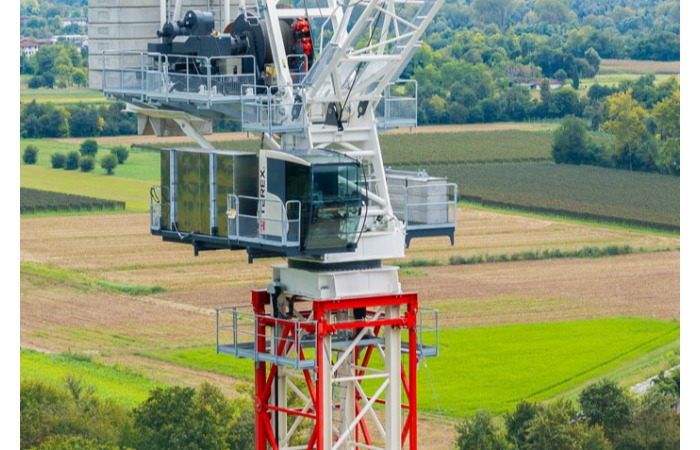
Heavy Lifts, Higher Ambitions
India’s infrastructure story is entering a new phase—one defined not just by scale, but by complexity. From high-speed rail corridors and mega refineries to renewable energy installations and urban skylines, projects today demand precision lifting, heavy-duty capabilities and faster execution timelines. At the centre of this transformation is the crane industry—quietly but decisively enabling India’s growth journey.
Once seen largely as support equipment, cranes have evolved into strategic assets. Their role today extends far beyond lifting and placing materials; they are central to project planning, safety, productivity and cost optimisation. As infrastructure investments accelerate, the crane market in India is witnessing a structural shift shaped by technology, policy, localisation and global trade dynamics.
Market on the rise
India’s construction sector continues to expand on the back of sustained government spending on roads, railways, ports, metros and urban infrastructure. This momentum is directly translating into demand for cranes across categories—crawler, mobile, tower and rough terrain.
The crawler crane segment, in particular, is seeing strong growth, with projections indicating the market could reach nearly $806 million by 2033. These machines are indispensable for heavy-lifting applications in bridges, high-rise buildings, industrial plants and large infrastructure projects. Their ability to operate in challenging terrains and lift massive loads makes them a preferred choice for complex projects.
At the same time, port modernisation and the push to enhance maritime trade are opening up new avenues for crane deployment. Similarly, sectors such as oil & gas, steel and cement are driving demand for high-capacity lifting solutions.
Dual Demand
One of the most interesting trends in the Indian crane market is the simultaneous demand for both high-capacity and smaller cranes.
On one hand, infrastructure projects are becoming larger and more complex, driving the need for heavy-duty cranes. As Karan Gandhi, Executive Director, Express Equipment Rental & Logistics, notes, “the future of India’s crane market lies in larger and more specialised cranes capable of handling complex lifting tasks.” This is particularly evident in sectors such as refineries and petrochemicals.
Praveen Sharma, Managing Director, ABC Infra, highlights, “1,200-tonne crawler cranes were essential at the Pachpadra refinery, underlining the importance of such machinery in India’s evolving construction landscape.”
Demand in the super-tonnage category—cranes above 800 tonnes—is expected to surge significantly, driven by renewable energy projects such as wind turbine installations. With India targeting 500 GW of non-fossil fuel capacity by 2030, large cranes will play a pivotal role in enabling this transition.
On the other hand, there is a growing market for smaller and medium-capacity cranes. High acquisition costs, rising interest rates and the evolving rental ecosystem are pushing contractors towards more economical options. Smaller cranes are easier to deploy, cost-effective and suitable for shorter-duration or specialised jobs.
This trend is further amplified by the emergence of first-time rental companies operating on tighter margins. For these players, smaller cranes offer a practical entry point into the business.
Rental: The silent influencer
The crane rental industry is a critical pillar of the market, shaping buying patterns and influencing pricing benchmarks. Companies such as Sanghvi Movers have built extensive fleets to cater to diverse project requirements.
Rental players are increasingly selective in their investments, balancing the need for high-capacity equipment with financial prudence. Rising capital costs and uncertain utilisation rates have made it difficult to justify large fleet expansions, particularly in the heavy crane segment.
At the same time, the rental ecosystem is evolving towards integrated solutions. Beyond equipment supply, rental companies are offering engineering support, project planning and execution services, positioning themselves as end-to-end lifting partners.
Make in India gains ground
A defining shift in the Indian crane industry is the growing momentum behind domestic manufacturing. For decades, the market—especially in the high-capacity segment—relied heavily on imports. That dynamic is now changing.
Strategic partnerships between manufacturers and rental companies are playing a key role in accelerating localisation. The collaboration between Action Construction Equipment (ACE) and Sanghvi Movers is a case in point.
Sorab Agarwal, Executive Director, ACE, explains, “India’s infrastructure expansion has entered a phase where scale and complexity are increasing rapidly… These applications require higher-capacity crawler and mobile cranes, which has created a clear shift in demand.”
He adds that partnerships with rental companies ensure that indigenously manufactured cranes are deployed and tested in real-world conditions, strengthening product development and reliability.
Rishi Sanghvi, Managing Director, Sanghvi Movers, underscores the broader impact: “This is not just about replacing imports, but about building long-term capability.”
The benefits of localisation extend across the value chain—job creation, faster service turnaround, stronger aftermarket support and the development of ancillary industries.
Further strengthening this trend is the recent joint venture between ACE and Japan’s Kato Works. The formation of ACE KATO aims to manufacture high-capacity cranes in India, combining global technology with local manufacturing strength.
As Agarwal notes, “Our partnership with Kato Works marks an important milestone in bringing globally benchmarked crane technology to India while strengthening domestic manufacturing capabilities.”
Technology: The new differentiator
As cranes become more sophisticated, technology is emerging as a key differentiator. Digitalisation, telematics and automation are transforming how cranes are operated and maintained.
Manish Mathur, CEO, Action Construction Equipment (ACE), observes that the industry is being reshaped by sustainability and digitalisation. Modern cranes are now equipped with advanced telematics systems that enable real-time monitoring, predictive maintenance and data-driven decision-making.
Safety is another critical focus area. With crane sizes increasing, the margin for error is shrinking. Manufacturers are integrating AI and IoT-based safety systems to minimise risks.
Agarwal highlights this shift: “Most crane-related incidents arise from human error rather than equipment failure. We have integrated AI and IoT-based safety systems… creating fail-safe operating conditions.”
These advancements not only improve safety but also enhance productivity and reduce downtime—key considerations for project owners.
Skilling: A Persistent Challenge
Despite technological progress, the industry faces a structural challenge: the shortage of skilled operators and technicians. Operating high-capacity cranes requires specialised training, precision and a deep understanding of safety protocols. As machines become more advanced, the skill gap is becoming more pronounced.
To address this, companies are investing in training programmes and dedicated academies. Sanghvi Movers, for instance, trains hundreds of technicians annually and runs operator certification programmes.
As Sanghvi notes, structured training initiatives are essential not just for operational efficiency, but also for ensuring safety across the industry.
Global context
The crane industry is deeply influenced by global trade dynamics. The influx of low-cost equipment—particularly from China—has disrupted pricing structures in several markets, including India and Europe. In Europe, the issue has escalated into a formal anti-dumping investigation. Leading manufacturers have raised concerns over what they describe as unfair pricing practices supported by subsidies and preferential policies.
Christoph Kleiner, Managing Director Sales, Liebherr, states, “It is patently unfair to compete with products whose selling conditions do not reflect the actual cost of production.”
Similarly, Aaron Ravenscroft, President & CEO, Manitowoc, emphasises the need for fair competition: “We call on the Commission to restore a level playing field.” These developments are being closely watched in India, where similar concerns are emerging.
India’s policy dilemma
India’s construction equipment industry finds itself at a crossroads. While demand is robust, domestic manufacturers are under pressure from low-cost imports.
Industry veteran Anand Sundaresan offers a candid assessment: “Anti-dumping exists on paper, but offers little real protection.”
He points out that structural disadvantages—such as higher input costs and dependence on imported components—make it difficult for Indian OEMs to compete on price. Loopholes in anti-dumping policies and weak enforcement further complicate the situation.
The rental market adds another layer of complexity, as lower-cost machines often become the preferred choice for contractors focused on short-term economics. However, there are signs of policy support, particularly in segments such as large cranes, where anti-dumping measures are beginning to make an impact.
Sustainability and emissions
Environmental considerations are increasingly shaping the crane industry. The transition to CE V-compliant engines aligns Indian equipment with global emission standards, enabling exports and reducing environmental impact.
Manufacturers are also exploring alternative powertrains and energy-efficient designs. While sustainability adds to costs, it is becoming a non-negotiable requirement, especially for global competitiveness.
The road ahead
The Indian crane industry stands at a pivotal moment. Demand is set to grow, driven by infrastructure expansion, energy transition and urbanisation. At the same time, the market is becoming more complex, influenced by technology, policy and global competition.
Three key themes will define the future:
- Capacity expansion: Demand for both high-capacity and smaller cranes will continue, reflecting the diverse nature of projects.
- Localisation: Make in India initiatives, strategic partnerships and joint ventures will strengthen domestic manufacturing and reduce import dependence.
- Technology adoption: Digitalisation, automation and safety innovations will become standard, improving efficiency and reliability.
For India, the crane industry is more than just a segment of construction equipment—it is a strategic enabler of national development. Ensuring its long-term competitiveness will require a balanced approach: fostering innovation, supporting domestic manufacturing and maintaining fair competition.
As infrastructure projects scale new heights, cranes will continue to do what they do best—lift not just loads, but the ambitions of a nation.
Top 3 trends shaping the crane market
- Rise of super-tonnage cranes
- Rental-led procurement
- Digital & safety tech adoption
 A-303, Navbharat
Estates,
Zakaria Bunder Road,
Sewri (West), Mumbai - 400 015,
Maharashtra, India
A-303, Navbharat
Estates,
Zakaria Bunder Road,
Sewri (West), Mumbai - 400 015,
Maharashtra, India +91-22-24193000
 Subscriber@ASAPPinfoGlobal.com