
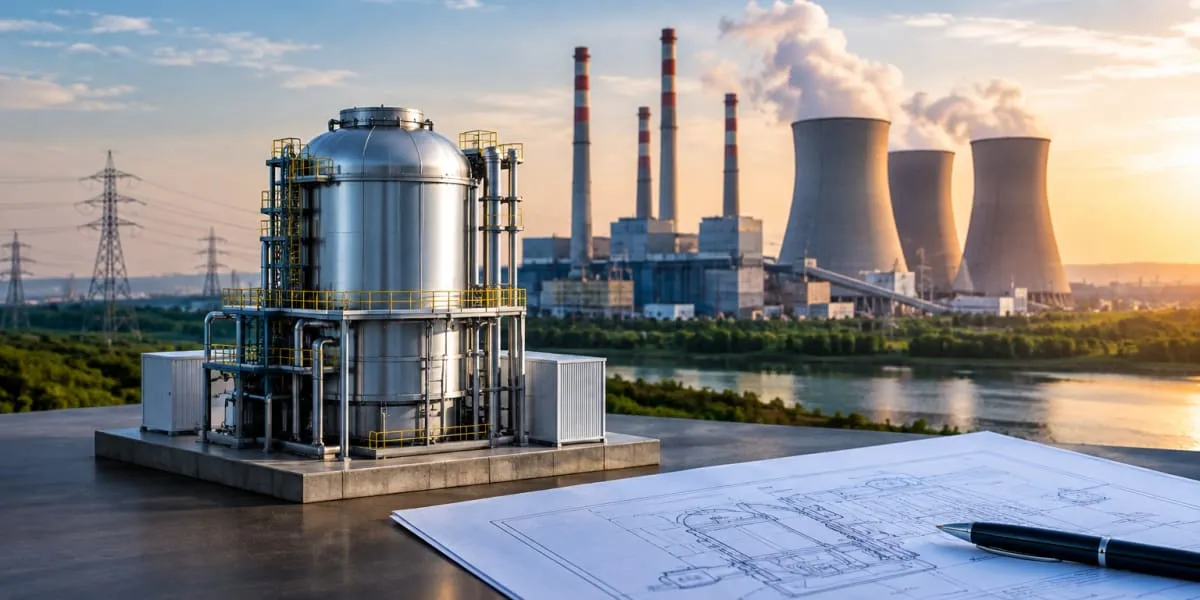
Andhra Pradesh Approves SMR Assessment as Thermal Alternative
The Andhra Pradesh government has approved an initial assessment of nuclear power based on Small Modular Reactors (SMRs) as a possible alternative to thermal generation. The state will examine whether SMR-based plants can be deployed at thermal power units nearing retirement or at other suitable locations, according to a media report.
The proposal follows a request from Andhra Pradesh Power Generation Corporation (APGENCO) to explore nuclear generation as thermal units are phased out. K Vijayanand, Special Chief Secretary (Energy), indicated that the state would examine the option after SMR technology stabilises. The government has also allowed for private-sector participation in the development of any projects that may emerge from the assessment.
The approval does not represent a decision to construct a specific nuclear plant. It does not establish a project capacity, investment requirement, construction schedule or commissioning date. The next stage will involve assessing technology options, identifying suitable sites and reviewing regulatory, financing and safety requirements before any project can progress beyond exploration.
SMRs generally have a smaller generation capacity and physical footprint than conventional nuclear reactors. Their modular systems can be manufactured and assembled before being transported to a project site, while some designs require less frequent refuelling. These features could allow the state to evaluate whether existing power-generation locations can support a different technology as older thermal units retire.
Private participation could broaden the pool of potential developers and investors if Andhra Pradesh moves from technology assessment to project development. However, no private company, SMR design or location has been identified so far. The assessment will determine whether the technology can provide a practical replacement or supplementary source of generation capacity currently supplied by thermal plants, while also establishing whether existing sites and infrastructure are suitable for future deployment.
 A-303, Navbharat
Estates,
Zakaria Bunder Road,
Sewri (West), Mumbai - 400 015,
Maharashtra, India
 +91-22-24193000
 Subscriber@ASAPPinfoGlobal.com