Rental market is expected to grow Rs 42,000 cr by 2030
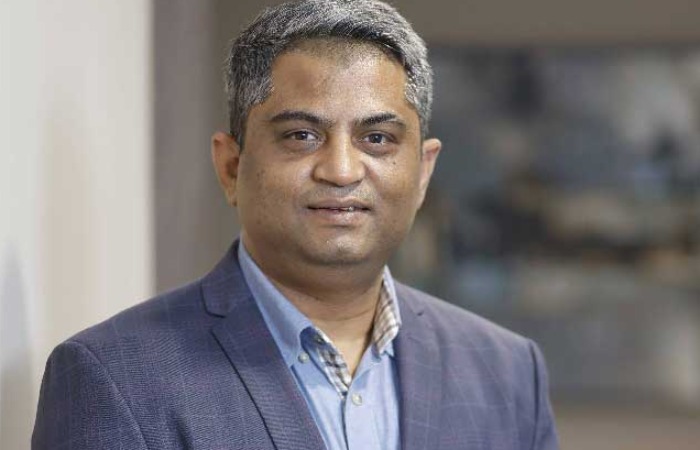
Col (Retd) Shaishav Srivastava, CEO, Synfra, explains the market gaps, technology challenges, operator ecosystem, financing opportunities and the future of equipment rentals in India.
What gap in Indias construction equipment ecosystem led you to launch Synfra, and what problem are you solving at scale?
The construction industry has traditionally been slow in adopting technology. While many digital solutions have emerged in recent years, most focus on project management and process optimisation. Very little technology has been built for actual site-level execution.
At the execution level, the industry faces three major challenges. First is labour availability. Construction remains labour-intensive, but labour participation is declining. Younger generations are unwilling to take up physically demanding jobs, which means productivity will increasingly depend on mechanisation.
Second, the industrys resources remain fragmented. Equipment owners largely operate with an ownership mindset and are reluctant to share assets efficiently. Third, the sector has historically been uncomfortable with debt despite being highly capital-intensive.
Globally, developed markets have solved labour shortages through mechanisation. In India, however, equipment penetration is still relatively low. Contractors continue to prefer ownership, which locks up huge capital and slows decision-making. Even rental procurement is inefficient because contractors still depend on personal networks and offline quotations.
That is where Synfra comes in. We identified a major gap in visibility and reliability. Contractors often do not know where machines are available or whether the supplier is genuine. Suppliers, on the other hand, have very limited market access beyond a small network of contractors.
How large is Indias construction equipment rental market today?
The rental market itself is estimated at around Rs 31,000 crore and is expected to grow to nearly Rs 42,000 crore by 2030. It is one of the fastest-growing segments in construction equipment.
Another important trend is the increasing shift towards rentals. In 2010, around 47 per cent of equipment sales went into the rental market. By 2020, this had increased to 67 per cent. Today, many OEMs estimate it is above 70 per cent.
The reason is simple. Contractors are increasingly avoiding high capex and depreciation burdens. Environmental regulations are also reducing the effective operational life of machines. Contractors want flexibility instead of blocking capital in ownership.
At the same time, suppliers are facing declining profitability because the market remains relationship-driven. Most suppliers still rely on a small notebook of repeat customers and have almost no digital presence.
How does Synfras platform solve these problems?
We launched Synfra initially as a marketplace MVP focused on four fast-moving equipment categories: earthmoving equipment, cranes and lifting equipment, road construction machinery and related heavy equipment.
The biggest issue in the market was trust. Existing listing platforms often contain inaccurate or misleading information. A supplier may advertise a 50-tonne crane without actually owning one.
To solve this, every machine listed on our platform was physically verified. Our team visited sites, checked the equipment, validated RC documents and ensured the machine actually existed. Contractors could then view verified equipment near their project location.
The two things contractors need most are visibility and reliability. They want to know where the nearest available machine is and whether it is in good working condition.
Initially, we manually verified every listing because trust-building is extremely important in construction. In the future, we plan to digitise this process through AI-based verification, including 360-degree video inspections, RC verification, insurance checks and operator documentation.
Which equipment categories are seeing the highest demand currently?
At present, dumpers and excavators are seeing massive demand, especially during the summer season before monsoons. This is the peak period for excavation, foundation work and mining activities.
If someone wants 200 dumpers today, we could deploy them within two days. The demand is very strong, but supply remains fragmented because our supplier network is still expanding regionally.
Road construction equipment is another highly active category because contractors work within narrow seasonal windows. In North India, road construction is limited by monsoons and winter conditions, so contractors prefer renting machines rather than owning them year-round.
Cranes are also heavily rental-driven because they are expensive assets used only for limited durations in projects.
How has the market responded to Synfra so far?
The response from suppliers has been very positive because they understand the potential of digital aggregation. They have seen how platforms like Uber transformed taxis and how logistics platforms digitised transport operators. Equipment suppliers have been waiting for a similar model in construction.
In just eight months of operations, we generated around ?2 crore in revenue despite being in the early stages. Most of our 300-plus vendors are currently concentrated in North India, especially Delhi-NCR, but we are gradually expanding our reach.
The bigger challenge now is scaling the supplier base to meet rising demand from contractors across regions.
How are you approaching monetisation?
We realised early that transaction commissions alone would not sustain the business economically. Traditionally, brokers in this industry charge 7 to 8 per cent commissions. We charge around 3 per cent as a convenience fee.
Beyond this, we are building additional revenue streams. One is a subscription model where suppliers can pay for enhanced visibility and unlimited listings.
We are also launching a blue-collar operator platform called Operator, which will function like a recruitment marketplace for equipment operators. Since almost all rental machines are supplied with operators, this becomes a natural extension of our ecosystem.
Another major opportunity is equipment financing. Nearly 99 per cent of heavy equipment purchases are debt-financed. We have already tied up with financial institutions to facilitate loans for suppliers, creating an additional revenue stream through loan processing commissions.
What are the biggest operational challenges in the rental business?
Verification remains the biggest challenge. In construction equipment rentals, compliance and safety are critical. Large contractors often require third-party inspections, operator health checks and strict maintenance compliance before equipment deployment.
Another challenge is payment security. Suppliers are often worried about delayed contractor payments. We are exploring escrow-based systems similar to international markets, where contractors commit funds upfront through tripartite arrangements involving banks.
The industry also needs greater standardisation. Rental contracts today vary significantly depending on operating hours, fuel responsibilities, lead distances, maintenance requirements and machine usage conditions. Digitisation will eventually help standardise these variables.
What is your long-term vision for Synfra?
We are still at a very early stage, but the opportunity is enormous. Construction equipment rentals in India are moving towards a platform-driven ecosystem.
Our long-term vision is to create a complete infrastructure services platform that integrates equipment discovery, verification, operators, financing and eventually escrow-backed transactions.
The future of construction will depend heavily on mechanisation, asset optimisation and technology-led transparency. We believe Synfra can play a significant role in enabling that transition for Indias infrastructure sector.
 A-303, Navbharat
Estates,
Zakaria Bunder Road,
Sewri (West), Mumbai - 400 015,
Maharashtra, India
A-303, Navbharat
Estates,
Zakaria Bunder Road,
Sewri (West), Mumbai - 400 015,
Maharashtra, India +91-22-24193000
 Subscriber@ASAPPinfoGlobal.com