Rewriting the DNA of Mobile Hydraulics
The Indian construction equipment sector is at a historic crossroads. Driven by massive infrastructure investments and the rapid expansion of national transport networks, the market no longer demands mere iron and raw horsepower: it demands intelligence. In an increasingly complex global environment, the industry is being shaped by three powerful forces: the Drive to innovate, the Disruptions redefining hardware, and the accelerating pace of Digitisation.
Walvoil, a global leader in hydraulic and mechatronic systems and a flagship brand of the Interpump Group, has internalised this triad. Through its robust manufacturing presence in Bengaluru (Attibele) and its global R&D centres, the company is leading the transition of mobile hydraulics into a new era: that of hydraulic digital solutions.
Drive
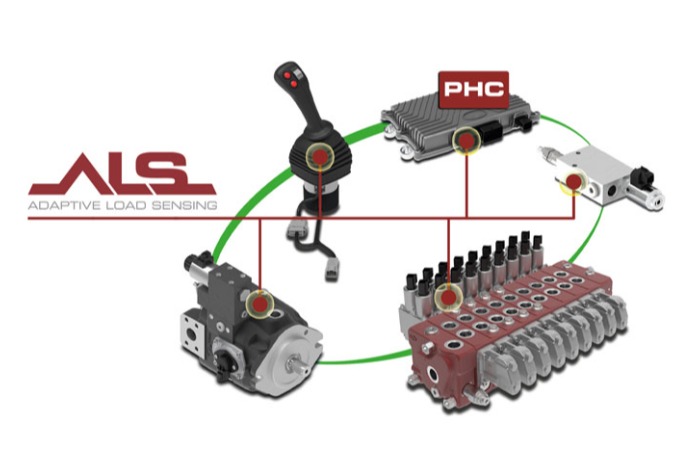
Drive reflects the determination of industry players to push performance boundaries. For Indian OEMs, the primary challenge is achieving superior productivity while reducing fuel consumption and Total Cost of Ownership (TCO). Walvoils answer is the ALS (Adaptive Load Sensing) system.
Traditional Load Sensing (LS) systems, while efficient, suffer from a mechanical limitation: they maintain a fixed pressure margin (stand-by margin) that often exceeds the real demand, leading to significant energy dissipation. Walvoil has digitalised this concept. The ALS system creates a Software-Defined Hydraulic environment where electronic control on both the pump and the valve modulates the pressure margin dynamically.

By reading the operators intent via electronic joysticks, the ALS eliminates unnecessary energy waste. This technology can reduce energy consumption by 5 per cent to 15 per cent, providing Indian contractors with a decisive edge in operational efficiency and sustainability.
Disruption
Disruption in todays market is about breaking the reliance on static mechanical components. Walvoil is disrupting the status quo by introducing a new generation of "smart" hardware and ergonomic interfaces that adapt to the machines needs in real-time.
PWLS Piston pump: Dynamic torque management: Central to this disruption is the new PWLS variable displacement axial piston pump provided with ALS control. Unlike traditional pumps with fixed mechanical regulators, the PWLS can be equipped with ALS electronic proportional regulators. This allows for a dynamic setting of the torque limit, enabling the machine to exploit the maximum available power in every operating condition. Whether the engine is thermal or electric, the PWLS with ALS control ensures optimal performance without the risk of stalling and significantly improving cycle times.
DPX Series: Full flow sharing technology: The Full Flow Sharing technology is a simple and compact solution to have pressure compensated main control valves with a predictable control even in case of flow saturation. This feature, together with the simplicity of setup and installation, makes the DPX Series the right choice for the best machine controllability and experience.
Multiple simultaneous actuations is a very common situation in mobile hydraulics, where the operator controls the movement speeds through joystick operation. In this condition, its important to have a fast response and precise local compensation. The DPX main control valves are optimised to provide a fast reaction to all operator requests.
NG5 module: Mechatronic intelligence: Complementing the directional valve range is the new NG5 electro-hydraulic module. This mechatronic system features embedded electronics and provides high performance and safety. By utilising the CANbus protocol, the NG5 communicates directly with the machines control network, ensuring precise movement and simplified wiring architectures. The NG5 module has EPD certification according to ISO 14025 and EN 50693.

Advanced user interfaces: DJW joystick and MTH handle: The disruption extends to the cabin with the DJW electronic joystick. Based on contactless Hall effect technology, the DJW is designed for safety-related applications and ISOBUS compatibility. Its robust, IP67-rated construction makes it ideal for the harsh environments of Indian jobsites.
Mounted on the joystick is the MTH multifunction handle. This ergonomic grip can be configured with up to 12 push-buttons and five proportional rollers, allowing the operator to control complex machine functions with a single hand. It features capacitive operator presence detection and LED backlighting, providing immediate visual feedback and enhancing overall safety.
CED: Electronic heart of the system: The orchestration of these advanced components is managed by the CED electronic control units. These units serve as the "brain" of the mechatronic system, processing signals from the user interfaces and sensors to command the hydraulic actuators. Designed for high-reliability and safety-related applications, the CED boards are built to withstand extreme mechanical stress, vibrations, and temperatures. They provide the necessary computing power to execute complex control logics, ensuring that the interaction between the pump, valves, and joysticks is fluid, safe, and efficient.
Digitisation
Digitisation is the backbone of growth, and at its heart lies the ability of the machine to "perceive" its environment. Walvoils approach relies on the integration of data from multiple sources (sensors) to create a precise digital map of the machines movements.
Role of IMUs in real-time perception: A key element of this digital awareness is the use of Inertial Measurement Units (IMUs). By placing these 6-degree-of-freedom inertial platforms on the machine's boom, arm, and bucket, Walvoil can dynamically monitor the geometry of the equipment. Through advanced algorithms, the system synthesises data from these IMUs, filtering out the "noise" and vibrations typical of a construction site. This results in a precise, real-time understanding of the bucket's position in 3D space, known as Kinematic Perception.
From data to action: Operating assistance systems: By synthesising this sensor data, Walvoil enables features that transform the machine's capabilities:
- XY control (Trajectory definition): The operator sets a target path (e.g., a trench with a specific grade). The system continuously compares the buckets actual position”as reported by the IMUs”with the target, automatically adjusting the hydraulics to keep the tool on a perfect linear path.
- Digital to safety (Virtual walls): By knowing the exact geometry of the equipment through IMU data, the CED electronic control units can enforce "virtual walls." The system can automatically stop or slow down movements before the machine hits overhead power lines or obstacles.
- Automated functions: Features like "Return to Dig" and "Bucket Shaking" use this digital awareness to automate repetitive tasks, reducing operator fatigue and ensuring consistent productivity throughout long shifts.
Power of localisation: Walvoil in India
For the Indian market, innovation must be synonymous with robustness. The Attibele plant in Bengaluru is a centre of excellence where global technologies are tailored to withstand extreme dust, heat, and intensive duty cycles. By adopting CANbus communication, Walvoil enables a Smart Architecture that allows for remote performance tuning and predictive diagnostics, reducing downtime on critical infrastructure projects.
Conclusion
As India builds its future, Walvoil provides the tools to do it smarter. The integration of Drive (ALS efficiency), Disruption (PWLS pump, DPX directional control valves, NG5 module, and DJW/MTH interfaces), and Digitisation (IMU-based perception managed by CED boards) defines the new industry standard. Hydraulics is no longer just about force; it has become a sophisticated mechatronic science. Walvoil is leading this evolution, proving that when hydraulic muscles are guided by a digital brain, the Indian construction industry can reach new heights of productivity and safety.
Article courtesy: Walvoil “ Interpump Group
 A-303, Navbharat
Estates,
Zakaria Bunder Road,
Sewri (West), Mumbai - 400 015,
Maharashtra, India
A-303, Navbharat
Estates,
Zakaria Bunder Road,
Sewri (West), Mumbai - 400 015,
Maharashtra, India +91-22-24193000
 Subscriber@ASAPPinfoGlobal.com