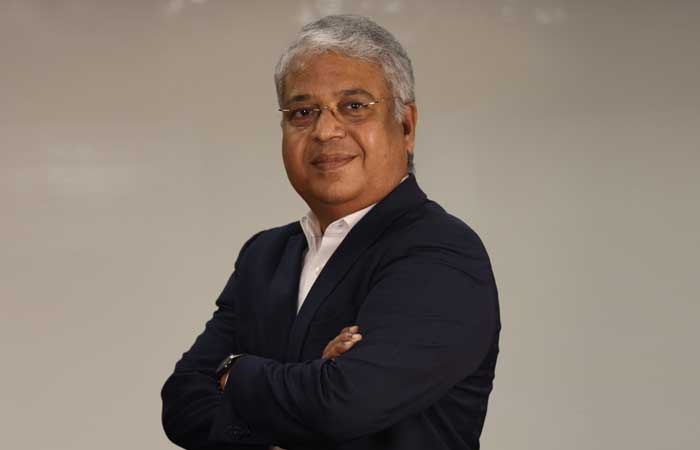
We are addressing the trends that will shape the future of construction
- VG Sakthikumar, Chairman and Managing Director, Schwing Stetter India
What are the key highlights of Schwing Stetter India’s showcase at bauma India 2026?
At bauma India 2026, we have showcased around 27 machines, including equipment and attachments, with a focus on technologies that represent the future of the construction industry.
A key highlight is our focus on alternative energy solutions. We have displayed an electric truck mixer and a CNG truck mixer as part of our efforts towards reducing dependence on conventional fuels. Globally, markets such as China have already witnessed rapid adoption of electric truck mixers, and similar changes can be expected in India over time.
How is Schwing Stetter expanding beyond its traditional concrete equipment portfolio?
While concrete remains our core business, we are increasingly looking at the complete construction ecosystem, including both upstream and downstream applications.
On the upstream side, aggregates are a key ingredient for concrete, and therefore we have entered crushing solutions with jaw crushers, cone crushers and different capacity equipment. We already have installations operating near Bengaluru.
On the downstream side, we have entered the mortar plant segment. Concrete is required for structural applications, while mortar is essential for activities such as wall plastering and tile installation. This represents an important emerging opportunity, especially with increasing housing and infrastructure development.
What is different about your mortar plant solution for the Indian market?
Traditionally, mortar plants have been designed for very large capacities and involve significant investment. Such models are more suited to markets where logistics and transportation challenges are different.
We have developed a lower-capacity mortar plant concept suited to Indian conditions. The idea is to serve a smaller radius around a city, enabling more efficient operations and making the solution practical for Indian construction requirements.
What are the key developments in your concrete equipment portfolio?
In concrete pumps, we have displayed a 31-metre pump with options across different truck platforms. We have also introduced new 10 cu m and 8 cu m truck mixers. Our latest self-loading mixers are designed to deliver higher torque from the same engine capacity, which improves performance while also reducing fuel consumption for similar operations. For customers, this translates into better productivity and improved fuel efficiency.
How are sustainability requirements influencing your product development?
Sustainability is becoming increasingly important, and we have showcased solutions addressing waste management and resource efficiency.
One such solution is our wet concrete recycling plant. Earlier, we offered larger models suited to bigger plants; now we have introduced a smaller version that can be used with different plant sizes.
We have also developed solutions for construction and demolition waste recycling. With increasing urban development and redevelopment, construction waste is putting pressure on landfill capacity. In collaboration with IIT Madras, we have studied the conversion of demolished construction waste into fresh concrete.
What are the applications of your construction waste recycling solution?
Earlier, the solution was available as a track-mounted compact machine with an impact crusher in a single-stage configuration. We have now developed a skid-mounted version to address smaller requirements as well.
This makes the technology more accessible for applications where a compact solution is required.
What other technologies have you introduced for specialised concrete applications?
For advanced concrete applications such as ultra-high-performance concrete, where brass and steel fibres are used to achieve higher strength, we have introduced a dosing system.
We have also developed a high-pressure cleaning system attachment for continuous concrete production operations, helping maintain equipment performance and productivity.
How is the market for construction equipment performing currently?
The market has gone through different cycles. Between 2011 and 2015, the industry remained largely flat, followed by growth until COVID. The market reached another peak around 2023 and has remained at similar levels since then.
Industry volumes are currently around 130,000-140,000 units. However, exports have performed well over the last three years. If exports are excluded, the domestic market has remained relatively flat.
Despite this environment, Schwing Stetter India has achieved single-digit growth over the last three years, and we expect close to double-digit growth or better this year. The first half of the year was positive, and we expect the second half to improve further, supported by recovery in earthmoving equipment demand after the monsoon season.
How are exports becoming an opportunity for Indian construction equipment manufacturers?
We are focusing on markets where India has signed free trade agreements, as these agreements provide advantages for Indian manufacturers. Our exports have expanded to markets including the UK, Canada, Australia and the US, while volumes have also increased significantly in Africa and the Middle East. South Asia has been relatively slower due to political transitions in some markets.
The perception of Indian-made construction equipment has improved globally, with customers increasingly recognising the quality of products manufactured in India.
What investments has Schwing Stetter India made to support future growth?
We have completed two major investments. Our existing manufacturing facility, which had around 500,000 sq ft of built-up area, has been expanded by another 200,000 sq ft.
Additionally, we inaugurated a new facility in Jamshedpur spread across 10 acres with around 100,000 sq ft of built-up area. These investments provide the required capacity and manufacturing capability for the next phase of growth.
We are also working with our supply chain partners to ensure they are prepared to support increased volumes.
How are you preparing for the expected market recovery?
The industry has historically seen cycles, with periods of slower growth followed by stronger phases. After three flat years, we expect the next three years to be positive. The capacity, product range and manufacturing infrastructure required for this growth phase have already been created. The focus now is on managing supply chain readiness and responding when demand improves.
What is driving the construction equipment market recovery?
Different infrastructure segments are moving at different speeds. Railway projects are performing well, real estate activity remains positive and hydropower projects are expected to provide further opportunities.
Road construction activity can improve further, and we expect it to contribute as government spending progresses. Generally, recovery in earthmoving equipment is followed by improvement in downstream segments such as material handling, concrete and crushing equipment after a lag of around one quarter.
How is Schwing Stetter adopting IoT and digital technologies across its equipment portfolio?
All our mobile machines are IoT-enabled. Stationary equipment such as batching plants can also be connected through LAN-based systems for monitoring.
We develop both hardware and software capabilities internally across products such as pumps, self-loading mixers and batching plants. IoT provides operational data, but the key is analysing that data and converting it into actionable decisions.
For example, if a self-loading mixer indicates that it requires a hydraulic filter or oil change after a certain number of operating hours, the system can help initiate timely action. However, technology supports the process; it does not replace the need for human decision-making and customer interaction.
How do you view the transition towards electric construction equipment in India?
The transition towards cleaner technologies will happen, but adoption will depend on market readiness.
We are prepared with the technology and supply chain capabilities, but customer adoption needs to develop. Unlike some markets where electric equipment adoption has moved rapidly, India still faces challenges related to infrastructure, approvals and supply chains.
Mining applications have seen some adoption of electric vehicles because the operating environment supports the transition. However, construction sites and ready-mix concrete operations will require further ecosystem development.
Customers are increasingly conscious about carbon emissions and cleaner technologies, but the transition has to happen based on practical operating requirements.
 A-303, Navbharat
Estates,
Zakaria Bunder Road,
Sewri (West), Mumbai - 400 015,
Maharashtra, India
A-303, Navbharat
Estates,
Zakaria Bunder Road,
Sewri (West), Mumbai - 400 015,
Maharashtra, India +91-22-24193000
 Subscriber@ASAPPinfoGlobal.com