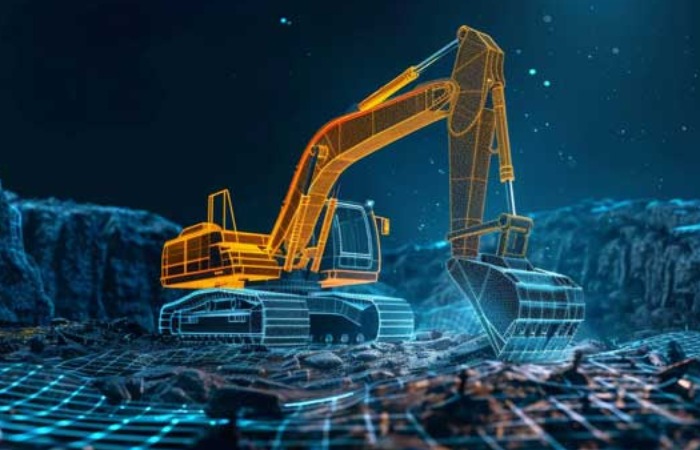
The Smart Equipment Era
Indias construction equipment industry is entering a new era where digitalisation is no longer an optional value addition but a core business necessity. As infrastructure projects become larger, timelines tighter, and margins thinner, contractors are increasingly relying on connected machines, telematics, predictive maintenance, data analytics, artificial intelligence (AI), and intelligent fleet management to maximise productivity while reducing operating costs.
The transformation extends well beyond equipment manufacturers. Digital technologies are reshaping how projects are planned, executed, monitored and maintained. Whether it is a highway project in Rajasthan, a metro rail corridor in Mumbai or a mining operation in Odisha, data has become as valuable as diesel.
The industrys shift towards digital construction was one of the dominant themes during the Construction Technology Show (CTS) Roundtable held in Mumbai.
Construction embraces the digital age
Construction has traditionally been among the slowest industries to adopt technology. Unlike manufacturing, where automation and data analytics have transformed production over several decades, construction projects have largely relied on conventional methods, fragmented communication and manual decision-making. That mindset is now changing rapidly.
Large infrastructure investments, labour shortages, increasing mechanisation and pressure to complete projects faster have accelerated digital adoption across the sector. Contractors today require real-time visibility into every aspect of their operations”from equipment utilisation and fuel consumption to project progress and machine health. The message resonated across the industry: the future belongs to connected construction.
From machines to intelligent assets
Perhaps nowhere is digitalisation more visible than in hydraulic excavators”the workhorses of India's construction sector. Modern excavators have evolved from standalone digging machines into connected assets capable of continuously transmitting operational data to fleet managers, service engineers and project owners.
Telematics systems now monitor fuel consumption, engine performance, machine utilisation, idle hours, operator behaviour, service intervals and even machine location. Instead of reacting after a breakdown occurs, contractors can now identify potential failures before they happen.
According to Dimitrov Krishnan, Managing Director, Volvo Construction Equipment India, customer priorities have shifted dramatically. Customers today are looking beyond the purchase price. They evaluate total cost of ownership, fuel efficiency, uptime, lifecycle value and increasingly rely on telematics to understand machine health, fuel usage, idle time and maintenance requirements.
This change reflects a broader industry transition where data has become central to equipment ownership.
Similarly, Siddharth Chaturvedi, General Manager “ Marketing, Tata Hitachi Construction Machinery, observes that today's customers have become far more performance-oriented. Telematics is rapidly gaining acceptance because fleet owners want better visibility into machine utilisation, fuel consumption, idle time and maintenance schedules. Connected equipment enables customers to improve productivity while reducing avoidable operating costs.
Instead of merely buying an excavator, contractors are now investing in an information platform that continuously generates operational intelligence.
Predictive maintenance replaces reactive repairs
One of digitalisation's biggest contributions has been the emergence of predictive maintenance. Traditionally, machines were serviced after scheduled operating hours or when failures occurred. Unexpected breakdowns often resulted in expensive repairs, idle equipment and project delays.
Connected machines are changing this model.
By continuously monitoring engine temperature, hydraulic pressure, component wear and fault codes, modern telematics platforms can identify anomalies well before a critical failure occurs. Service teams can plan maintenance proactively, ensuring spare parts and technicians are available before the machine stops working.
Volvo CE believes predictive maintenance has become an important contributor towards higher uptime and lower lifecycle costs.
Krishnan explains that telematics provides visibility into machine health, productivity, idling patterns and service requirements, enabling planned maintenance that maximises uptime while reducing operating expenses.
Tata Hitachi is pursuing a similar strategy through remote diagnostics and data analytics.
According to Chaturvedi, predictive maintenance is becoming increasingly important because it allows customers to minimise unplanned downtime while improving equipment reliability through proactive service interventions.
The benefits extend beyond maintenance. Better uptime directly translates into improved contractor profitability.
Data-driven decision making
Construction sites generate enormous volumes of data every day. The challenge has never been collecting information”it has been converting that information into actionable decisions.
Dr Venkata Santosh Kumar of IIT Bombay highlighted the need to strengthen the industry's data infrastructure, particularly on remote project sites where connectivity often remains inconsistent.
Similarly, Chandra Vasireddy, CEO and Co-founder of Inncircles, argued that technology should improve governance by connecting every stakeholder involved in project delivery.
Artificial intelligence is expected to further enhance these capabilities.
Rushabh Mamania, Partner and Chief Business Officer at Roadvision, noted that AI, computer vision and language intelligence are beginning to reshape construction, with Indian startups already developing globally relevant solutions. The next phase of digital construction will increasingly rely on AI-driven analytics that not only report project status but also recommend corrective actions before problems escalate.
Fuel efficiency through intelligent hydraulics
Rising diesel prices have fundamentally changed equipment buying behaviour. Instead of comparing only purchase prices, contractors increasingly evaluate machines based on operating cost per hour and cost per tonne. Digital technologies play a major role here.
Modern excavators integrate intelligent hydraulic systems, automatic engine management, multiple work modes and auto-idling functions that optimise power delivery according to the application. Krishnan notes that fuel efficiency has become a basic business requirement rather than merely a product feature.
Customers today evaluate cost per hour and cost per tonne. Intelligent hydraulic systems, efficient engines, work modes and better engine-hydraulic matching significantly reduce fuel consumption while maintaining productivity.
Chaturvedi echoes this view, stating that intelligent hydraulic optimisation and energy-efficient operating systems are enabling contractors to achieve better long-term returns despite higher initial investments. Digital control systems continuously balance engine output with hydraulic demand, reducing unnecessary fuel consumption without compromising performance.
Connected fleets and rental growth
Indias rapidly expanding organised rental market is further accelerating digital adoption.
Rental fleet operators manage hundreds of machines deployed across multiple projects and cities. Manual tracking is simply no longer practical. Connected equipment allows rental companies to monitor asset location, utilisation, fuel consumption, idle hours and operator behaviour remotely.
PN Krishnakumar, CEO, XCMG India, believes telematics has evolved into a prerequisite for fleet management. Machines without factory-integrated telematics solutions are increasingly being excluded from large fleet procurement because rental operators depend on real-time utilisation data, operator behaviour monitoring and remote asset tracking.
Rental companies also rely heavily on predictive maintenance to maximise fleet availability while reducing unexpected repair costs. As equipment sharing becomes increasingly common, connected technologies will continue to influence machine design, service models and purchasing decisions.
AI, automation and smarter construction sites
Digitalisation extends far beyond equipment. Building Information Modelling (BIM), digital twins, drones, AI-powered progress monitoring, robotics and cloud-based project management platforms are gradually integrating into mainstream construction.
Industrialised construction methods”including precast, modular construction and off-site manufacturing”also depend heavily on digital workflows that integrate design, procurement, logistics and execution.
According to experts, Construction 4.0 will require digital, physical and cyber-physical systems to work together seamlessly. Rather than replacing human expertise, technology will augment decision-making across the project lifecycle.
Sustainability through digital intelligence
Digitalisation is also supporting the industrys sustainability objectives. Connected machines reduce unnecessary idling, improve fuel efficiency, optimise maintenance schedules and minimise emissions. Manufacturers are combining telematics with operator training and intelligent hydraulics to improve environmental performance without sacrificing productivity.
Electric and hybrid construction equipment represent the next phase of this evolution. However, manufacturers agree that Indias transition will be gradual.
Krishnan believes electric excavators will gain acceptance where charging infrastructure, operating conditions and economics make practical sense. Similarly, Tata Hitachi expects electrification to accelerate as infrastructure develops and commercial viability improves.
For now, improving fuel efficiency through digital optimisation remains the industry's most immediate sustainability strategy.
The road ahead
India is entering one of the worlds largest infrastructure expansion phases. Delivering highways, metros, industrial corridors, airports and mining projects at the required speed will demand far more than bigger machines”it will require smarter ones.
Connected equipment, predictive maintenance, AI-driven analytics, intelligent hydraulics, cloud platforms and integrated project management are transforming construction into a data-driven industry.
Digitalisation is no longer about adopting technology for its own sake. Its real value lies in improving productivity, reducing lifecycle costs, enhancing sustainability and enabling better business decisions.
For construction equipment manufacturers, success will increasingly depend not only on engineering robust machines but also on delivering intelligent ecosystems that keep those machines connected, productive and profitable throughout their lifecycle.
The excavator of tomorrow will not simply move earth”it will generate data, predict failures, optimise fuel, communicate with project managers and become an integral part of a connected construction ecosystem. In Indias next infrastructure decade, digital intelligence may well prove to be the industrys most powerful machine.
 A-303, Navbharat
Estates,
Zakaria Bunder Road,
Sewri (West), Mumbai - 400 015,
Maharashtra, India
A-303, Navbharat
Estates,
Zakaria Bunder Road,
Sewri (West), Mumbai - 400 015,
Maharashtra, India +91-22-24193000
 Subscriber@ASAPPinfoGlobal.com