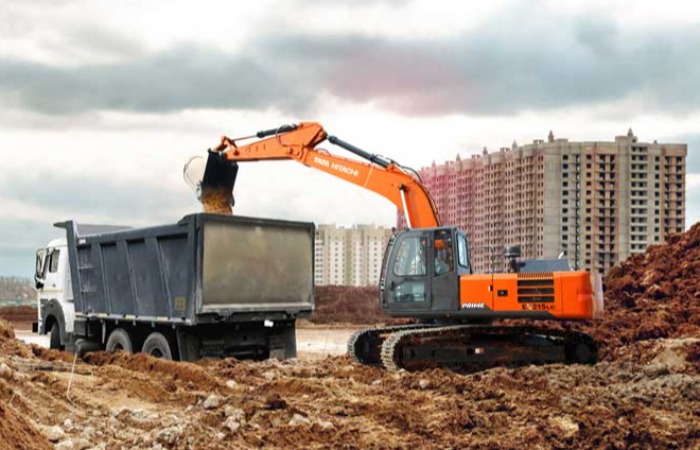
The market is shifting to lifecycle value
Siddharth Chaturvedi, General Manager, Marketing, Tata Hitachi Construction Machinery, discusses evolving customer expectations, fuel efficiency, connected excavators, and the technologies reshaping Indias hydraulic excavator market.
The 20“22 tonne segment continues to dominate the Indian hydraulic excavator market. What are the key factors driving the strong demand for this category across infrastructure, mining, and urban construction applications?
From a Tata Hitachi perspective, the 20“22 tonne class has always been the most versatile and commercially viable category in the Indian market. This segment offers the ideal balance between productivity, mobility, fuel efficiency, and operating cost, making it suitable across multiple applications such as road construction, irrigation, railways, urban infrastructure, quarrying, and general construction.
Indias infrastructure growth continues to be the biggest demand driver. Large-scale investments in highways, metro rail, logistics parks, airports, mining development, and rural infrastructure have created sustained demand for machines that can deliver high productivity while remaining economical to operate.
The 20“22 tonne excavator is often considered the workhorse of the industry because it can perform a wide range of applications with minimal operational complexity. Contractors prefer this category because it offers:
¢ Excellent digging and loading performance
¢ Ease of transportation between project sites
¢ Compatibility with multiple attachments
¢ Lower lifecycle cost compared to larger equipment
¢ Strong resale value and rental demand
Another important factor is the increasing shift towards mechanisation in tier-2 and tier-3 markets. Customers are looking for machines that are reliable, easy to maintain, and adaptable to varying site conditions. This segment perfectly addresses those requirements.
At Tata Hitachi, we have seen growing demand for technologically advanced yet durable machines that can perform consistently under Indian operating conditions, whether in harsh mining zones, urban projects, or remote infrastructure sites.
How is customer expectation evolving in the hydraulic excavator market in India, particularly in areas such as fuel efficiency, machine uptime, lifecycle costs, telematics, and operator comfort?
Customer expectations in India have evolved significantly over the last few years. Earlier, purchase decisions were largely driven by acquisition cost and basic productivity. Today, customers evaluate machines based on total cost of ownership, reliability, operational efficiency, and long-term profitability.
Fuel efficiency has become one of the most critical decision-making parameters due to rising diesel costs. Customers now expect machines that deliver higher output per litre of fuel while maintaining performance levels.
Machine uptime is equally important. Project timelines have become tighter, and downtime directly impacts contractor profitability. As a result, customers increasingly value:
¢ Reliable components
¢ Faster service response
¢ Predictive maintenance support
¢ Easy availability of spare parts
¢ Remote diagnostics and telematics
Telematics is rapidly gaining acceptance because fleet owners want better visibility into machine utilisation, fuel consumption, idle time, and maintenance schedules. Connected equipment helps customers improve productivity while reducing avoidable operating costs.
Operator comfort has also become a major focus area. Skilled operators today prefer machines with:
¢ Ergonomic cabins
¢ Better visibility
¢ Reduced vibration and noise
¢ Easy-to-use controls
¢ Air-conditioned cabins and improved seating comfort
At Tata Hitachi, we are seeing customers becoming more data-driven and performance-oriented. They are looking for machines that not only deliver productivity but also contribute to business efficiency over the entire lifecycle.
In your view, what are the most significant trends currently shaping the Indian hydraulic excavator industry, and how do you see the market evolving over the next three to five years?
The Indian hydraulic excavator industry is currently being shaped by five major trends:
¢ Infrastructure-led growth: Government-led investments in roads, railways, urban development, mining, and energy projects continue to create strong long-term demand for construction equipment.
¢ Increasing mechanisation: The industry is witnessing deeper penetration of mechanised equipment in cities and urban and rural areas. This trend will continue as labour availability challenges and productivity expectations increase.
¢ Digitalisation and connected machines: Telematics, machine monitoring, predictive maintenance, and fleet analytics are becoming mainstream. Customers want real-time operational insights to improve asset utilisation and reduce downtime.
¢ Focus on fuel efficiency and sustainability: Customers are increasingly prioritising fuel-efficient machines with intelligent hydraulic systems and optimised engine performance to reduce operating costs and emissions.
Over the next three to five years, we expect the market to become more technology-driven, with greater adoption of smart machines, advanced attachments, automation features, and connected services. We also foresee increasing demand for customised solutions tailored to specific applications and regional requirements.
India will remain one of the fastest-growing construction equipment markets globally, supported by strong infrastructure spending and industrial expansion.
Contractors today are increasingly looking for higher machine utilisation and operational flexibility. How are attachments, advanced hydraulics, and smart machine technologies helping excavators become multi-application machines?
The role of excavators has evolved significantly from being single-purpose digging machines to becoming versatile multi-application platforms. Attachments are playing a pivotal role in transforming the way excavators are utilised today. Customers are increasingly equipping their machines with a wide range of specialised tools ” including breakers, crushers, grapples, augers, shears, and compaction attachments.
These versatile attachments are being deployed across diverse applications such as:
¢ Solid waste management
¢ Quarrying and mining
¢ Pipeline and utility projects
¢ Material handling
¢ Road construction
Additionally, demolition attachments are rapidly gaining prominence, driven by stricter safety regulations and evolving industry standards. Advanced hydraulic systems enable faster attachment integration and better operational precision. Intelligent hydraulic control systems help optimise power distribution, improve responsiveness, and reduce fuel consumption during varying operating conditions.
Smart machine technologies are further improving utilisation by enabling:
¢ Real-time machine monitoring
¢ Application-based work modes
¢ Automated diagnostics
¢ Enhanced hydraulic efficiency
¢ Better attachment compatibility
For contractors, this means one machine can perform multiple jobs across different projects, improving return on investment and fleet flexibility.
At Tata Hitachi, we are focusing on designing machines that offer high adaptability, robust hydraulic performance, and superior reliability across diverse Indian applications.
With rising fuel costs and pressure on project profitability, how important have fuel-efficient technologies and intelligent hydraulic systems become in influencing customer buying decisions?
Fuel efficiency has become one of the most decisive factors influencing equipment purchases in India today. Fuel expenses constitute a significant portion of operating costs for contractors and fleet owners. Even marginal improvements in fuel consumption can substantially impact overall profitability over the machine lifecycle.
As a result, customers are actively evaluating:
¢ Engine optimisation technologies
¢ Intelligent hydraulic systems
¢ Auto-idle and economy modes
¢ Energy-efficient operating systems
Modern intelligent load serving hydraulic systems help reduce unnecessary power losses while maintaining productivity. Customers now understand that higher initial investment in advanced technologies often translates into lower operating costs and better long-term returns.
At Tata Hitachi, our focus is on delivering machines that combine productivity with fuel efficiency through advanced hydraulic optimisation, efficient power management, and application-specific performance tuning.
The market is clearly shifting from lowest acquisition cost to highest lifecycle value.
Sustainability and digitalisation are becoming important themes globally. What is your companys approach towards connected excavators, predictive maintenance, hybrid/electric machines, and low-emission technologies for the Indian market?
At Tata Hitachi, sustainability and digitalisation are central to our long-term vision for the Indian market.
We are continuously strengthening our connected equipment ecosystem through telematics-enabled machines that provide customers with real-time insights into machine health, fuel efficiency, utilisation, and maintenance requirements.
Predictive maintenance is becoming increasingly important because it helps customers minimise unplanned downtime and improve asset reliability. Through data analytics and remote monitoring capabilities, we aim to provide proactive service support and better lifecycle management.
On the sustainability front, we are focused on:
¢ Improving fuel efficiency
¢ Reducing emissions
¢ Developing environmentally responsible technologies
¢ Enhancing machine efficiency through intelligent hydraulics
Globally, the industry is moving towards electric construction equipment, and we believe India will gradually adopt these technologies as infrastructure, regulations, and operational economics evolve. However, the pace of adoption in India will depend on factors such as charging infrastructure, project requirements, and total cost viability.
 A-303, Navbharat
Estates,
Zakaria Bunder Road,
Sewri (West), Mumbai - 400 015,
Maharashtra, India
A-303, Navbharat
Estates,
Zakaria Bunder Road,
Sewri (West), Mumbai - 400 015,
Maharashtra, India +91-22-24193000
 Subscriber@ASAPPinfoGlobal.com