Sustainability must drive every project
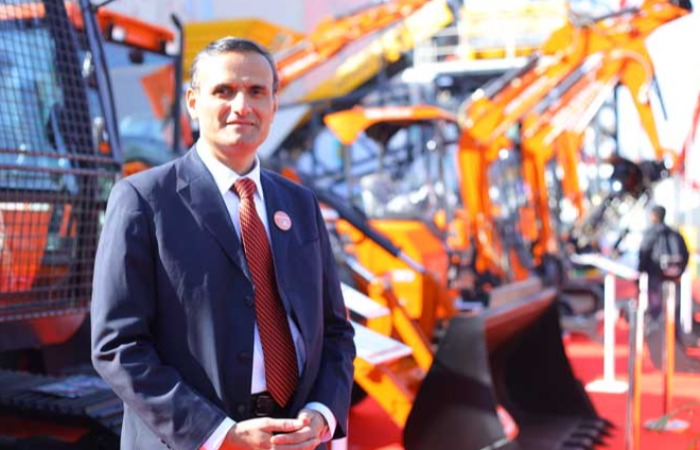
Siddharth Chaturvedi, General Manager “ Marketing, Tata Hitachi Construction Machinery, speaks on the key trends currently shaping demand for road construction equipment in India.
As India pursues its Vision 2047 infrastructure goals, what role do you see road construction equipment playing in transforming the countrys road and highway network?
India's Vision 2047 represents one of the most ambitious infrastructure transformation journeys in the world. Roads and highways will form the backbone of this vision, improving connectivity, enabling economic growth, and linking urban centres with rural India.
Road construction equipment will play a pivotal role in delivering this transformation by enabling faster execution, higher quality construction, greater precision, and improved safety. Modern excavators, wheel loaders, backhoe loaders, compact equipment and specialised attachments have become indispensable across every stage of road development”from earthwork and site preparation to material handling and utility works.
At Tata Hitachi, we see ourselves as partners in nation-building. Our equipment is engineered to deliver high productivity, fuel efficiency, reliability and lower lifecycle costs, helping contractors complete projects on time while maintaining superior quality standards. Every kilometre of road built with dependable equipment contributes directly to India's economic growth and long-term infrastructure vision.
What are the key trends currently shaping demand for road construction equipment in India, and how do you expect these trends to evolve over the next decade?
Several structural trends are driving demand for advanced construction equipment in India. Large-scale investments in expressways, economic corridors, metro rail, airports, logistics parks, industrial corridors, and rural connectivity projects are significantly expanding equipment requirements.
At the same time, customers are increasingly prioritising productivity, fuel efficiency, machine reliability, operator comfort and total cost of ownership rather than simply evaluating acquisition cost.
Looking ahead, we expect demand to grow for technologically advanced machines that offer digital connectivity, intelligent machine controls, enhanced safety features and improved sustainability. Compact equipment for urban infrastructure, versatile machines for multi-application use, and equipment supported by predictive maintenance and telematics will become increasingly important.
The future market will reward manufacturers who can provide complete solutions”not just machines”through technology, after-sales service and lifecycle support.
Sustainability is becoming increasingly important in infrastructure development. How are equipment manufacturers supporting greener road construction through technology, fuel efficiency and recycling solutions?
Sustainability is a core pillar of Tata Hitachi's growth strategy. We are committed to reducing our environmental footprint through fuel-efficient products, cleaner technologies, renewable energy, and responsible manufacturing practices. Our machines are engineered to deliver higher productivity with lower fuel consumption, while initiatives such as hydrostatic wheel loaders, energy-efficient excavators, solar-powered manufacturing facilities, water conservation, and remanufacturing support our circular economy goals. Beyond products, we actively contribute to society through focused CSR initiatives in education, healthcare, rural development, skill development, and community welfare. At Tata Hitachi, we believe sustainable growth is achieved by creating long-term value for our customers, communities, and the environment.
Contractors today are under pressure to deliver projects faster while controlling costs. What innovations are helping improve equipment uptime, operational efficiency and lifecycle economics?
Today's contractors operate in an extremely competitive environment where project timelines are compressed and margins are constantly under pressure. To address these challenges, equipment manufacturers are focusing on innovations that improve reliability, simplify maintenance and maximise machine availability.
Fuel-efficient engines, intelligent hydraulic systems, telematics-enabled monitoring, predictive maintenance, longer service intervals and improved component durability all contribute to reducing operating costs and increasing uptime.
Equally important is a strong service ecosystem. Tata Hitachi's nationwide dealer network, trained service engineers, genuine spare parts availability and responsive customer support ensure customers receive timely assistance whenever required.
Ultimately, customers evaluate equipment not by its purchase price alone, but by the value it creates throughout its lifecycle. Our objective is to maximise that value through dependable products and comprehensive lifecycle support.
 A-303, Navbharat
Estates,
Zakaria Bunder Road,
Sewri (West), Mumbai - 400 015,
Maharashtra, India
A-303, Navbharat
Estates,
Zakaria Bunder Road,
Sewri (West), Mumbai - 400 015,
Maharashtra, India +91-22-24193000
 Subscriber@ASAPPinfoGlobal.com