We are investing in expanding our drilling tools manufacturing capacity.
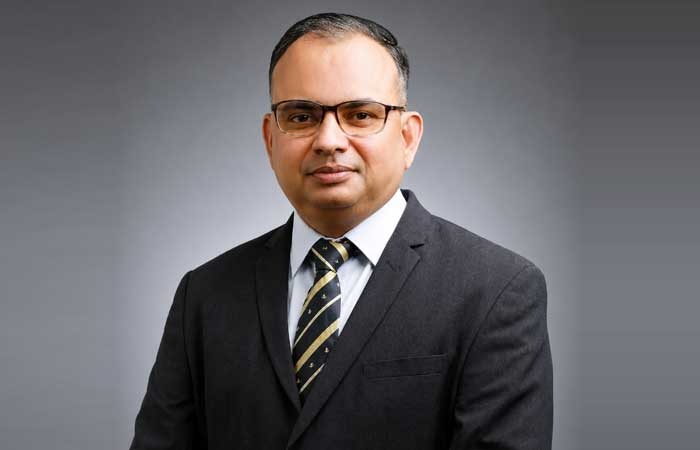
Rajendra Singh Rathore, GM –India, Bauer Equipment India
What are the key products or technologies you are showcasing at bauma ConExpo India, and what makes them particularly relevant to the evolving needs of Indian customers?
At bauma ConExpo India, we are showcasing technologies that directly address the key priorities of Indian foundation and construction contractors. A major focus of our exhibit is our latest generation of foundation equipment designed for applications such as piling, drilling, diaphragm walls, and ground engineering. These machines offer higher productivity, greater precision, and improved reliability, enabling contractors to execute increasingly complex infrastructure and urban development projects efficiently.
What major shifts are you seeing in customer demand—such as automation, digitalisation, fuel efficiency, alternative fuels and lower operating costs—and how is your product strategy responding to these trends?
Across the Indian civil foundation market, customer demand is shifting from simply buying equipment for productivity toward buying solutions that improve project economics, sustainability, predictability, and uptime. The strongest demand trends we see are automation, digitalisation, fuel efficiency, lower total cost of ownership, and preparation for future emissions requirements.
Automation and productivity are becoming critical parameters as customers face persistent challenges around skilled operator availability, tighter project schedules, and pressure to improve safety.
Bauer automated drilling and piling functions, operator-assistance systems and possibility of Real-time machine data monitoring helps customers to reduce dependence on highly experienced operators and achieve consistent pile quality.
Fuel remains one of the largest operating expenses on foundation projects. Customers are focused on maximising productivity while minimising fuel consumption and overall operating costs.
Our product development prioritises more efficient hydraulic systems, optimised power management, intelligent engine controls, and machine designs that deliver higher output per liter of fuel consumed – EEP Energy-Efficiency-Package. The objective is to lower total cost of ownership while maintaining high productivity levels. Customers are increasingly evaluating equipment based on lifecycle value rather than purchase price alone. Reliability, serviceability, parts availability, machine uptime, and resale value have become critical purchasing criteria.
Our strategy focuses on delivering maximum lifecycle value through robust machine design, extended service intervals, remote support capabilities, predictive maintenance tools, and strong aftermarket support. The goal is to help customers achieve lower operating costs, higher equipment utilisation, and improved project profitability.
The biggest change in customer demand is that buyers are no longer looking only for powerful foundation equipment. They increasingly want intelligent, connected, fuel-efficient, low-cost-to-operate machines that improve project outcomes.
Customers are seeking higher productivity, greater automation, digital fleet visibility, reduced fuel consumption, lower emissions, and optimized total cost of ownership. Our product strategy is focused on delivering these outcomes through advanced automation, digital connectivity, fuel-efficient machine designs, alternative-energy readiness, and lifecycle cost optimisation, helping foundation contractors operate more efficiently, sustainably, and profitably.
India is emerging as both a major construction equipment market and an export hub. What are your plans to expand manufacturing and exports from India over the next few years?
India is becoming increasingly important to our global strategy, both as one of the world‘s fastest-growing construction equipment markets and as a highly competitive manufacturing base for exports. We see significant opportunities driven by continued investment in infrastructure, urbanisation, transportation networks, renewable energy projects, and industrial development.
To capitalise on this growth, we are investing in expanding our drilling tools manufacturing capacity, strengthening localisation, and developing a more resilient supply chain ecosystem in India. Our focus is not only on increasing production volumes but also on enhancing manufacturing efficiency, quality standards, and technology capabilities to serve both domestic and international markets.
In parallel, we are strengthening our engineering and product development capabilities in India. This enables us to develop products that are tailored not only for Indian customer requirements but also for emerging markets that share similar operating conditions and infrastructure needs. We see India evolving from a manufacturing center into a strategic hub for manufacturing, engineering, sourcing, and innovation.
Ultimately, our objective is to make India a larger contributor to both our global production network and export business while supporting the country‘s vision of becoming a leading manufacturing and engineering powerhouse. By investing in local capabilities, talent, technology, and supplier partnerships, we are positioning ourselves for sustainable long-term growth in both domestic and international markets
With global trade uncertainties, geopolitical tensions and changing tariff dynamics, how are you managing supply chains, costs and localisation to remain competitive?
Global supply chains have become significantly more complex over the past few years due to geopolitical uncertainties, evolving trade policies, tariff changes, logistics disruptions, and fluctuations in raw material and component costs. These factors have reinforced the importance of building a resilient, flexible, and regionally balanced supply chain rather than relying heavily on any single source or geography.
We are also investing in digital technologies that provide better visibility into inventory, supplier performance, demand forecasting, and potential supply chain risks. These tools enable faster decision-making and help us proactively manage disruptions before they impact customers.
With India’s push towards higher ethanol blending in fuels, how do you see this impacting construction equipment engines, machine performance, fuel systems and the overall equipment ecosystem?
India's move toward higher ethanol blending is an important step in reducing dependence on imported fossil fuels and lowering the carbon intensity of the transportation sector. While construction equipment differs significantly from passenger vehicles because it is predominantly powered by diesel engines, the broader shift toward alternative and lower-carbon fuels is highly relevant to our industry and will influence future powertrain development, fuel infrastructure, and equipment design.
Any transition to higher-blend alternative fuels requires careful evaluation of engine performance, combustion characteristics, power output, fuel efficiency, cold-start behavior, and long-term durability.
Most construction and foundation equipment currently operates on diesel engines due to the high torque, durability, and energy density required for demanding jobsite applications. Therefore, higher ethanol blending in gasoline will have only a limited direct impact on most heavy equipment in the near term. However, the industry is closely monitoring developments in alternative fuel technologies, including ethanol-derived fuels, biodiesel, renewable diesel, HVO (hydrotreated vegetable oil), and other low-carbon energy solutions.
Higher ethanol blending is an important indicator of India‘s broader energy transition. While its direct impact on most construction equipment may be limited today, it reinforces the industry‘s move toward fuel flexibility, lower emissions, and alternative energy solutions. Our focus is on ensuring that future equipment platforms can deliver productivity, reliability, and sustainability as fuel technologies continue to evolve.
What are your key business priorities for the Indian market over the next two to three years, and where do you see the biggest growth opportunities?
India continues to invest heavily in transportation, logistics, and urban infrastructure through initiatives such as PM Gati Shakti, highways, rail, ports, airports, and multimodal logistics projects. These projects require extensive piling, retaining structures, ground improvement, and deep foundation solutions
Key opportunities in metro rail expansions, High-speed and freight rail corridors, expressways and bridges, airports and port expansion, logistics parks and industrial corridors.
Infrastructure projects offer large project sizes, long pipelines, and recurring foundation packages across multiple phases. The increasing scale of renewable projects requires optimised foundation designs with ground improvement methodologies, that reduce concrete consumption, shorten installation time, and improve lifecycle performance.
One of the fastest-growing opportunities is the digital infrastructure market. India‘s data centre capacity is expanding rapidly due to cloud computing, AI, data localisation, and hyperscale investments.
Creating a need of Deep piles for heavy equipment loads, Strict settlement control, Ground improvement, Fast-track project execution.
In parallel, manufacturing investments driven by industrial corridors and supply-chain diversification will create demand for large industrial foundations.
Major metros such as Mumbai, Navi Mumbai, Bengaluru, Hyderabad, Chennai, Pune, and Delhi NCR continue to see urban redevelopment and highrise construction.
These projects increasingly require: deep basements, diaphragm walls, secant piles, ground anchors, complex excavation support systems. This segment offers technically demanding work compared with conventional piling.
The strongest growth is likely to come from the combination of infrastructure, data centers, renewable energy, and industrial manufacturing, where project pipelines remain robust and technical foundation solutions command premium value.
 A-303, Navbharat
Estates,
Zakaria Bunder Road,
Sewri (West), Mumbai - 400 015,
Maharashtra, India
A-303, Navbharat
Estates,
Zakaria Bunder Road,
Sewri (West), Mumbai - 400 015,
Maharashtra, India +91-22-24193000
 Subscriber@ASAPPinfoGlobal.com